

Arizona Land Development Loans: 2026 Practical Guide
October 6, 2026Spec Home Financing: A Practical Guide for Arizona Builders

What if the biggest financing hurdle isn’t the build itself, but whether your plans, budget, and sale strategy tell one clear story? Spec home financing differs from a standard mortgage because you’re funding a home you plan to sell, not move into. That can leave Arizona builders unsure what a lender will focus on, how land and construction costs fit together, or whether the project timeline supports the repayment plan.
Those questions are fair. A lender needs to understand the property, the proposed build, the numbers behind it, and how you expect to repay the financing after the home sells. When those pieces don’t line up, it can be harder to explain the project and assess its risks. When they do, you can have a more focused financing discussion.
This guide explains how spec home financing works, what lenders may evaluate, and how to prepare a credible budget and value case. You’ll also learn how land, local project details, timing, and your planned exit can shape the financing path. Use it to organize the essentials before discussing your Arizona build.
Key Takeaways
- A spec home is built for sale without a buyer under contract, so financing must account for the project rather than a completed owner-occupied home.
- Spec home financing discussions may consider your experience, available equity, property, plans, project budget, and intended repayment strategy.
- Compare conventional construction financing, private lending, and available project capital by documentation, project fit, funding process, and repayment considerations.
- Make your funding request clearer by separating confirmed project details from estimates, assumptions, and items still awaiting local review.
- Applewood Funding Inc offers construction and land lending for a project-based discussion shaped around the property, budget, plans, and intended exit.
Spec Home Financing Explained: How Funding a Build-to-Sell Home Works
A spec home is built for sale without a buyer contracted in advance. The builder chooses the site, plans the home for an anticipated market, and takes on the task of finding a buyer after construction. That changes the financing conversation. Instead of borrowing to purchase a completed home to live in, the builder seeks funding for a project whose repayment may depend on a future sale.
Spec home financing is funding used to acquire or develop a property, build a home intended for sale, and repay the financing from the project’s proceeds or another planned source. The structure depends on the property, project, borrower, and lender. Approval rules and terms aren’t the same for every build.
The basic sequence is straightforward: identify the site, develop plans, arrange construction funding under agreed terms, complete the build, market and sell the home, then repay the loan as required. A sale may be the intended exit, but a sound plan also accounts for timing and the possibility that the home takes longer to sell than expected.
What makes a spec home different from a custom build?
A custom home is designed for a specific buyer, often with that buyer’s preferences shaping the plans. A spec home is built for a target market instead. Without a committed buyer, the builder needs a sale strategy based on the home’s features, location, likely appeal, and anticipated completed value. Disciplined budgeting matters: upgrades and delays can affect the project’s financial picture, and an overly optimistic value estimate can weaken the repayment plan.
How construction funding can support a build
Construction financing may fund eligible project costs according to the lender’s agreed terms. Funds may be released in stages rather than all at once. A draw is a request for a portion of approved funds tied to documented project progress. Draw procedures and required documents vary, so understand the process before work begins. For example, clarify what progress information is needed for a draw and how it should match the project budget.
Keep the moving parts connected. The site, plans, budget, construction progress, and expected sale should tell one coherent story. If your planned exit includes offering terms directly to a buyer, that’s a distinct arrangement called seller financing, not the same as repaying construction funding through a conventional sale. Treat it as a separate strategy with its own considerations.
What Lenders Evaluate in an Arizona Spec Home Financing Request
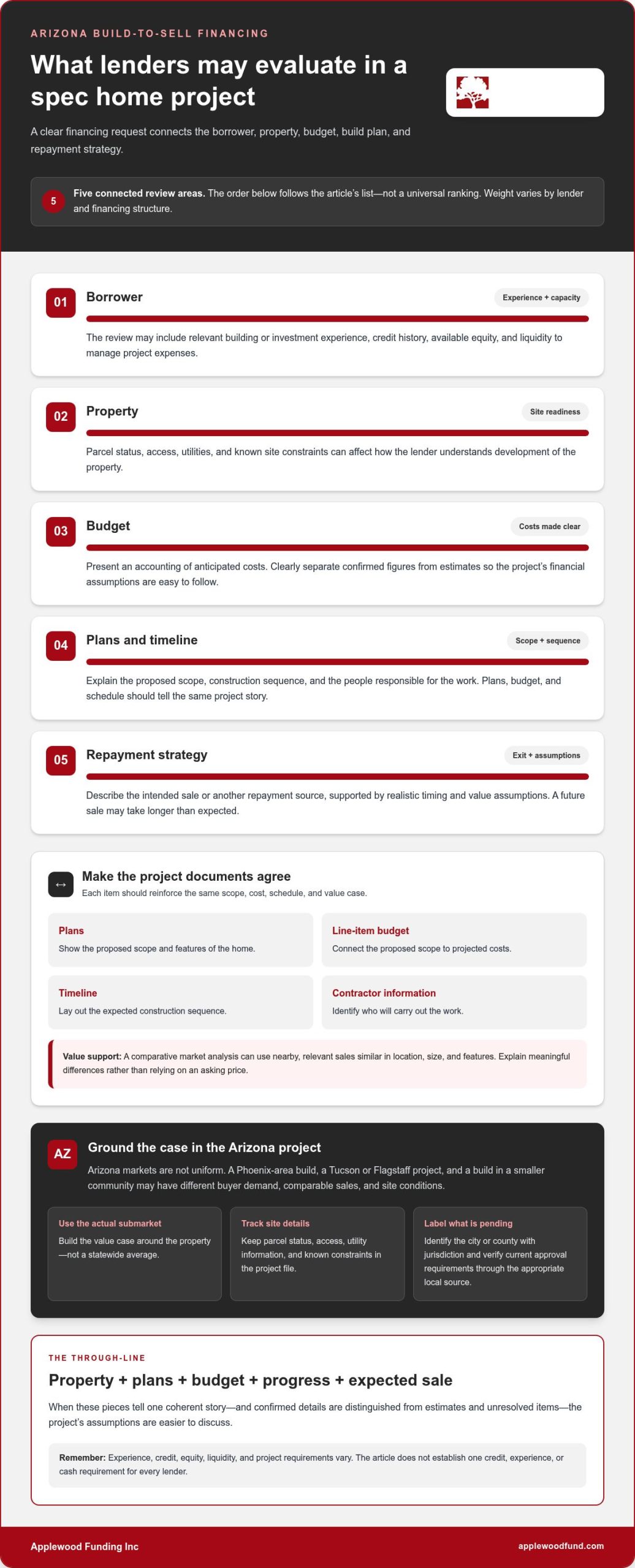
A lender reviewing spec home financing is looking for a connected project story, not just a set of plans or a borrower’s credit profile. The review varies by lender and financing structure, but may cover five areas:
- Borrower: Relevant building or investment experience, credit history, available equity, and liquidity to manage project expenses.
- Property: Parcel status, access, utilities, and known site constraints that could affect development.
- Budget: A clear accounting of anticipated costs, with estimates distinguished from confirmed figures.
- Plans and timeline: The proposed scope, construction sequence, and information about the people responsible for the work.
- Repayment strategy: The intended sale or other repayment source, supported by realistic timing and value assumptions.
These factors don’t carry identical weight with every lender. A builder with a strong track record may present a different experience profile from a first-time developer. Available equity and liquidity can also help explain how you’ll fund and manage the project. Don’t assume one credit, experience, or cash requirement applies across the board.
Which project documents help explain the build?
Make the documents agree with each other. Plans show the proposed scope, a line-item budget connects that scope to projected costs, a timeline lays out the expected sequence, and contractor information identifies who will carry out the work. If the plans show an upgrade that’s missing from the budget, resolve the mismatch before presenting the package.
A comparative market analysis can help support the projected completed value. Use nearby, relevant sales that resemble the planned home in location, size, and features. Explain meaningful differences rather than relying on an asking price. The clearer the link between the finished product and its estimated value, the easier it is to discuss the project’s financial assumptions.
How do Arizona site and market details affect the review?
Arizona isn’t one uniform market. A Phoenix-area project and a build in Tucson, Flagstaff, or a smaller community may face different buyer demand, comparable sales, and site conditions. Build the value case around the property’s actual submarket, not a statewide average.
Keep a project file with the parcel’s status, access details, utility information, and known site constraints. Identify the city or county with jurisdiction and verify current approval requirements through the appropriate local source. Label unresolved items clearly rather than presenting a pending review as settled. For broader consumer-facing information, USA.gov provides an overview of government housing assistance, though it isn’t a substitute for project-specific lender or local approval guidance.
Once your property details, budget, plans, and value support are organized, you can discuss your Arizona project financing with Applewood Funding.
Spec Home Financing Compared: Private Construction Funding and Other Paths
There’s no automatic winner among construction financing, private lending, and available project capital. Each path affects how much documentation you’ll assemble, how the build is funded, and what repayment obligations you take on. Compare them against your project’s readiness, financial circumstances, and the level of risk you’re prepared to carry. Terms and review processes vary by lender and transaction.
| Path | Documentation | Project fit | Funding process | Repayment considerations |
|---|---|---|---|---|
| Conventional construction financing | May involve detailed borrower, property, budget, and construction records. | May suit a project that aligns with the lender’s underwriting approach and documentation requirements. | Funding follows the lender’s process and agreed construction terms. | Review payment obligations and any transition or payoff requirements connected to completion. |
| Private lending | Project and collateral information may be reviewed alongside borrower financial details. | May merit consideration when the project or borrower circumstances call for a different financing conversation. | Structure and funding steps depend on the lender’s review and written terms. | Understand the full repayment plan, including how the intended sale fits the loan’s obligations. |
| Available project capital | Organize your sources of funds, planned spending, and remaining reserves. | May fit builders able to use capital without relying on a construction loan. | Funds are deployed from available resources according to the project plan. | Consider how tying up capital affects reserves and your ability to handle overruns or a slower sale. |
When might private construction financing merit consideration?
Alternative lending may enter the discussion when a project’s structure, readiness, or timing doesn’t align neatly with a conventional financing path. A private lender may assess the property and project alongside borrower information, but that doesn’t guarantee approval or make the process automatically faster or easier. Applewood Funding offers construction and land lending, providing a basis for discussing a build in terms of its specific property and plans.
What trade-offs should builders understand before proceeding?
Read the written terms closely. Understand how interest, fees, funding conditions, payment obligations, and repayment timing work together. Then test the plan against a less favorable outcome, such as a longer sale period, a change in costs, or a completed value below your estimate. An optimistic sale assumption won’t fix a budget gap. Keep a realistic repayment plan and enough detail to explain how the project’s numbers connect.
For a broader look at ground-up financing, read Applewood Funding’s construction loan guide. Use it alongside your project documents to compare funding paths on their actual terms, not assumptions.
How to Prepare a Spec Home Financing Request Before You Build
A clear project file makes it easier to discuss the build, identify open questions, and compare financing paths. Prepare it before construction begins, then update it as decisions and costs change. Keep confirmed details separate from estimates, assumptions, and items awaiting local review. That distinction makes it clear what’s known and what still needs attention.
What belongs in a lender-ready project file?
Use this sequence to build a practical request for spec home financing:
- 1. Define the project. Identify the parcel, its status, and the home you plan to build. Note the relevant Arizona city or county and any site details that may affect the work.
- 2. Assemble the plans and team information. Include current plans, the proposed scope, contractor information, and a construction schedule. Mark revisions so the documents reflect the same version of the project.
- 3. Build a line-item budget. Organize expected costs by project category. Label figures as confirmed or estimated, and explain key assumptions. Make sure the budget matches the plans and scope.
- 4. Support the completed-value estimate. Include relevant comparable sales and explain how location, size, condition, and features inform your estimate. Identify differences between the comparable properties and your planned home.
- 5. Summarize your financial picture and exit. Outline your planned contribution, existing property obligations, and intended repayment strategy where applicable. Explain how the expected sale supports repayment.
How can you make the repayment plan credible?
Be specific about how you expect to market and sell the finished home, and show which assumptions support that plan. Don’t treat an asking price or best-case sale scenario as guaranteed proceeds. Consider how a construction delay or longer sales period could affect your ability to meet repayment obligations. A useful file makes those risks visible instead of hiding them in a single optimistic projection.
Keep records current as work progresses. If a plan changes, update the budget and schedule too. If an estimate becomes a confirmed cost, change its label and retain the supporting information. Consistent figures prevent avoidable confusion during a financing discussion.
For broader context on the trade-offs involved, read this hard money financing trade-offs guide. Then bring your organized project details to a conversation with Applewood Funding about construction and land lending. Discuss your Arizona build financing.
Explore Arizona Spec Home Financing with Applewood Funding
A useful financing conversation starts with the project, not a one-size-fits-all loan assumption. Applewood Funding offers construction and land loans. For an Arizona build-to-sell project, the discussion can center on the property, your plans, the budget, and the intended exit. Bring the facts you have, identify what’s still an estimate, and make the project’s priorities clear.
What should you bring to a financing conversation?
Prepare a concise project overview, then organize the supporting details so the main assumptions are easy to follow. Include:
- Project and parcel details: The property location, parcel information, current status, access, utilities, and known site constraints.
- Plans and scope: The proposed home design, current plans, and a summary of the work you expect to complete.
- Budget and schedule: A line-item project budget and estimated construction schedule. Mark which costs and dates are confirmed and which remain projections.
- Value assumptions: Relevant comparable sales and a short explanation of how they support the estimated completed value. Note differences between those properties and your planned home.
- Exit and repayment: Your intended sale strategy and how expected proceeds relate to repayment. Flag assumptions that could change, such as timing or final sale value.
Keep unresolved questions visible. Local reviews, site details, or cost estimates may still need attention. Label them clearly instead of presenting an open item as settled. That gives the financing conversation a practical starting point.
How can Applewood Funding help move the discussion forward?
Applewood Funding offers construction and land lending for Arizona projects. A useful starting point is a clear picture of what you’re building, where the property stands, how the budget was developed, and how you plan to repay the financing. A prepared file helps keep the conversation focused on the project’s actual details rather than assumptions about a standard structure.
Before you reach out, check that your plans, budget, schedule, and value assumptions tell the same story. If one figure has changed, update the related documents. That step can make it easier to explain the build and identify the questions that matter next.
Ready to discuss your Arizona spec home financing needs? Discuss your Arizona spec home financing needs with Applewood Funding.
Turn Your Arizona Build Plan Into a Clear Financing Conversation
A strong project starts with connected details: a realistic budget, plans that match the scope, and a repayment strategy grounded in the intended sale. The right financing path depends on the property, project readiness, and your circumstances, so keep confirmed facts separate from estimates and open questions.
Applewood Funding offers construction and land loans for Arizona borrowers. Whether your project is in Phoenix, Scottsdale, Glendale, Peoria, Tempe, Mesa, Sedona, Flagstaff, or Tucson, bring your project information to a discussion focused on the property, budget, and intended exit. A clear, well-organized request gives the conversation a practical place to start.
Ready to take the next step? Discuss your Arizona spec home financing needs with Applewood Funding. Prepare your project details, clarify your assumptions, and move toward your build with confidence.
Frequently Asked Questions
What is spec home financing?
Spec home financing is project-based funding for a house built for sale before a buyer is committed. A lender may review the property, plans, budget, estimated completed value, borrower circumstances, and repayment strategy. Funding may cover eligible project costs under the lender’s terms and process. For an Arizona build, organize these details and review local project requirements before relying on future sale proceeds to repay the financing.
Can you get a construction loan to build a spec home?
Yes, some construction financing can support homes built for sale, but each lender sets its own criteria and structure. The review may include the site, plans, budget, borrower profile, projected completed value, and repayment plan. A loan for an owner-occupied home isn’t automatically the same as project financing. Prepare the project details first, then compare how each option fits your build and circumstances.
How do lenders evaluate a spec home project?
Lenders may assess the property, plans, itemized budget, borrower information, completed-value estimate, and intended sale or repayment strategy. They may also review project progress and how funding will be administered. Keep assumptions consistent across documents and support the estimated value with relevant comparable sales. In Phoenix or another Arizona market, verify current approval requirements with the city or county that has jurisdiction.
What documents are needed for spec home financing?
A useful project file typically includes parcel information, building plans, a line-item budget, a construction schedule, contractor details, and comparable sales that support the projected completed value. Borrower financial information and a repayment plan may also be relevant. Requirements vary by lender and transaction. Organize your materials so the project scope, costs, schedule, value assumptions, and intended exit tell one consistent story.
Is spec home financing different from a regular mortgage?
Yes. A regular mortgage commonly helps a buyer purchase a completed home, while spec home financing supports a build intended for sale without a buyer committed in advance. Construction funding may follow project-specific terms and processes. Compare the documentation, funding structure, repayment obligations, and risks rather than treating the options as interchangeable. The intended sale can be part of the repayment plan, but it isn’t guaranteed.
Can I use private financing for a spec home in Arizona?
Private financing may be an option to explore, depending on the lender and project. Applewood Funding is an alternative lender offering construction and land loans. A project discussion can focus on the parcel, plans, budget, local status, and intended exit. Applewood Funding serves Arizona communities including Phoenix, Scottsdale, Glendale, Peoria, Tempe, Mesa, Sedona, Flagstaff, and Tucson.
What happens if a spec home takes longer to sell than planned?
A slower sale can extend the project’s carrying period and affect your repayment plan. Before construction begins, review the loan’s maturity, payment obligations, and other written terms, then consider how a delay could affect your finances. Don’t treat an expected sale date as certain. Planning for a longer marketing period can help you understand your options and make the project’s assumptions more realistic.