

Lot Loan Guide: How to Finance Land in Arizona in 2026
October 3, 2026Mesa, Arizona Private Lenders: How to Choose the Right Financing
The best financing for a Mesa property isn’t always the loan with the simplest pitch. If a bank’s process doesn’t fit your property, timeline, or borrower profile, mesa arizona private lenders may offer another path. The right structure depends on how you’ll use the property and how you plan to repay the loan.
Compare more than the headline rate. Loan purpose, occupancy, property condition, fees, repayment schedule, and exit plan all matter. A home you’ll occupy calls for a different conversation than a fix-and-flip, rental, construction, or land project. Choosing a structure that doesn’t match your plan can leave you with terms or repayment obligations that are difficult to manage.
This guide explains how to compare private financing for Mesa properties, what information to prepare, and which loan terms to read closely. Start by identifying the property’s intended use and your repayment plan. Then compare financing structures against those details before committing.
Key Takeaways
- Match financing to the property’s use: owner-occupied, fix-and-flip, rental, construction, and land projects call for different loan conversations.
- Compare the full repayment picture, including fees, schedule, collateral, and exit plan, rather than judging a loan by its interest rate alone.
- When comparing mesa arizona private lenders, focus on whether the loan structure fits your intended use and repayment plan.
- Prepare purchase details, title information, property condition, project scope, and relevant financial records to make a loan discussion more focused.
- Explore Applewood Funding Inc’s owner-occupied hard money loans and other real estate financing options in light of your property and goal.
Mesa, Arizona Private Lenders: What They Finance and Who They Serve
Private lending is financing arranged outside the standard bank mortgage process, often with close attention to the property and the loan’s purpose. A hard money loan is one form of private lending commonly associated with real estate. Its terms may reflect the property, intended use, and repayment plan. Private financing doesn’t mean automatic approval or guaranteed funding.
Conventional underwriting typically weighs factors such as income, credit, and debt alongside the property. Asset-based lending may place greater emphasis on the property’s value and condition, but the borrower’s finances and repayment plan still matter. The balance varies by loan. When speaking with mesa arizona private lenders, begin with a clear description of the property and how you intend to use it.
How property use changes the private lending conversation
A Mesa homeowner seeking financing for a primary residence has a different occupancy situation from an investor buying a rental or renovating a property for resale. Owner-occupied hard money is a specialized financing path, and clearly stating that you plan to live in the property helps frame the right loan conversation. Applewood Funding offers owner-occupied hard money financing for borrowers exploring this option.
An investor’s intended use matters, too. A fix-and-flip project raises questions about the property’s condition, renovation scope, and repayment after the planned sale. A rental purchase centers on the long-term property plan, while construction and land financing address different project or site needs. For example, a homeowner seeking financing for the home they live in should state that occupancy clearly. An investor planning to renovate a Mesa property should outline the work and intended exit. Applewood Funding offers owner-occupied, fix-and-flip, rental, construction, and land financing options. For more detail, see the guide titled Owner-Occupied Hard Money Loans.
Private lender, broker, or matching platform: what is the difference?
A lender provides or funds a loan. A broker arranges financing between a borrower and potential lenders. A matching platform connects borrowers with financing programs or providers, but may not fund the loan itself. The distinction matters because the company presenting an option may not be the entity making the loan.
A lender’s program page describes financing it offers, while a comparison platform may present options from multiple sources. Before comparing offers, identify who funds the loan and who arranges or matches it. That clarity helps you compare the actual structure, property-use requirements, and repayment plan instead of assuming every option comes from the same type of provider.
How Mesa Borrowers Can Compare Private Lenders and Loan Structures
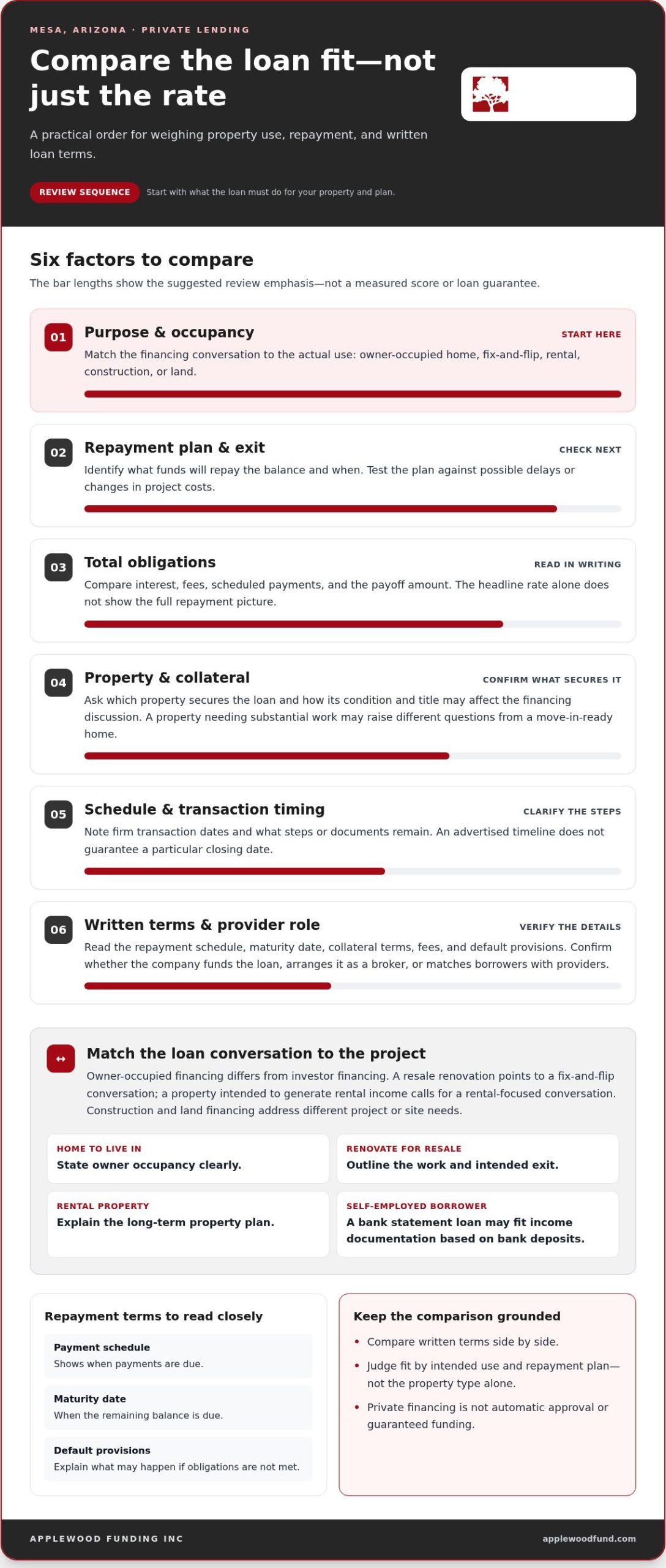
Start with fit, not the headline rate. Offers can differ in what they finance, what secures the loan, and how repayment works. Use this checklist to compare mesa arizona private lenders while keeping your property, occupancy, and plan in view.
- Purpose: Is the financing for an owner-occupied home, a fix-and-flip, a rental, construction, or land?
- Occupancy: Will you live in the property, rent it out, or renovate it for sale? State the intended use clearly.
- Collateral: Which property secures the loan, and how might its condition and title affect the financing discussion?
- Repayment plan: What funds will repay the balance, and when do you expect them?
- Timeline: Which transaction dates are firm, and what steps still need to happen?
- Total obligations: What interest, fees, scheduled payments, and payoff amount are described in writing?
Property details affect the questions to resolve. A home needing substantial work may call for a different discussion from a move-in-ready property. If you have a purchase deadline, clarify what documentation and decision steps remain. Don’t assume an advertised timeline guarantees a particular closing date.
Which loan purpose fits your Mesa property?
Owner-occupied financing is distinct from investor financing. A renovation project intended for resale may point toward a fix-and-flip structure, while a property intended to generate rental income calls for a rental-focused conversation. Construction and land financing address different property and project needs. A bank statement loan may suit a self-employed borrower whose income documentation relies on bank deposits. Match the loan purpose to the actual use, not just the property type.
Which loan terms deserve a close read?
Read the repayment schedule, maturity date, collateral terms, fees, and default provisions. The schedule shows when payments are due; maturity is when the remaining balance is due. Default provisions explain what may happen if obligations aren’t met. Compare the written terms side by side, then test your exit plan against possible delays or changes in project costs. The interest rate alone won’t show your total obligations or whether the loan fits your plan.
For owner-occupied homebuying context, the CFPB’s guide to homeownership offers general resources for buyers. For financing options based on your property use and repayment plan, explore Applewood Funding’s mortgage and hard money options.
Private Lending in Mesa: Risks, Trade-Offs, and Common Misconceptions
Flexibility can help when a conventional loan process doesn’t fit the property or borrower’s situation. It doesn’t remove the need to understand the cost, repayment schedule, or consequences of falling behind. Private financing isn’t automatically cheaper, faster, or better for every borrower. Compare the specific terms and structure against your plan.
Some private loan decisions may place greater emphasis on property details or use alternative ways to review a borrower’s finances. That flexibility is not a promise of approval. Costs and obligations vary by loan, and short-term financing can create pressure if a sale, refinance, or project takes longer than planned. For owner-occupied loans, applicable protections and requirements depend on the loan structure, occupancy, and current law. Don’t assume rules for an investment loan apply to a home you’ll occupy, or the reverse. Consider qualified legal advice for questions about your situation.
Is private financing always faster or easier?
No. A different review approach may offer flexibility, but it doesn’t guarantee approval or a particular closing date. Property condition, documentation, title details, and transaction complexity can all affect the review. For example, unresolved title issues or incomplete renovation information may need attention before the financing decision is clear.
Eligibility and timing depend on the specific loan scenario, property, documentation, and transaction. If you have a purchase or project deadline, list the steps still ahead rather than relying on a general claim about speed. Allow for review and closing requirements in your plan.
What repayment and collateral risks should borrowers understand?
Understand what happens if a payment is late or the balance isn’t repaid by the maturity date. Depending on the written loan terms and applicable law, missed obligations may trigger default remedies and put the property pledged as collateral at risk. If that property is your home, the stakes are especially personal. A delayed sale, added costs, or the need to find replacement financing may also affect your broader financial position.
Before signing, write down the repayment source and a backup plan. If repayment depends on selling a renovated property, consider what happens if the work takes longer or the sale proceeds fall short. If refinancing is your exit plan, don’t treat future approval as certain. Review the complete written terms, including payment obligations, maturity, fees, collateral, and default provisions. Ask a qualified legal or financial professional to explain terms you don’t understand. Clear answers can help you avoid a rushed decision later.
What Mesa Borrowers Should Prepare Before Discussing a Private Loan
A focused loan conversation starts with a clear picture of what you’re financing, what the property needs, and how you expect to repay. Documentation depends on the loan purpose, so use this as a preparation checklist, not a universal underwriting list. Organizing these details helps mesa arizona private lenders understand your scenario and identify the next questions.
- Define the purpose. State whether you’ll occupy the property, renovate it for resale, rent it out, build, purchase land, or access equity.
- Document the property. Gather its address, known condition, intended occupancy, and relevant purchase or refinance details.
- Organize your finances. Summarize the financial information related to your request. Self-employed borrowers may find it useful to organize bank statement records alongside other relevant details.
- Map repayment. Identify the expected source of repayment and the assumptions behind your plan.
Organize the property and transaction details
Start with the property address, purchase agreement or refinance context, intended use, and any title information you have. For a Mesa property, relevant local property, title, or transaction records can help explain the deal. Requirements differ by loan, so share what’s available and note anything still in progress.
For renovation or construction, prepare a short scope of work and any estimates or plans you have. Describe the property’s current condition and the work you expect to complete. Write down the transaction timeline, including purchase, closing, or project deadlines. Clear details help frame the conversation, but don’t guarantee funding or a particular schedule.
Build a realistic repayment or exit plan
Be specific about where repayment is expected to come from. It might be proceeds from a planned sale, a refinance, rental income, or another source tied to your circumstances. Test the assumptions: What if repairs cost more than expected, the project takes longer, or a sale is delayed? A backup plan matters when repayment depends on a future event.
If accessing property equity is your goal, include that purpose and the intended use of funds in your summary. Applewood Funding offers cash-out hard money financing as one possible path. Bring your organized property details and repayment outline to discuss your private loan scenario with Applewood Funding.
Explore Applewood Funding for Mesa Private Lending Options
Finding the right fit starts with matching your property, its intended use, and your repayment plan. Applewood Funding’s primary focus is owner-occupied hard money lending, with additional real estate financing options for different property and project goals. The details matter because a structure that fits one scenario may not suit another.
Match the financing conversation to your Mesa scenario
If you’re seeking financing for a home you plan to occupy, owner-occupied hard money lending may be a relevant path to discuss. It’s a specialized type of financing, so be ready to explain the intended occupancy and your overall plan. For more background, review Applewood Funding’s owner-occupied hard money loan guide.
For an investment or development goal, the conversation may center on another category: fix-and-flip loans for renovation projects, rental property loans for rental plans, or construction and land loans for building or land-related needs. Self-employed borrowers may also explore bank statement loans, while cash-out hard money financing may be relevant when accessing property equity is the goal.
These categories are starting points, not promises of specific terms or outcomes. Describe the property and intended use plainly. For example, explain whether a Mesa home will be your primary residence or an investment, what work is planned, and what funds or event are expected to repay the loan. This keeps the financing discussion focused on your actual scenario.
Take the next step with Applewood Funding
Before reaching out, bring together four essentials: the property and transaction details, intended use, financing goal, and a realistic repayment plan. Include relevant purchase or refinance information, known title details, property condition, and project scope. If your plan depends on a future sale or refinance, outline your assumptions and consider what could happen if timing or costs change.
That preparation gives the conversation a useful starting point and helps you focus on the questions that matter for your situation. If you’re comparing mesa arizona private lenders, begin with the property’s use and your repayment strategy. Then consider which financing category aligns with both.
Discuss your Mesa financing scenario with Applewood Funding and share the property details, intended use, and goal behind your request.
Choose a Financing Path That Fits Your Mesa Property
The right loan conversation starts with the property’s purpose and occupancy, then gets specific about the written terms and repayment plan. Compare total obligations, not just the interest rate, and organize the property details, project scope, and exit strategy before moving forward. This preparation can help you assess which mesa arizona private lenders and financing structures align with your goals.
Applewood Funding’s primary focus is owner-occupied hard money loans. Other financing options include fix-and-flip, rental, construction, land, bank statement, and cash-out loans. Start with the option that reflects how you’ll use the property and how you plan to repay the loan. Applewood Funding is managed by Joel McDaniel, NMLS 175371.
Ready to discuss your property and financing goal? Talk with Applewood Funding about your Mesa property and financing goals. Bring your intended use, property details, and repayment plan to start a focused conversation.
Frequently Asked Questions
Are there private lenders in Mesa, Arizona for owner-occupied homes?
Yes. Applewood Funding’s primary service is owner-occupied hard money loans, a specialized financing option for borrowers exploring a loan for a home they intend to occupy. The right structure depends on the property, purpose, and borrower’s situation. Applewood serves borrowers in Mesa and other Arizona communities, including Phoenix, Scottsdale, Glendale, Peoria, Tempe, Sedona, Flagstaff, and Tucson. Compare written terms and repayment obligations before committing.
Can I use a private lender to buy a primary residence in Mesa?
It may be possible to explore private financing for a Mesa primary residence, but owner-occupied loans are distinct from investment-property loans. Applewood Funding focuses on owner-occupied hard money lending. The loan’s structure, your intended occupancy, and applicable requirements all matter, so don’t assume investor loan terms apply to a home you’ll live in. Review the complete written terms and consider qualified legal or financial advice for questions about your circumstances.
How do Mesa private lenders evaluate a property and loan request?
Evaluation can consider the property, its condition, intended use, transaction details, and repayment plan, alongside information about the borrower. The relative weight of each factor varies by loan and lender. A Mesa purchase with renovation plans raises different questions from a move-in-ready primary residence or rental property. Organize the address, occupancy, purchase or refinance context, project scope, and expected repayment source for a focused discussion.
What is the difference between a private lender and a hard money lender?
A private lender is a broad term for a nonbank source of financing. Hard money lending is commonly a property-focused form of private real estate lending, though loan structures and underwriting approaches vary. The terms are sometimes used interchangeably, but they don’t guarantee the same process or conditions. Focus on who funds the loan, what property secures it, and what the written agreement requires for payments, maturity, fees, and repayment.
Can self-employed borrowers work with private lenders in Arizona?
Yes. Applewood Funding offers bank statement loans for self-employed borrowers. This financing category may be relevant when bank statements are part of how a self-employed borrower documents income, but it doesn’t mean every borrower or property will fit the same structure. For an Arizona property, prepare relevant financial records, describe how your business income is documented, and outline the property’s intended use and your repayment plan.
What should I compare before choosing a private lender in Mesa?
Compare the loan’s purpose and occupancy fit, collateral, repayment schedule, maturity date, fees, default provisions, and total obligations. Look beyond the interest rate: the full written terms and your ability to repay are central to whether financing fits. Check that the proposed structure aligns with how you’ll use the Mesa property and your realistic exit plan. Account for possible project delays or changes before making a commitment.
What happens if I cannot repay a private loan on time?
If you can’t meet the loan’s payment or payoff terms, the agreement may treat that as a default and specify possible remedies. Because real estate may secure the loan, the property could be at risk, subject to the written terms and applicable law. Before borrowing, understand the late-payment, maturity, and default provisions. If repayment depends on a sale or refinance, consider delays and discuss unclear terms with a qualified legal or financial professional.
Do private lenders in Mesa finance fix-and-flip or rental properties?
Yes. Applewood Funding offers fix-and-flip loans and rental property loans, as well as construction and land financing. These are separate financing categories because renovating a property for resale differs from holding it as a rental or building on land. Describe the Mesa property’s current condition, intended use, planned work, and repayment strategy. The loan structure and written obligations should align with the project rather than rely on a generic assumption.