
Private Financing for Arizona Home Builders: Funding Guide
October 5, 2026Arizona Land Development Loans: 2026 Practical Guide
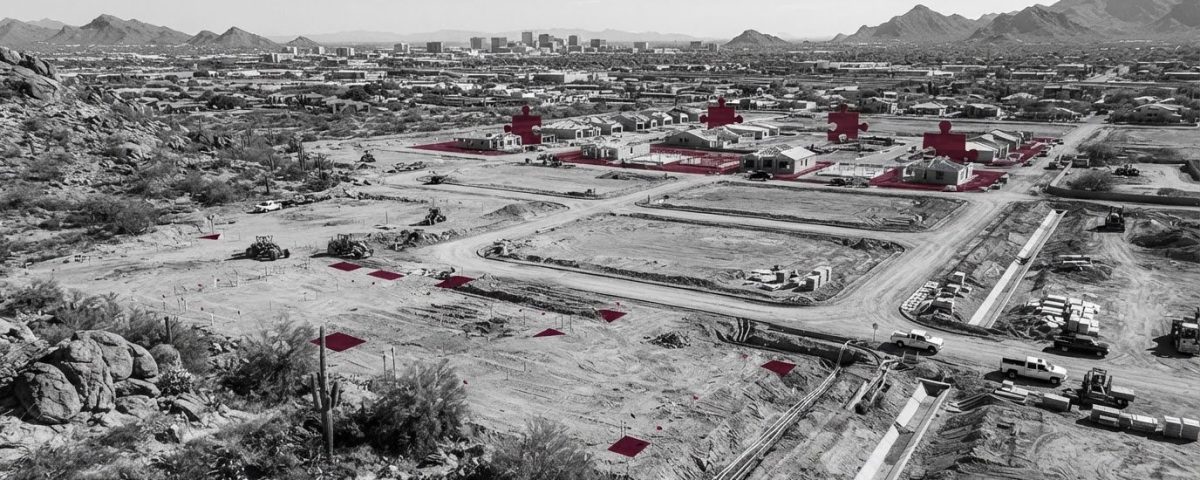
Can land development loans fund the work that turns an Arizona parcel into a build-ready site? The answer depends on the project’s stage and plan, not just the loan label. Buying raw land, grading a site, installing roads or utilities, and securing permits are different needs. Zoning, legal access, utility capacity, and approvals can shape both the financing request and the project budget.
Before committing to a parcel, map the work that remains and identify which steps depend on approvals or infrastructure. This guide explains how land development financing can fit different project stages, what expenses a project plan might include, and what a lender typically assesses. It also shows how to organize parcel details, development costs, approvals, and a practical repayment strategy into a clear financing request.
We’ll compare land, development, and construction financing, then outline the documents and site information to prepare. Applewood Funding Inc offers land and construction financing for Arizona real estate projects, including land development. Whether you’re evaluating a parcel in Phoenix, Scottsdale, Glendale, Peoria, Tempe, Mesa, Sedona, Flagstaff, or Tucson, start by matching the financing plan to the work the site needs.
Key Takeaways
- Match financing to the parcel’s readiness, from land acquisition to site improvements and vertical construction.
- Land development loans are assessed against the full project plan, not land value alone.
- Compare loan purpose, project stage, and planning inputs rather than relying on financing labels alone.
- Build a stronger request by organizing parcel details, local due diligence, costs, and a clear repayment path.
- Applewood Funding offers land and construction financing for Arizona real estate projects.
What Land Development Loans Can Fund at Each Project Stage
Land development loans finance work that prepares a parcel for a planned use. Depending on the financing structure and project plan, funds may support land acquisition, site preparation, horizontal infrastructure, or a combination of these needs. The scope matters: financing to buy a parcel does not automatically cover the cost of making it build-ready.
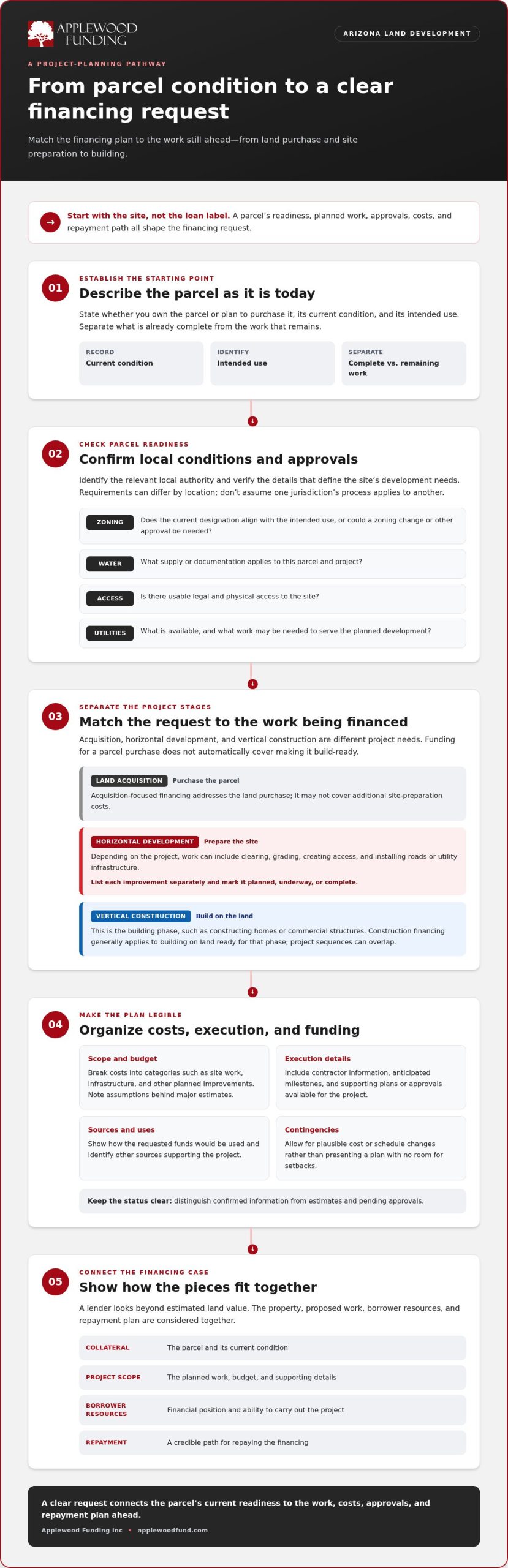
Land development involves preparing land for a future use, which can include planning and physical site improvements. To understand what financing your project needs, divide the work into stages. Record what is complete, what remains, which tasks need approval, and which costs belong to each phase. For example, a parcel that already has legal access and utility connections presents a different scope from one that still needs roads, grading, and infrastructure.
Land acquisition, horizontal development, and construction are different stages
Acquisition is the purchase of a parcel before planned improvement work begins. Financing focused on acquisition addresses the land purchase. It may not cover the additional cost of preparing the site.
Horizontal development prepares the site for its intended use. Depending on the project, this can include clearing, grading, creating access, and installing roads or utility infrastructure. List each improvement separately in the budget, and note whether it is planned, underway, or complete.
Vertical construction is the building phase, such as constructing homes or commercial structures. It follows land preparation, though project sequences can overlap. Raw land financing addresses the purchase of undeveloped property; development financing addresses the work planned to prepare land for use. Construction financing, in turn, generally applies to building on land that is ready for that phase.
Why Arizona parcel readiness changes the financing conversation
Two Arizona parcels can face different review pathways based on their location and planned use. A site within Phoenix may involve city review, while land in an unincorporated area may fall under county processes. A parcel in Scottsdale, Glendale, Peoria, Tempe, or Mesa may have different local planning and infrastructure considerations from a rural property near Sedona, Flagstaff, or Tucson. Rural parcels can also raise practical questions about access and utilities that differ from those for land near an established urban network. Do not assume that requirements in one jurisdiction apply to another.
Before shaping a financing request, identify the relevant local authority and confirm key parcel details. Focus on:
- Zoning: Does the current designation align with the intended use, or could a zoning change or other approval be needed?
- Water: What supply or documentation applies to this parcel and project?
- Access: Is there usable legal and physical access to the site?
- Infrastructure: What utilities are available, and what work may be needed to serve the planned development?
These details help define the project scope before you discuss financing. Applewood Funding offers land and construction loans for Arizona real estate projects, including land development. Present the parcel’s current condition and planned improvements clearly so the financing request reflects the work ahead.
How Land Development Loans Work: Collateral, Project Scope, and Repayment
A lender assessing land development loans looks beyond the parcel’s estimated value. The key question is whether the property, proposed work, borrower resources, and repayment plan fit together. A valuable site may still present financing challenges if development costs are unclear, key approvals remain uncertain, or the project lacks a credible repayment path.
Think of the request as one connected plan. The parcel serves as collateral, while the budget and execution plan show what the financing would support. The lender may also consider the borrower’s financial position and ability to carry out the project. These factors are evaluated together, rather than as a checklist where one strong figure settles the decision.
What a lender may review in a development proposal
Make the project easy to understand. Start with whether you own the parcel or plan to purchase it, its current condition, and its intended end use. Then explain the work needed to reach that use, who will perform it, and how the project is expected to progress. Separate confirmed information from estimates and pending approvals.
- Scope and budget: Break costs into clear categories, such as site work, infrastructure, and other planned improvements. Note the assumptions behind major estimates.
- Execution details: Include contractor information, anticipated milestones, and supporting plans or approvals available for the project.
- Sources and uses: Show how the requested funds would be used and identify the other sources supporting the project.
- Contingencies: Allow for plausible cost or schedule changes instead of presenting a plan with no room for setbacks.
A clear budget helps show whether the proposed financing matches the actual work. It also makes it easier to assess how the plan could change if costs rise or a milestone takes longer than expected. For an overview of government financing for land development, the U.S. Department of Agriculture outlines Rural Housing Site Loan programs for housing sites.
How collateral and the exit strategy fit together
Collateral analysis considers the property and its circumstances, including its value and any existing liens. Liens can affect the equity available to support financing. But collateral alone does not explain how the project will repay the loan. Pair property information with a realistic exit plan.
Possible exits depend on the project. A developer might plan to sell improved lots, refinance, or transition to construction financing after site preparation. Each path rests on assumptions, such as market demand, project completion, or eligibility for later financing. Treat these as plans, not guaranteed outcomes. Available structures, terms, and approval decisions vary by project.
Applewood Funding offers land and construction financing for real estate projects. To discuss your project, prepare the parcel details, proposed scope, budget, and intended exit for a land financing project discussion.
Land Development Loan vs. Land Loan or Construction Loan
Choose financing based on the work the project needs, not just the name of the loan. One loan may cover only the parcel purchase, another may support site improvements, and construction financing generally applies to building. Some projects need financing for more than one stage, so do not assume a single loan will carry the project from raw land to completed structures.
| Financing type | Purpose and project stage | Typical planning inputs | Possible next step |
|---|---|---|---|
| Land loan | Purchase or hold a parcel, often before improvements begin. | Parcel details, intended use, current condition, and purchase information. | Plan for approvals and site work, then assess whether development financing is needed. |
| Land development loan | Fund some or all planned work to prepare land for its intended use. | Development scope, improvement budget, milestones, and project exit. | Complete planned site work and evaluate financing for the next phase. |
| Construction loan | Finance vertical building, such as homes or commercial structures, when the project is ready for that stage. | Building plans, construction budget, schedule, and repayment plan. | Complete construction and follow the project’s repayment or exit plan. |
These are general distinctions, not universal definitions. Lenders may use the same label for different structures or structure a loan to address more than one need. Compare what the financing can cover, when funds are used, and how repayment is planned. Evaluate land development loans against the actual scope, not the label alone.
When land financing fits better than construction financing
If you’re acquiring or holding land, start by considering how the purchase fits the project plan. If the parcel needs entitlement work, grading, access, or utility infrastructure before construction can begin, development financing may be the more relevant comparison. The parcel’s current status and intended use shape the financing need. A site ready for vertical construction presents a different need from one that still requires substantial preparation.
Plan the transition before site work begins
Map the project in sequence: review the parcel and approvals, complete planned site work, then advance building plans and construction. Consider the next financing stage early. For example, if you plan to build after installing infrastructure, identify the documents and milestones that may support a later construction financing request. A future loan, refinance, or extension is not automatic; each depends on the project and the lender’s review.
For a project approaching the building phase, discuss Applewood Funding’s construction and land financing in relation to the parcel, development work, and intended next step.
How to Prepare an Arizona Land Development Loan Request
A well-organized request makes it easier to understand what the parcel needs, what development will cost, and how the work is expected to proceed. Build the file in a logical order, and keep confirmed information separate from estimates and pending reviews.
Build a parcel and project file before discussing financing
Start with the property and the plan. Include parcel identification, ownership or purchase details, available property records, current site condition, intended use, and proposed improvements. Add preliminary budgets, relevant plans, contractor or consultant details, and milestones. A realistic schedule should show dependencies, such as approvals or infrastructure work that must happen before later tasks. Do not promise a completion date before those steps are understood.
Check Arizona approvals and infrastructure by jurisdiction
Identify the city or county responsible for parcel-specific planning information. Requirements can differ across jurisdictions and between incorporated and unincorporated areas. Confirm zoning, entitlement status, road access, utility availability, water requirements, and any environmental review relevant to the property with the appropriate local authority or qualified project professionals. Record what is approved, what is under review, and what has not been submitted. A pending review is not an approval.
Use this sequence to prepare a clear financing discussion:
- Define the scope. State the intended use and list the improvements needed to reach the next project milestone.
- Review the parcel. Gather property records and identify zoning, access, water, utility, and environmental items that need verification.
- Build the budget. Organize estimated costs by work category, note assumptions, and include reasonable contingencies.
- Assemble documents. Collect purchase or ownership details, plans, available approvals, contractor or consultant information, and a schedule tied to project dependencies.
- Discuss financing. Present the funding purpose, project stage, available resources, and intended repayment or exit plan.
This preparation connects the financing request to the parcel’s actual status, rather than treating every land opportunity the same. For land development loans, clear documentation of what is known and what remains unresolved makes the project plan easier to assess.
Have a parcel and scope in view? Discuss your Arizona land financing scenario with Applewood Funding. Outline the budget, site details, and intended next step.
Explore Land Development Financing with Applewood Funding
Land development financing should reflect the parcel’s current condition and the work needed to move the project forward. Applewood Funding offers land and construction loans for Arizona real estate projects, including land development. A clear project summary helps connect the financing discussion to the actual scope, whether you’re acquiring land, preparing a site, or planning for construction.
What to bring to an initial financing conversation
Bring the details that show where the project stands and where it is headed. A complete picture grounds the discussion in the parcel, the work, and your proposed repayment plan. Organize these basics before you begin:
- Parcel and status: Share the location, ownership or purchase status, current condition, and development stage. For a Phoenix-area parcel or a rural Arizona property, include the relevant city or county jurisdiction if known.
- Proposed work: Describe the intended use and improvements, such as grading, access, or utility work, and note which items are complete, planned, or awaiting review.
- Budget and schedule: Provide preliminary costs by work category and a schedule based on realistic assumptions and dependencies. Distinguish estimates from confirmed bids or dates.
- Supporting records: Include available property records, plans, contractor or consultant details, and approval documents. Identify pending reviews separately from approvals already received.
- Repayment or exit: Explain how you expect the project to repay the financing, such as through a sale, refinance, or transition to construction financing. Treat the plan as a project assumption, not a guaranteed outcome.
Match the financing conversation to your Arizona project
Keep the request specific to the site. A parcel near Phoenix may have different infrastructure and review considerations from land in another Arizona community. The goal is to describe the actual jurisdiction, current parcel status, and work needed, then separate verified details from open questions. That approach applies whether the project is in Mesa, Tempe, Scottsdale, Glendale, Peoria, Sedona, Flagstaff, Tucson, or elsewhere in Arizona.
If you’re still organizing the site-readiness picture, revisit the earlier guidance in this article on preparing a parcel for development. Then bring those findings into the financing discussion. Applewood Funding offers land and construction financing in the context of your project’s location, scope, budget, and intended exit. The request should reflect the actual parcel and development plan.
Ready to put the project details on the table? Discuss your Arizona land financing project with Applewood Funding.
Turn Your Arizona Land Plan Into a Clear Next Step
The right financing conversation starts with the project, not just the parcel. Land development loans should fit the work ahead, whether you’re purchasing land, preparing a site, or planning vertical construction. A realistic budget, clear scope, local due diligence, and practical repayment plan help show how those stages connect.
Applewood Funding offers land and construction loans and alternative, asset-based real estate financing for projects in Arizona, including Phoenix and other communities. Bring the parcel details, development plans, budget, and intended exit to a discussion tailored to your project. Financing structure and approval depend on the project’s details, so start with a clear picture of what’s needed and what comes next.
Discuss your Arizona land development project and take a practical step toward moving your plans forward.
Frequently Asked Questions
What is a land development loan?
A land development loan is financing intended to support work that prepares a parcel for a planned use. Depending on the project and financing structure, land development loans may address acquisition, site preparation, or infrastructure needs. They differ from financing focused only on buying undeveloped land or building structures. In Arizona, the parcel’s current condition, planned improvements, and local review status help define the project scope.
What can a land development loan be used for?
A land development loan may fund eligible expenses tied to preparing land, such as clearing, grading, access improvements, roads, or utility infrastructure. The exact uses depend on the financing structure, collateral, and project plan, so do not assume every cost is covered. For a parcel in Phoenix, Mesa, or a rural Arizona community, describe the proposed work and separate land purchase costs from site-improvement costs.
How do land development loans differ from land loans?
A land loan generally focuses on purchasing or holding a parcel, while development financing is planned around improvements that prepare land for its intended use. A project might need acquisition funding first, then capital for infrastructure or other site work. Loan labels vary, so compare actual uses, project stage, and repayment structure. An Arizona parcel’s readiness can help clarify which financing need comes first.
Is it difficult to qualify for a land development loan?
Qualification depends on the parcel, borrower, project scope, budget, and repayment plan. Lenders may review property value and existing liens alongside the borrower’s capacity and the plan for completing the work. Applewood Funding provides alternative, asset-based real estate financing, including land and construction loans. For projects in Scottsdale, Glendale, Peoria, Tempe, or other Arizona communities, present the site and development plan clearly. Approval is not guaranteed.
What documents do I need for a land development loan?
Prepare parcel identification, ownership or purchase details, available property records, and a summary of the intended use and current development stage. Add a preliminary budget, proposed schedule, relevant plans, contractor or consultant information, and available approval documents. Include a clear repayment or exit plan. For a project in Sedona, Flagstaff, or elsewhere in Arizona, distinguish confirmed approvals from pending reviews and label estimates accurately.
Can I get a land development loan in Arizona before all approvals are complete?
Possibly, but pending approvals can affect how a project is assessed, and requirements vary by lender and parcel. Clearly identify what is approved, what is under review, and what has not been submitted. Confirm zoning, access, water, utilities, and applicable reviews with the relevant local authority. A Phoenix-area parcel and land in unincorporated Arizona, for example, may follow different review pathways. Do not present an application or pending review as an approval.
Can a land development loan also pay for building construction?
It may, depending on the financing structure, collateral, and project, but site-preparation financing and vertical construction financing often address different stages. A plan might cover acquisition and improvements first, then use construction financing for buildings once the site is ready. Do not assume one loan covers every phase or that later financing is automatic. Applewood Funding offers land and construction loans for Arizona projects, including in Tucson and other communities.