

Scottsdale Bridge Loans for Real Estate: A Borrower’s Guide
October 9, 2026How to Finance a Rental Property in Tucson: 2026 Guide
The lowest-rate loan may be the wrong fit for a Tucson rental. A conventional mortgage can look attractive on paper, but if its income requirements or timeline don’t match your situation, it may not help you secure the property. The better question is how to finance a rental property in tucson based on the deal’s cash flow, your borrower profile, and your exit plan.
It’s reasonable to worry that projected rent won’t cover the mortgage and day-to-day ownership costs. Rent is only one part of the picture. Vacancy, repairs, taxes, insurance, and financing terms can all change the numbers, so build a realistic estimate before choosing a loan.
This guide compares conventional, DSCR, portfolio, and private financing, including the trade-offs that matter when your timeline is tight or the property needs work. You’ll also learn how to assess rental income against operating costs, which Tucson property and rental details to review, and what to gather for a focused financing package. Then you can match the funding route to the property, your plan, and your next move.
Key Takeaways
- Match financing to the property’s condition, your borrower profile, and your investment timeline rather than focusing on the rate alone.
- Compare conventional, DSCR, portfolio, and private loans by qualification focus, documentation, flexibility, and potential trade-offs.
- To decide how to finance a rental property in tucson, use comparable local rentals and realistic operating assumptions to test the deal’s income potential.
- Stress-test rent, vacancy, expenses, and repayment assumptions before settling on a financing route.
- Organize purchase details, property information, rent assumptions, expenses, and borrower records into a focused financing plan.
How Tucson Rental Property Financing Starts With the Deal
Start with the investment goal: finance a Tucson property whose rent and costs support the plan, whether you intend to hold it for steady income or improve it before renting. The purchase price matters, but it can’t tell you whether the numbers work. Two properties at similar prices may have different rent potential, repair needs, insurance costs, or financing fits.
Rental-property financing is funding structured around an investment property and its intended use. The financing route can affect what a lender reviews, which records you’ll need, and how the property’s condition factors into the decision. For example, investors exploring a hard money loan should understand how this type of financing is commonly associated with real estate investment, then compare the structure with the property’s plan and timeline.
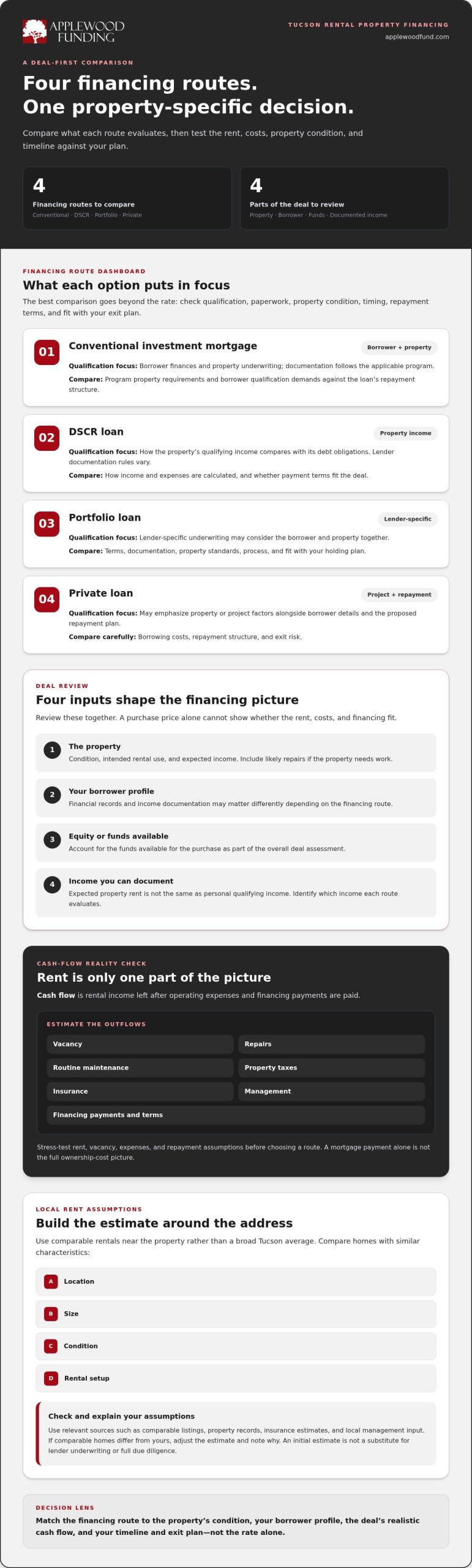
Cash flow is rental income left after operating expenses and financing payments are paid. For a useful first estimate, count the likely outflows, not just the mortgage payment. A deal that appears affordable from its price alone may look different after vacancy, upkeep, taxes, insurance, and management enter the picture.
What lenders and investors evaluate in a rental-property deal
Separate the deal into four parts: the property, your finances as the borrower, the equity or funds available for the purchase, and the income you can document. Property details may include its condition, intended rental use, and expected income. Borrower information can include financial records and income documentation. The exact underwriting criteria depend on the lender and loan program, so don’t assume one route’s requirements apply to every option.
Keep the income categories distinct. A property’s expected rent is not the same as your personal qualifying income. Some financing approaches place more weight on the property’s income, while others may examine the borrower’s financial profile and documented income. When considering how to finance a rental property in tucson, identify what each route evaluates before relying on a rent estimate or assuming personal income will carry the application.
Build a Tucson-specific first-pass property picture
Use comparable rentals near the property, not a broad Tucson average, to form a rent assumption. Look for similarities in location, size, condition, and rental setup. Then estimate vacancy, repairs, routine maintenance, insurance, property taxes, management, and financing outflows. Verify neighborhood-level rent and expense assumptions with current, relevant sources, such as comparable listings, property records, insurance estimates, and local management input. Avoid treating an unverified citywide figure as a forecast for one address.
Make the assumptions visible. If the property needs work, include likely repairs rather than treating the current condition as rent-ready. If comparable homes differ from yours, adjust the estimate and note why. This first-pass picture won’t replace lender underwriting or full due diligence. It will help you spot gaps early and bring a clearer, property-specific case into the financing comparison.
Compare Rental Property Financing Options for a Tucson Purchase
Choose the financing structure by asking what the deal needs and what you can document. A Tucson rental that’s ready for tenants may present a different financing case than a property needing significant work. The right comparison includes more than the interest rate: look at qualification focus, paperwork, property condition, process timing, repayment terms, and how each option fits your exit plan.
| Financing route | Qualification and documentation focus | Property, timeline, and trade-offs |
|---|---|---|
| Conventional investment mortgage | Typically reviews borrower finances and property underwriting; documentation follows the program. | Program rules shape property requirements and process. Compare the borrower qualification demands with the loan’s repayment structure. |
| DSCR loan | Focuses on how the property’s qualifying income compares with its debt obligations; lender documentation rules vary. | Useful to evaluate when rental performance is central to the request. Confirm how income and expenses are calculated and assess payment terms against the deal. |
| Portfolio loan | Uses lender-specific underwriting standards, which may consider the borrower and property together. | Terms, documentation, property standards, and process can differ by lender. Clarify how the individual structure fits your holding plan. |
| Private loan | May emphasize property or project factors, alongside borrower details and the proposed repayment plan. | Can be considered when asset or project details drive the request. Weigh borrowing costs, repayment structure, and exit risk carefully. |
When conventional, DSCR, or portfolio financing may fit
Conventional investment mortgages generally put borrower qualification and property underwriting at the center, subject to the applicable program rules. Fannie Mae offers information about its role in housing finance, but individual loan requirements depend on the lender and program. DSCR financing evaluates rental income in relation to debt obligations, so the property’s income assumptions become especially important. Portfolio lending is lender-specific; its underwriting approach may differ from standardized program rules. In every case, confirm documentation needs and property criteria for the actual application.
Use a sample property to compare the routes. If documented borrower income is a central strength, explore how conventional underwriting treats your application. If the rental figures are the key part of the case, examine how a DSCR lender calculates qualifying income and debt. If the property or borrower situation doesn’t align neatly with a standard program, a portfolio structure may merit comparison. None is an automatic fit.
Where private rental-property loans may enter the comparison
Private, asset-based financing may be relevant when the property or project is central to the request. Flexibility can come with trade-offs: compare total borrowing costs, payment and repayment structure, and the risk that your planned sale, refinance, or other exit doesn’t happen as expected. Review hard money loan pros and cons as part of that assessment. For a property-specific financing discussion, explore rental-property financing with Applewood Funding Inc.
To decide how to finance a rental property in tucson, compare each route against the same property assumptions and your intended timeline. Lender, borrower, and property details all matter. The goal isn’t to find a universally best loan; it’s to understand which structure fits the deal and leaves a workable plan for repayment.
How to Test a Tucson Rental Deal Before Choosing Financing
Run the property through the same checks before comparing loan options. A disciplined review helps separate a promising rent estimate from income you can support with current local evidence, and it shows how changes in expenses or financing could affect the plan.
- Verify the property. Review its condition, intended rental use, and any known repair needs. Confirm the parcel details so you can check property-specific tax information rather than relying on a general estimate.
- Validate expected income. Compare current rentals similar in size, condition, and setup within the immediate Tucson area. Where available, use completed rental data as well as active listings, and account for differences between comparable properties and the one you’re evaluating.
- Model operating costs. Include vacancy, repairs, maintenance, insurance, taxes, utilities, and management where applicable. Identify which costs are known, which are estimates, and what needs further verification.
- Stress-test the assumptions. Recalculate the deal with lower rent, longer vacancy, higher repair or insurance costs, and a longer holding period. Check whether the plan still works when conditions are less favorable than your base estimate.
- Compare financing against the results. Estimate the property’s net operating income, then compare it with expected debt obligations under each financing structure. Consider how the payment and repayment terms align with the property’s projected performance and your exit plan.
Estimate rental income and operating costs carefully
Choose comparables for their relevance, not because they make the deal look stronger. A nearby rental with a different layout or condition may be a weak match. Keep notes on the properties and sources behind your rent estimate, and avoid assuming the unit will stay occupied or need no repairs. Verify property taxes using current Pima County and City of Tucson information tied to the specific parcel. For insurance and utilities, use property-specific estimates where possible instead of applying broad assumptions.
A rental projection is only as reliable as its verified income and expense assumptions. Make uncertain inputs visible. That way, you can see which assumptions have the most influence on the result and what needs attention before you commit to a financing route.
Stress-test the deal against financing and exit scenarios
Compare net operating income, which is income after operating expenses and before debt payments, with the expected debt obligations for each option. Then test what happens if rent is lower, vacancy lasts longer, or repairs and insurance cost more than planned. These changes can affect whether the property supports the proposed repayment structure.
State your intended exit clearly: hold the property long term, refinance, or sell. Model the plan around that choice, but don’t treat a future refinance or sale as guaranteed. This is the practical core of how to finance a rental property in tucson: check the local property numbers first, then choose a financing structure that fits both the deal and your intended timeline.
Prepare Your Tucson Rental Property Financing Plan
A focused financing package makes the deal easier to review. Put the property facts, rental assumptions, requested financing, and borrower records in one organized file. Keep estimates separate from verified documents, and label where each figure came from. That gives you a clearer picture of the request and helps surface missing details before they slow your planning.
Documents and deal details to organize
Start with a short property summary: address, purchase details, intended use, current condition, and any planned repairs. Add the purchase contract or available property information, plus a budget that separates acquisition needs from repair and operating costs. State the financing amount you’re seeking and describe how you expect to repay it, based on the investment plan.
Next, arrange borrower and property records according to the selected lender’s process. Requirements differ by financing approach, so use the lender’s requested document list as your guide. Potentially relevant records include:
- Income documents and financial statements that support the borrower profile
- Asset and liability information, including available funds for the transaction
- Property records and details about condition, ownership, or planned work
- Rent evidence, such as comparable listings or available rental records for similar nearby properties
- A written operating budget that explains assumptions for vacancy, maintenance, insurance, taxes, utilities, and management where applicable
Make the figures easy to follow. If a rent estimate comes from comparable properties, identify them and note meaningful differences. If an expense is still an estimate, mark it as such and explain how you arrived at it. This helps keep projections transparent rather than making an unverified assumption look like a confirmed number.
Tucson due diligence to complete alongside financing
Check the specific parcel, not just the neighborhood. Review zoning and rental-use information through current City of Tucson resources, and verify parcel and tax details with the relevant Pima County offices. Use current official sources for applicable local requirements. Treat this as fact-finding, not a legal conclusion, and seek qualified guidance if a particular use or requirement is unclear.
Inspect the property’s condition and record repairs that could affect rent readiness, operating costs, or the financing request. Consider how insurance needs may relate to the property’s characteristics and intended use. Keep repair estimates and supporting records with the budget, then update your projections if new information changes the plan.
A well-prepared file connects local property facts to the financing request. It can help you explain why your rent estimate is reasonable, how you accounted for ownership costs, and what the funds are intended to support. If you’re ready to discuss the deal and your funding plan, discuss your Arizona real estate financing needs.
Choose a Financing Route and Move Your Tucson Rental Plan Forward
There’s no universally best loan for every Tucson rental. Choose by fit: how the lender evaluates you and the property, whether the projected numbers support repayment, how the structure aligns with your timing, and what you plan to do when the loan term ends. A lower advertised rate alone can’t tell you whether a financing route fits your investment plan.
Bring the same deal assumptions to each comparison. Use verified local rent evidence, realistic expenses, and the property’s condition. Then weigh qualification requirements, total borrowing costs, repayment structure, and flexibility together. If an option depends on an exit such as refinancing or selling, account for the possibility that your timing or circumstances may change.
Match the financing route to your investor situation
Conventional financing may suit borrowers and properties that fit applicable lender and program criteria. An income-focused approach such as DSCR lending may fit a deal where the property’s rental income is central to underwriting. Portfolio financing can be worth exploring when a lender’s individual underwriting model aligns with the property and borrower. Private, asset-based financing may offer another evaluation approach when project or property factors lead the request.
Use these questions to narrow your comparison:
- Which parts of your borrower profile and records does the financing approach emphasize?
- How does the lender evaluate property condition and expected rental income?
- Do the projected property numbers support the expected payment and repayment plan?
- Does the structure match your intended holding period and exit?
What to discuss when exploring a rental property loan
Prepare a concise overview of the Tucson property, its intended use, purchase details, and current condition. Bring your rent assumptions and supporting comparables, plus an expense estimate that explains key operating costs. Be clear about the financing amount you’re seeking, your planned holding period, how you expect to repay the debt, and whether the intended exit is a long-term hold, refinance, or sale.
That information gives a financing conversation a practical starting point. Applewood Funding offers rental property loans and private, alternative real estate financing as potential routes to discuss an investment plan. You can review Applewood Funding’s rental property financing information alongside your property analysis, then discuss how the request fits your borrower situation, deal numbers, and timeline.
That’s the core of how to finance a rental property in tucson: match the financing structure to the actual deal, not a general rule of thumb. Gather your property summary, income assumptions, expense model, and exit plan. Contact Applewood Funding about rental property financing to discuss your investment financing needs.
Turn Your Tucson Rental Analysis Into a Clear Next Step
A rental investment becomes easier to act on when the numbers, timing, and funding request all point in the same direction. Use your property analysis as a working decision tool, not a one-time calculation. If rent assumptions, expenses, or project plans change, update the financing picture before you commit. That keeps your next move tied to the deal in front of you.
The practical answer to how to finance a rental property in tucson depends on the specific property and your investment plan. Bring your purchase details, income projections, expense assumptions, and intended exit into the next financing conversation. You’ll be better prepared to discuss trade-offs and identify which questions still need answers.
Applewood Funding lists rental property loans and provides private and alternative real estate financing. Take the next step with a focused plan: discuss your rental property financing plan. A thoughtful deal review can help you move forward with greater clarity and confidence.
Frequently Asked Questions
Can I use projected rent to qualify for a Tucson rental property loan?
Sometimes, but the lender and loan program determine how projected rent is counted. A DSCR approach typically examines property income against debt obligations, while other underwriting may focus more on your personal qualifying income. For a Tucson property without a signed lease, ask how the lender will assess expected rent and what evidence it accepts. The answer to how to finance a rental property in tucson can depend on that distinction.
Is a DSCR loan the same as a conventional investment property mortgage?
No. A DSCR loan focuses on the relationship between a property’s income and its debt obligations. A conventional investment mortgage generally follows its own program and lender criteria, which may place more emphasis on borrower qualification and property underwriting. Compare how each lender calculates income, handles documentation, and structures repayment. For an investor considering properties in Tucson or elsewhere in Arizona, these differences can change which application approach fits the deal.
Can I finance a Tucson rental property that needs repairs?
Possibly. The property’s condition, repair scope, financing structure, and lender requirements all matter. A home needing cosmetic updates may be viewed differently from one with major issues that affect its use or rent readiness. Document the needed work, gather estimates, and explain whether repairs happen before or after renting. Private or asset-based financing may be relevant for some project-driven requests, but terms and property requirements depend on the lender.
Should I buy a Tucson rental property in my personal name or an LLC?
There isn’t one answer that fits every investor. Ownership can affect liability planning, taxes, recordkeeping, and how a lender structures or reviews the loan. Before making an offer, discuss the choice with a qualified attorney or tax professional and understand the lender’s borrower and title requirements. If you’re comparing Tucson investments with properties around Phoenix, Mesa, or Tempe, consider the ownership structure for each deal before signing purchase documents.
What documents should I prepare for a rental property loan application?
Prepare the property address and purchase details, a condition summary, your intended rental use, and a budget for planned repairs. Organize borrower income, asset, and liability records, plus property documents relevant to the financing approach. Include evidence for expected rent and a clear expense breakdown. Keep digital copies current and make sure names, addresses, and figures match across records. The lender’s process determines which documents are needed for your specific request.
Do Tucson rental properties have different rules by neighborhood?
They can. Zoning, parcel jurisdiction, property use, and private restrictions may affect what’s permitted at a particular address. Don’t assume a rule that applies to one Tucson neighborhood applies throughout the city or Pima County. Check current official records for the parcel and review any applicable association documents. If you’re considering a different rental setup, verify the property’s permitted use before basing income projections or financing plans on it.