


How to Finance a Rental Property in Tucson: 2026 Guide
October 10, 2026How to Leverage Home Equity for Business: Options, Risks, and Next Steps

What if the funding that moves your business forward also puts your home at risk? If you’re weighing how to leverage home equity for business, the right choice isn’t simply the option that provides cash fastest. It’s the one that fits your business purpose, repayment plan, and comfort with using your home as collateral.
That trade-off can feel especially difficult when traditional income documents don’t reflect the way self-employed cash flow works. The stakes are real: if you can’t repay a loan secured by your home, foreclosure may be a risk. Start with a clear view of both the opportunity and the downside.
This guide compares HELOCs, home equity loans, cash-out refinancing, and private cash-out hard money financing. You’ll learn what to weigh before borrowing, how to connect funding to a realistic repayment source, and what to prepare before exploring an Arizona lending option. Applewood Funding Inc offers cash-out hard money options for borrowers considering property equity for business and other needs. Compare the options against your funding goal, repayment plan, and comfort with putting your home on the line.
Key Takeaways
- Define the business funding need and repayment source before deciding how much equity to access.
- Compare each borrowing structure by how you draw funds and repay, not just by the amount available.
- Stress-test payments against slower sales, delayed revenue, and the possibility that the business plan falls short.
- To leverage home equity for business, prepare a clear funding request and review the loan documents with your home-risk limits in mind.
- Arizona borrowers can explore Applewood Funding’s cash-out hard money options, tailored to the property, business purpose, and borrower’s situation.
Can You Leverage Home Equity for Business? Start With the Funding Goal
Yes, homeowners may be able to borrow against their property and use the funds for a business purpose. In practical terms, leveraging home equity for business means borrowing money secured by your home to pay for a defined business need. The financing structure and approval depend on the lender and the borrower’s situation.
First, distinguish equity from cash you can spend. Home equity is the portion of your property’s value that remains after accounting for debt secured by it. For a basic explanation, see understanding home equity. Equity isn’t money you can use without cost or obligation: borrowing creates debt that must be repaid under the loan terms.
That makes your funding goal the right starting point. “I need extra working capital” is a concern, not yet a plan. What will the money pay for? When will the expense occur? What business cash flow, asset sale, or other realistic source will cover repayment? Clear answers help you judge whether borrowing against your home fits the need.
Which business needs might home-equity funds address?
A specific use is easier to evaluate than an open-ended request. Funds might cover equipment needed to fulfill new orders, inventory for a planned seasonal push, startup costs tied to a launch, or a time-sensitive business expense with a clear payoff path. Estimate the amount from quotes, invoices, or a documented budget instead of borrowing an arbitrary cushion.
Next, connect the expense to a repayment timeline. Equipment may support revenue over time, while inventory may be repaid from expected sales. Neither outcome is guaranteed, so test what happens if orders arrive late or sales fall short. Using home equity to cover recurring losses without a recovery plan can turn a business cash-flow problem into a risk to your home.
What does it mean to put your home behind business funding?
If a loan is secured by your property, your home serves as collateral for the debt. That connection matters even when the funds go to the business rather than household expenses. If payments are missed, the property may be at risk, subject to the loan terms and applicable law. Business success, tax treatment, and loan approval aren’t guaranteed.
Before moving forward, write down three things: the exact business use, the expected repayment source, and your fallback if that source is delayed or doesn’t materialize. Ask whether the household could manage payments if the business stopped contributing. If the plan only works under the best-case forecast, pause and reassess the amount, timing, or financing route.
Keep both sides of the trade-off in view. Home equity may make capital accessible for a defined opportunity, but it doesn’t make that opportunity safer or repayment automatic. Cost the planned use and map repayment before comparing financing options.
Compare HELOCs, Home Equity Loans, Cash-Out Refinances, and Private Lending
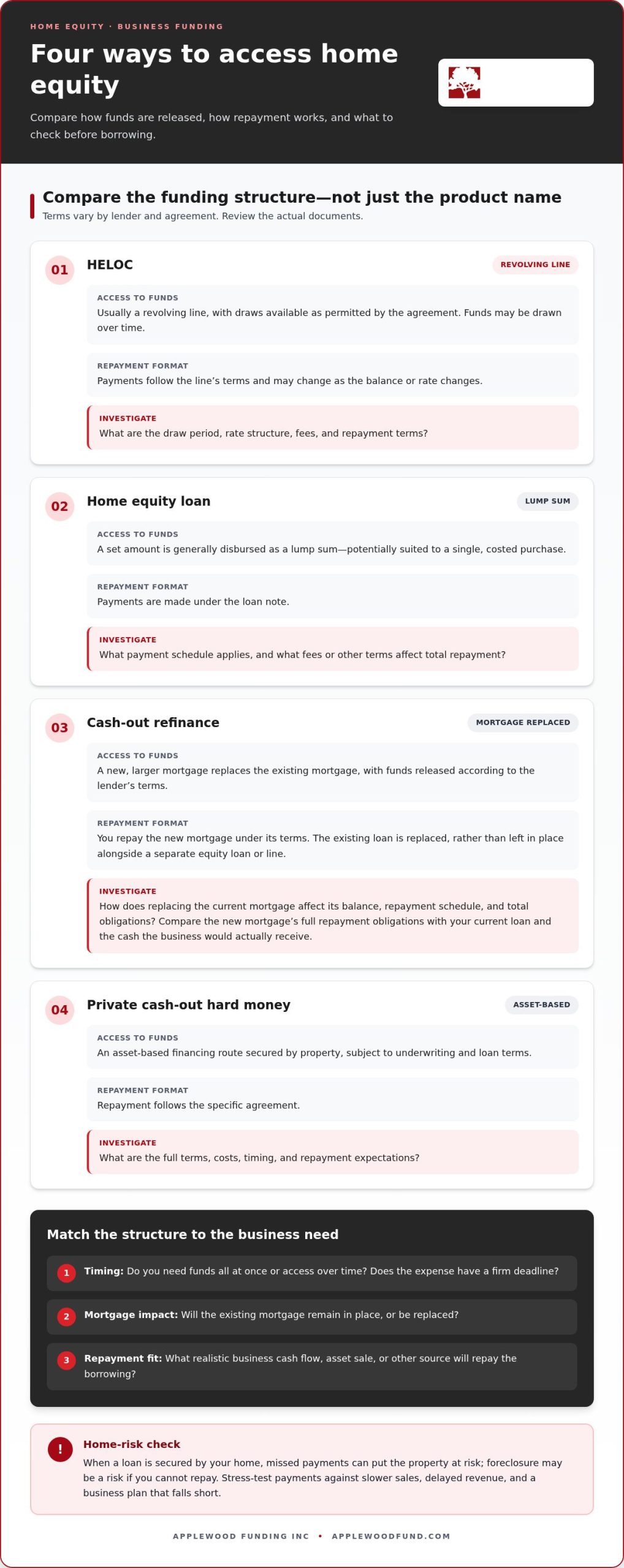
Once you’ve defined the business need, compare how each financing route releases funds and how repayment works. The right fit depends on whether you need access to funds all at once or over time, what happens to your existing mortgage, and whether the payment structure fits your business cash flow. Terms vary by lender and loan agreement, so compare the actual documents, not just product names.
| Option | Access structure | Repayment format | Questions to investigate |
|---|---|---|---|
| HELOC | Usually a revolving line, with draws available as permitted by the agreement. | Payments follow the line’s terms and may change as the balance or rate changes. | What are the draw period, rate structure, fees, and repayment terms? |
| Home equity loan | A set amount is generally disbursed as a lump sum. | Payments are made under the loan note. | What payment schedule applies, and what fees or other terms affect total repayment? |
| Cash-out refinance | A new, larger mortgage replaces the existing mortgage, with funds released according to the lender’s terms. | You repay the new mortgage under its terms. | How does replacing the current mortgage affect its balance, repayment schedule, and total obligations? |
| Private cash-out hard money | An asset-based financing route secured by property, subject to underwriting and loan terms. | Repayment follows the specific agreement. | What are the full terms, costs, timing, and repayment expectations? |
How do revolving credit and a lump-sum loan differ?
A HELOC can let you draw funds over time, which may suit business expenses that arrive in stages. Access depends on the agreement, and the line’s rate structure and repayment requirements matter. A home equity loan generally provides a defined amount up front, followed by payments under its note. That structure may be easier to match to a single, costed purchase. For either option, review draw periods, fees, rate terms, and repayment details before relying on the funds.
When might cash-out refinancing or private lending enter the comparison?
Cash-out refinancing changes the mortgage itself: the existing loan is replaced rather than left in place alongside a separate equity loan or line. Compare the new mortgage’s full repayment obligations with your current loan and the cash the business would actually receive. Funding timing also matters when an expense has a firm deadline.
Private cash-out hard money is an asset-based alternative, not an automatic fit. Underwriting and loan terms apply, so read the repayment obligations closely and weigh them against the project timeline. Applewood Funding Inc offers cash-out hard money loan options. If you’re weighing how to leverage home equity for business in Arizona, discuss your property and funding purpose with Applewood Funding Inc.
Is Using Your Home Equity for Business Worth the Risk?
Home equity can give a business owner another source of capital, potentially helping fund a planned purchase or bridge a timing gap. But access to funds is only one side of the decision. If financing is secured by your home, missed payments can put that property, including a primary residence, at risk under the loan terms and applicable law. The business may gain room to move, while your household takes on a real obligation.
Keep the business upside separate from the loan’s affordability. A growth forecast doesn’t ensure sales will arrive on schedule or that the business can make each payment. Before deciding to leverage home equity for business, test repayment against setbacks, not just the best-case plan. For another perspective on the trade-offs involved in asset-backed financing, see hard money loan pros and cons.
What repayment questions should you answer before borrowing?
Start with the payment source. Identify which business revenue or other funds will cover each payment and when that money is realistically expected. If repayment depends on a new contract, inventory sales, or a project finishing on time, plan for what happens if it doesn’t.
Run a stress test. Reduce expected revenue, increase operating expenses, and allow more time to reach profitability. Then look at household obligations as a whole, including your existing mortgage and the proposed new debt. Would payments remain manageable if the business contributed less than planned? If the answer depends on optimistic projections, the amount or structure may be too risky.
How can you limit exposure before committing?
Set guardrails for the decision. Borrow only for a documented business use, and build a repayment plan around defensible assumptions. Consider whether a smaller amount would meet the same need, or whether another funding source could avoid putting your home behind the debt. A narrower funding request can limit the obligation, though it doesn’t remove the collateral risk.
Use this quick review before moving forward:
- Purpose: Can you tie the requested funds to specific costs rather than a general cash cushion?
- Repayment: Is there a clear source for each payment if revenue is delayed or lower than expected?
- Household impact: Can your budget absorb the payments alongside existing obligations?
- Fallback: What practical steps would you take if the business plan underperforms?
Read the loan documents carefully so you understand the payment obligations and consequences of default. For questions about your specific legal or tax circumstances, seek independent advice from qualified legal and tax professionals. A sound decision isn’t the one with the most optimistic forecast. It’s the one whose repayment plan still makes sense when the business hits a rough patch.
Prepare to Leverage Home Equity for Business in Arizona
An organized request makes it easier to discuss financing options and understand what a lender may need to review. For Arizona homeowners, including business owners in Phoenix, Scottsdale, Glendale, Peoria, Tempe, Mesa, Sedona, Flagstaff, and Tucson, prepare the business case and property information together. Property value, existing liens, income, funding purpose, and repayment capacity may all shape the review. Use this sequence to get ready.
What should Phoenix-area business owners organize first?
- Define the request. Write down the business purpose, the amount needed, and the cost of each planned expense. Quotes, invoices, or a basic budget can connect the requested funds to actual needs.
- Gather property and debt records. Collect available information on the home, current mortgage, and any other liens secured by the property. Note the current loan balance and payment so the existing obligations are clear.
- Organize income and business records. Gather relevant documentation that helps explain household income, business activity, and cash flow. If traditional income records don’t capture how your self-employed business earns, organize supporting records that show the pattern and timing of income.
- Map repayment. Identify the expected payment source and the timeline for receiving those funds. Include a downside scenario, such as slower sales, delayed revenue, or higher expenses, and consider how household obligations would be handled.
- Compare the proposed terms with the plan. Review the loan documents against the intended business use and repayment schedule before signing. Make sure the payment structure and deadlines fit the cash-flow plan you’ve prepared.
Before a financing discussion, organize your property details, mortgage and lien information, income and business records, itemized funding request, and repayment timeline. Keep the documents current and make sure the figures tell one consistent story.
What should you understand before signing a home-secured loan?
Read the documents closely. Identify the property used as collateral, the payment schedule, the maturity date, any fees, and what the agreement says may happen if payments are missed. Don’t rely on a verbal summary when the written terms control. If a term is unclear, pause and get an explanation before you commit.
Check the fit from both directions: does the financing match the business purpose, and can the household manage repayment if business cash flow comes in late? For questions about your individual legal or tax circumstances, seek advice from a qualified Arizona attorney or tax professional.
Applewood Funding Inc offers financing for Arizona borrowers, including those in the Phoenix area, tailored to the property, purpose, and borrower’s situation. Talk with Applewood Funding Inc about your Arizona financing options.
Explore Applewood Funding’s Home-Equity Financing Options
Comparing financing routes is easier when the discussion starts with your actual business need and property, not a one-size-fits-all answer. Applewood Funding Inc is an Arizona alternative lender offering cash-out hard money options to help you leverage home equity for business. Financing is tailored to the property, business purpose, and borrower’s situation.
Private cash-out hard money is one route to evaluate, not a default choice for every homeowner. The useful question is whether the property, funding goal, and repayment plan align with financing terms you can manage. A discussion can help put those pieces in context without treating a particular structure or outcome as guaranteed.
How can a tailored financing conversation clarify your options?
Bring the funding purpose into focus. A request tied to a defined business expense gives the discussion a practical starting point: what the funds are intended to support, when they’re needed, and how the business expects to repay the debt. Add the property details and existing mortgage or liens so the asset is part of the financing picture.
Then explain the repayment plan, including what could change if revenue is delayed or falls short. Applewood Funding Inc alternative mortgage offerings include cash-out hard money financing, with details tailored to the borrower’s property, purpose, and project. Not every route suits every borrower. Compare proposed terms with the business timeline and household obligations before deciding.
If you’re ready to discuss the use of funds and the property behind the request, discuss your home-equity financing goals with Applewood Funding Inc.
What is a practical next step for Arizona homeowners?
Make the first discussion specific. You don’t need every answer in advance, but it helps to explain what you’re trying to fund and how you expect repayment to work. Arizona homeowners can bring a concise outline covering:
- The property and any existing mortgage or liens.
- The business purpose and the amount needed for planned costs.
- The expected repayment source, timing, and a realistic fallback plan.
Use the discussion to explore financing relevant to your circumstances and understand the terms under consideration. It is a starting point for evaluating options, not a promise of approval, a particular loan structure, or a specific outcome. Review any proposed documents and make sure the obligations fit your plan.
Ready to put your funding goal and property details on the table? Contact Applewood Funding Inc about your financing options.
Make Your Next Move With a Clear Plan
Before you leverage home equity for business, turn the decision into a simple written plan. State what the funds will make possible, what must happen for the business to repay them, and what you’ll do if that takes longer than expected. If the plan holds up under a less favorable scenario, you’ll have a stronger basis for discussing financing. If it doesn’t, adjusting the request or waiting is a decision, too.
You don’t need every detail figured out before starting a discussion. Bring your funding goal, property information, and repayment assumptions, then use the conversation to clarify which options may fit your situation. Keep the final decision grounded in terms you understand and payments your household can manage.
Take the next step with a focused question and a realistic plan. Contact Applewood Funding to discuss your financing options. A thoughtful decision can help you pursue business growth while staying deliberate about your home and financial future.
Frequently Asked Questions
Can I use a HELOC to fund a business?
A HELOC may provide business funding, subject to the line’s agreement, lender approval, and applicable rules. It can help when costs arrive in stages, such as paying separate supplier invoices over several weeks, but each draw adds to the balance. Before you leverage home equity for business, check how payments may change as you borrow and whether household income could cover them if Phoenix-area sales come in late.
Is it risky to use home equity for a startup?
It can be risky, particularly if a startup has uncertain revenue and the home secures the debt. Consider a business that needs time to attract customers: if sales take longer than planned, payments still come due. Estimate launch costs, identify funds available outside the business, and model a slower path to revenue. Arizona homeowners should weigh that downside against household savings and ongoing housing expenses before borrowing.
How much home equity can I use for my business?
There isn’t a simple amount you can calculate from home value minus the mortgage balance. A lender may assess the property, existing liens, borrower finances, requested loan structure, and underwriting criteria. For example, a second lien may affect how much financing is considered, while a change in estimated property value may alter the calculation. Available equity doesn’t guarantee approval or mean borrowing the maximum is a sound business decision.
What happens if my business cannot repay a loan secured by my home?
You remain responsible for the debt even if the business closes or revenue stops. If payments are missed, the lender may have remedies involving the home, depending on the loan documents and applicable law. Read the default and repayment provisions before signing, and keep copies of notices and payment records. If you’re an Arizona homeowner unsure about your obligations or protections, consult a qualified attorney about your specific circumstances.
Are business expenses paid with home-equity funds tax-deductible?
Tax treatment depends on the loan structure, how you use the funds, and your individual tax situation. Don’t assume interest is deductible just because the money supports a business or the home secures the loan. Keep transaction records that connect each draw to its use, such as invoices and business account entries. Ask a qualified tax professional to assess current federal and Arizona tax rules for your circumstances.
Can I use home equity for business if I am self-employed?
Yes, self-employment alone doesn’t determine whether a financing request will be approved. Lenders may review income documentation, property equity, existing obligations, business purpose, and repayment capacity under their criteria. Arizona business owners can organize bank statements, tax records, and business account activity to show how income moves through the year. Compare the requested payment with dependable household income, too, rather than relying only on projected business earnings.
Is a home equity loan different from a cash-out refinance?
Yes. A home equity loan generally creates a separate debt secured by the property, while a cash-out refinance replaces the existing mortgage with a new one that may release funds under its terms. That distinction can affect your current mortgage and total repayment obligations. For an Arizona borrower, compare the new payment structure, overall costs, and timing against the business need before choosing a route.