

Private Lender for Small Apartment Buildings in Peoria
November 20, 2026Flagstaff Cabin Renovation Financing for Project Costs
A cabin’s construction can shape its financing as much as the renovation itself. Flagstaff cabin renovation financing can include real estate loan options for log, timber, and traditional cabins, based on the property and planned work. The right structure depends on occupancy, the improvements, and how funds will be released during construction.
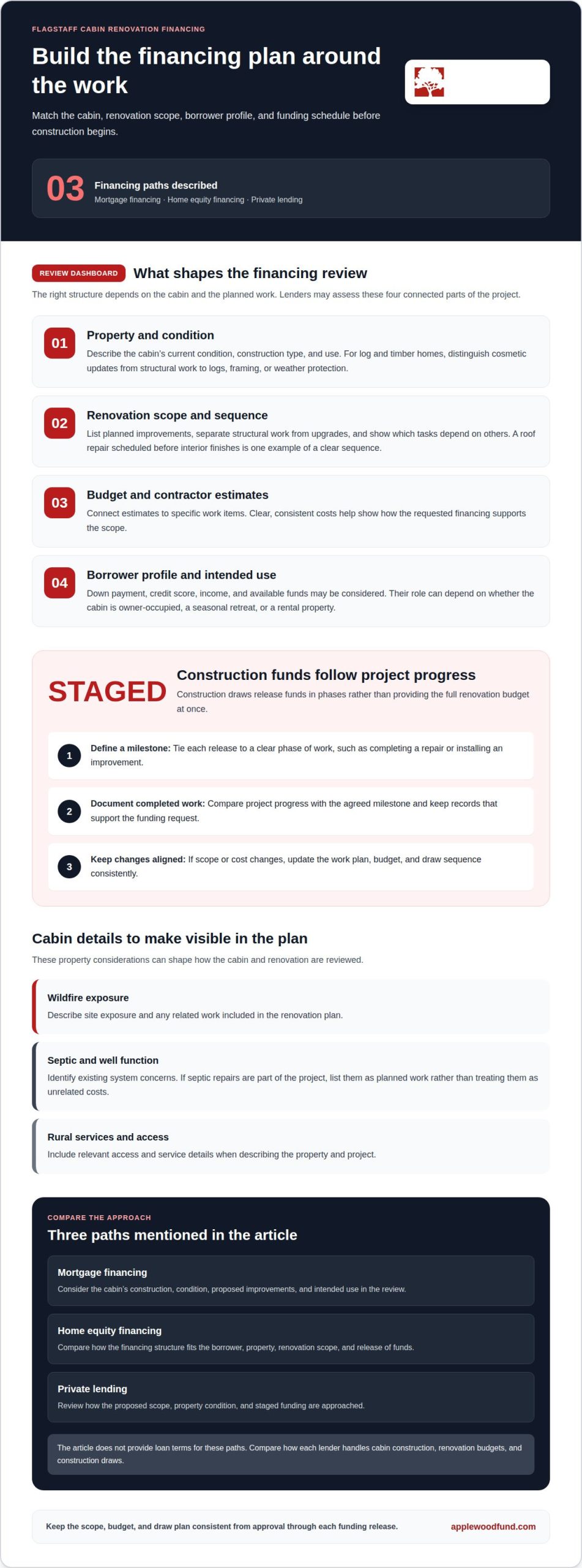
A renovation budget needs more than a list of materials and labor. Lenders may assess the property, project plans, borrower information, and contractor estimates, then structure funding around construction draws. For Flagstaff cabins, clear cost planning helps connect financing to the work, whether you are updating key rooms or making broader improvements. This guide covers financing paths, factors that may shape approval, project documents to prepare, and ways to align construction draws with progress, so you can plan your next steps before work begins.
Key Takeaways
- Match the financing approach to the cabin’s construction, renovation scope, and intended use.
- Build a clear project budget and scope to support loan review and a practical construction-draw plan.
- Understand how log and timber features can shape the property and project details considered during financing.
- Compare financing paths based on occupancy, income, credit profile, and how renovation funds are released.
- Choose an option that fits whether the property is owner-occupied, a seasonal retreat, or a rental investment.
Specialist support through loan approval and construction draws
For a Flagstaff renovation, approval and funding should match the work plan. A lender reviews the property, proposed improvements, borrower finances, and project budget. Arizona cabin projects can involve specific construction details, so describe the home and work clearly in the financing file. Organized information helps connect the loan decision to the project’s actual needs.
Start with a defined scope. Separate structural work from upgrades, and identify which tasks depend on others. For example, a cabin plan might schedule roof repairs before interior finishes. That sequence gives the lender and project team a clearer view of how the renovation will proceed. A Flagstaff cabin renovation financing plan should make the sequence easy to follow.
- Property details: Describe the cabin’s current condition, use, and construction type.
- Work scope: Set out the planned improvements and their order.
- Budget support: Match contractor estimates to specific work items.
- Funding structure: Align the loan amount and draw schedule with project needs.
Construction draws release funds in stages rather than providing the entire renovation budget at once. Connect each release to a defined phase, such as completing a repair or installing an improvement. Clear milestones help coordinate payments, contractor progress, and available funds. They also show what work remains before the next release.
Before approval, the financing review brings together the project and borrower information. The property’s value and condition, renovation plan, and borrower’s financial profile inform the decision. Accurate estimates matter: unclear or incomplete costs can make it harder to see how the requested financing supports the work. Keep revisions consistent across the scope, budget, and draw plan.
During construction, document each completed phase against the agreed schedule. If the project changes, update the work plan and budget so the draw sequence remains clear. For example, adding a repair may affect later work. Recording the change shows how the revised scope fits the financing plan and creates a clear record from approval through each funding release.
Specialist support can help when a cabin’s condition, renovation sequence, or funding schedule makes the financing file more involved. In Flagstaff, an organized plan gives the borrower, lender, and contractor a shared reference for project milestones. For Flagstaff cabin renovation financing, connect each funding release to the work it supports. The aim is a financing structure that follows the project from approval to final draw.
It illustrates how construction financing can support a defined development project. Each renovation still needs its own scope, budget, and draw plan. Specialist support can help keep those materials aligned and make project changes easier to track.
Before each funding release, compare completed work with the agreed milestone and keep records that support the request. If the scope or cost changes, make the revised information consistent across project documents. This helps the lender and contractor understand what changed, what remains, and how the funding schedule relates to the work ahead. Clear communication throughout approval and construction keeps financing decisions connected to actual progress.
Renovation financing for log, timber, and cabin homes
With log and timber construction, property condition can be central to financing review. Compare the proposed work, borrower profile, and property systems before choosing a funding approach.
Borrower Qualification Requirements
Down payment, credit score, and income may be considered alongside the property and renovation plan. Their role depends on the financing structure and whether the cabin will be owner-occupied, seasonal, or rented. Income documents show repayment capacity, while credit history and available funds help frame the application. Present the project scope and personal finances together to give the financing review a clear picture.
Cabin Renovation Financing Options
Options may include mortgage financing, home equity financing, or private lending, depending on the borrower and property. For a log home, the review should account for both the existing structure and planned improvements. That range describes project costs, not loan terms. A detailed scope connects the financing request to the work being funded.
Local Flagstaff Lenders
Flagstaff borrowers may explore renovation financing through local banks, mortgage brokers, and private lenders. The useful comparison is how each lender approaches cabin construction, renovation budgets, and staged funding, not just the lender’s name. Ask how the proposed scope, property condition, and intended use factor into the review. A lender familiar with Arizona properties may also understand how rural services and access affect project details.
Cabin Financing Risks
Wildfire exposure, septic condition, and well function can all affect how a cabin’s property and renovation plan are reviewed. These are distinct issues: wildfire relates to site exposure, while septic and well concerns involve essential property systems. Describe existing conditions and planned work clearly. For example, if the renovation includes septic repairs, list them in the project scope rather than treating them as unrelated costs.
For log and timber homes, distinguish cosmetic improvements from structural work. A finish update differs from repairs to logs, framing, or weather protection, and the financing file should reflect that distinction. Identify which work affects the home’s condition and which improves comfort or appearance. This clarifies the connection between the property review and the renovation’s purpose.
To discuss a financing approach for your cabin project, connect with a mortgage financing specialist.
What financing options are available for cabin renovations in Flagstaff?
Flagstaff cabin owners can consider home equity financing, refinancing, renovation loans, or private financing. The right route depends on the property’s equity, intended use, project scope, and borrower finances. Start by separating two needs: financing a cabin purchase and funding improvements to a cabin you already own. A loan designed for one purpose does not automatically cover the other. A Flagstaff cabin renovation financing plan starts by matching the loan purpose to the project.
A home equity loan or line of credit uses available equity in an owned property. It may suit a defined renovation, such as replacing a cabin’s roof or updating its kitchen. The amount available depends on the property and borrower qualifications. A cash-out refinance replaces an existing mortgage with a larger one, making some equity available for project costs. Compare the new loan’s overall terms with your current mortgage before choosing this structure.
Renovation financing can combine a property loan and improvement funding in one plan. The lender evaluates the home and proposed work, so an itemized scope matters. For a timber cabin, for example, the plan could distinguish structural repairs from interior finishes. Private financing is another option when a project or property calls for a different review approach. Terms and approval criteria vary by lender and loan structure.
USDA loans can offer 100% financing for homes in eligible rural and suburban areas. Some areas near Bellemont, Munds Park, and Parks may fall within USDA-eligible zones. That makes location an important first screen, but eligibility alone does not establish that a loan covers renovation work. Ask how the specific loan applies to the purchase, improvements, and intended use before relying on it for a cabin project.
- Already own the cabin: Compare equity-based financing and refinancing against the renovation plan.
- Buying and renovating: Look for a structure that addresses both the property purchase and planned work.
- Considering USDA financing: Treat location eligibility and renovation coverage as separate questions.
- Need a different property review: Compare private financing based on project scope and borrower qualifications.
Capstone Homes advises borrowers to speak with a loan officer to understand their situation and which financing option may work best. Bring the property’s intended use, current loan details, and a clear renovation scope to that conversation. For example, an owner-occupied cabin and a rental cabin can involve different financing considerations. Matching the loan purpose to the property’s use helps narrow the choices before approval and construction funding are arranged. Compare these factors when choosing Flagstaff cabin renovation financing for your property.
What down payment, credit score, and income requirements apply to renovation financing in Arizona?
Arizona renovation financing has no single down payment, credit score, or income threshold that fits every cabin project. Lenders assess these factors alongside the property, loan structure, renovation scope, and intended use. A practical first step is separating the lender’s requirements from assumptions based on another borrower’s loan or property.
Down payment: The amount required depends on the financing option and how the lender evaluates the cabin and project. For an owner renovating a property they already own, available equity may be relevant. For a purchase-and-renovation plan, the cash contribution and loan structure are assessed together. Separate renovation funds from purchase funds in your budget so each part of the request is clear.
Credit score: A credit score is one part of a borrower’s financial profile, not an approval decision on its own. Lenders may also review payment history, current debts, and the requested loan relative to the project. For example, substantial existing obligations present a different repayment picture from similar income with fewer debts. Keep credit details consistent with the rest of the application.
Income: Lenders assess whether documented income supports the proposed loan payments and existing financial commitments. The evidence may differ by work situation. A salaried borrower may provide income records, while a self-employed borrower may need documentation reflecting business income. Rental income may also be relevant when the cabin is an investment property, though how it is treated depends on the financing structure.
Prepare the application as one connected file. A lender can compare the borrower’s finances with the cabin’s condition and project plan. Useful records include:
- Income documents that reflect the borrower’s current work or business.
- Details of existing debts and recurring financial obligations.
- A renovation scope that separates essential repairs from optional upgrades.
- Property and loan information that explains current ownership or a planned purchase.
In Flagstaff, a cabin renovation involving structural repairs presents a different project profile from a cosmetic refresh. Describe the work accurately, then align the requested financing with the project’s purpose. If the cabin will generate rental income, state that intended use clearly rather than presenting it as an owner-occupied home. These distinctions help the lender assess the application on its actual terms.
Before comparing offers, ask how the lender weighs down payment, credit, income, property condition, and renovation scope together. A single minimum score or income figure cannot explain the full decision. Review the required contribution, documentation, and repayment structure for the specific loan. This gives Arizona borrowers a concrete basis for comparing financing options without assuming another cabin owner’s requirements will apply.
How does financing differ for a seasonal cabin, second home, or rental property in Flagstaff?
The key difference is how the property will be used. A seasonal retreat, a second home, and a rental investment each present a different occupancy and repayment picture. State the intended use clearly at the start of the financing discussion. For example, a cabin used by its owner during winter differs from one rented to guests throughout the year.
Seasonal cabin: Describe when the property is occupied and how it is maintained while vacant. A cabin used for occasional personal stays still has ongoing costs when nobody is there. Include those costs in the household budget alongside the renovation plan. Lenders assess the borrower’s broader finances, so the cabin’s seasonal use should fit the full repayment picture.
Second home: Explain how the Flagstaff property relates to your primary residence. A second home used for personal stays is not the same financing scenario as a property purchased mainly to generate rent. Existing housing obligations remain part of the financial picture. For instance, payments on a primary home and a Flagstaff cabin affect the overall budget considered during review.
Rental property: Present the cabin as an investment and describe its rental use. Rental income, existing property obligations, and renovation plans help explain the project’s financial purpose. Keep projected income separate from established income in your records. Rental Property Loans address financing for rental properties, making this category relevant when the renovation supports an investment property rather than personal occupancy.
Use a clear property-use summary to keep the application consistent:
- State whether the cabin is seasonal, a second home, or a rental investment.
- Describe who will occupy it and how often.
- List current property payments and other recurring obligations.
- For rentals, separate documented income from future projections.
- Connect each renovation item to the property’s intended use.
For example, replacing worn flooring in a personal-use cabin serves a different purpose from renovating guest rooms for rental use. Explain that distinction in the work scope. If a property changes from personal use to rental use, describe the change rather than relying on an earlier occupancy description. Consistency across the application, budget, and stated use helps lenders understand the request.
Choose financing based on the actual use, not simply the word “cabin.” A seasonal property with no rental plan, a second residence, and a guest-focused investment need different financial explanations. Set out the intended use, income sources, and renovation purpose together. Discuss rental-property financing for your Flagstaff cabin when the project supports an investment property.
Every income projection still requires a clear budget for the renovation and the property’s ongoing costs. Home prices and conforming loan limits can affect how a purchase and renovation are financed, so confirm how they fit your financing plan. Inventory usually opens up from late summer into winter, while spring and early summer are the most competitive buying periods; timing a purchase can therefore affect when renovation planning begins. Barden says a whole-home renovation in Flagstaff typically takes approximately one year from the first consultation to completion, with a 3-4 month design phase and 6-8 months of active construction. Barden also reports completing a downtown Flagstaff custom home build in 11 months.
Applewood Funding
Applewood Funding Inc, a private hard money lender, helps borrowers connect cabin projects with financing options suited to the property’s use and renovation plan. Options include Owner Occupied Hard Money Loans, Fix and Flip Loans, Rental Property Loans, Construction and Land Loans, Bank Statement Loans for Self-Employed, and Cash Out Hard Money Loans. The right fit depends on whether the cabin is owner-occupied or rented, the planned work, and how the borrower documents income.
Consider reaching out when you’re ready to discuss the project scope, intended use, and financing needs together. Contact Applewood Funding Inc to talk through your cabin renovation financing needs.
Set Your Cabin Project in Motion
Your Flagstaff cabin renovation financing plan should start with a clear decision: what outcome matters most for the property? Define the renovation’s purpose and how you plan to use the cabin afterward. This gives the financing conversation a practical focus and helps connect the project to an appropriate loan path.
Applewood Funding offers Owner Occupied Hard Money Loans, Fix and Flip Loans, and Rental Property Loans. These options serve different property goals, from improving a home you occupy to renovating an investment property. Bring your intended use and project priorities to the conversation, then explore which option fits your plans.
Discuss your cabin financing plans with Applewood Funding. Take the next step with a clear project goal and move toward a renovation plan that works for you.
Frequently Asked Questions
Are there loans available for log home, cottage, or cabin renovations?
Yes, financing options can support renovations to log homes, cottages, and cabins. The key is matching the loan structure to the property’s condition, planned work, and intended use. For example, repairs to a log home’s exterior may be assessed differently from cosmetic updates to a seasonal cottage. A clear description of the structure and renovation purpose helps lenders evaluate how the project relates to the property.
Can FHA 203(k), Fannie Mae HomeStyle, or other renovation loans be used for a Flagstaff cabin?
Possibly, depending on the program’s property, occupancy, borrower, and lender requirements. A Flagstaff cabin’s construction type and intended use may affect its eligibility assessment. Distinguish a primary residence from a seasonal home or rental property, and describe log or timber features accurately. Compare the program’s requirements with the cabin and project before relying on that loan for renovation funding.