

Hard money lenders that fund 100% of rehab: cash needed
November 12, 2026Fast Closing Real Estate Loans in Mesa, AZ

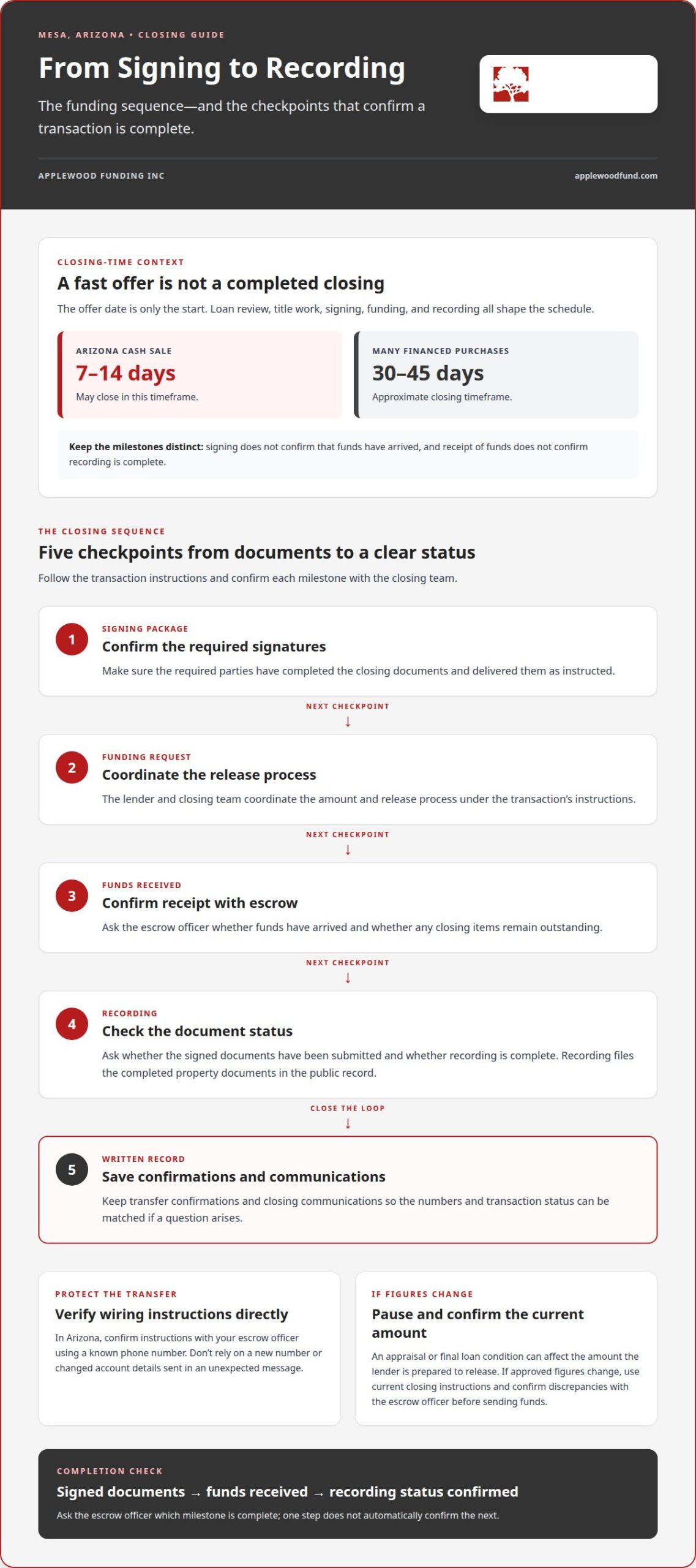
A cash sale in Arizona may close in as little as 7 to 14 days, while many financed purchases take about 30-45 days to close. Fast-closing real estate loans in Mesa, AZ, can help buyers move forward with financing, but the timeline still depends on the loan process, funding, and when the completed transaction is recorded.
When you’re facing a purchase deadline or competing for a property, timing matters. A quick offer is not the same as a completed closing: loan review, property-specific steps, fund transfer, and recording all affect when the transaction is complete.
This article explains how cash purchases compare with financed closings, what can affect a loan timeline, and how funding and recording fit into a Mesa transaction. You’ll also learn how to prepare before making an offer and consider financing for an owner-occupied purchase, investment property, or real estate project.
Key Takeaways
- Compare timelines realistically: an Arizona cash sale may close in 7 to 14 days, while many financed purchases take about 30-45 days.
- Plan for funding and recording as separate closing steps, and verify wiring instructions directly with your escrow officer using a known phone number.
- Get fully underwritten preapproval before making an offer to help keep the financing process moving.
- Prepare for property-specific and borrower-document requirements, including possible signatures from a non-borrowing spouse.
- Match the financing approach to your goal, whether you’re buying an owner-occupied home, pursuing a flip, or financing a rental or construction project.
Typical cash-offer and closing timelines
In Arizona, a cash sale may close in 7 to 14 days, while many financed purchases take about 30-45 days. The offer date is only the start: underwriting, title work, funding, and recording all shape the closing schedule. Buyers comparing fast-closing real estate loans in Mesa, AZ, should separate the loan timeline from the time needed to find and secure a property.
Loan Closing Process and Timing
A financed closing moves through several steps: loan review, property review, title work, signing, funding, and recording. Each step must be ready before the next can finish, so a delay in documents or appraisal can affect the target date. For a conventional mortgage, credit and borrower documentation are part of financing review. A faster loan may use a different review approach, but the contract and property still need attention.
How do fast-closing loan terms compare with conventional mortgage terms in Mesa? Fast-closing terms may emphasize a quicker review and the property’s value, while conventional mortgage financing typically involves a detailed review of the borrower’s financial documentation. Compare the stated timeline, repayment terms, and conditions, not just the proposed closing date.
What risks and penalties come with hard money or other fast-closing loans? Review the loan agreement’s interest, fees, repayment deadline, default terms, and any extension or late-payment penalties before signing. A short timeline can help meet a purchase deadline, but it does not change your obligation to repay under the agreement.
Arizona and Mesa Closing Factors
Arizona’s cash-sale timeline can be as short as 7 to 14 days, while many financed purchases close in about 30-45 days. A final walkthrough usually happens within 48 hours of closing. Build that step into the schedule alongside signing and funding, rather than treating the scheduled closing date as the only milestone.
Are there Mesa-specific title, appraisal, or recording delays that affect closing time? No specific Mesa delay is established here; title issues, appraisal scheduling, and recording readiness can affect timing in any transaction. Keep the closing team aligned on document completion, the property review, and the funding sequence.
A traditional Mesa home sale may spend 79 days on the market, followed by roughly 30 to 45 days to close. That is different from the closing period alone. Across Arizona, an as-is sale with an agent typically takes 30-60 days to close, while a home needing repairs may take 60-120+ days. Scottsdale and Mesa schedules can also shift with buyer demand and property conditions, so separate marketing time from loan-processing time when planning.
Cash buyers may make an offer within 24-48 hours, but a fast offer does not mean the transaction is already complete. For a financed purchase, track the milestones from accepted offer through recording. A buyer considering fast-closing real estate loans in Mesa, AZ, can use that sequence to identify which steps still need attention, whether the property is move-in ready or needs repairs.
Funding and recording
Signing is not the final funding step in a Mesa purchase. The closing team coordinates signed documents, the lender’s funding authorization, escrow’s receipt of funds, and submission of documents for recording. Keep these milestones distinct: a signed agreement does not confirm that funds have arrived or recording is complete.
Buyers can help keep the transfer orderly by following the escrow officer’s instructions and confirming key details through a trusted channel. In Arizona, verify wiring instructions directly with your escrow officer using a known phone number. Don’t rely on a new number or changed account details sent in an unexpected message. Confirm the recipient and payment instructions before initiating a transfer.
A practical sequence helps everyone track what remains:
- Confirm the signing package. Make sure the required parties have completed the closing documents and delivered them as instructed.
- Confirm the funding request. The lender and closing team coordinate the amount and release process under the transaction’s instructions.
- Confirm receipt with escrow. The escrow officer can clarify whether funds have arrived and whether any closing items remain outstanding.
- Confirm recording status. Ask whether the signed documents have been submitted and whether recording is complete.
- Keep a written record. Save transfer confirmations and closing communications so the numbers and status can be matched if a question arises.
These checkpoints matter when an appraisal or final loan condition affects the amount the lender is prepared to release. If approved figures change after a property review, the closing team needs updated instructions before coordinating the transfer. Don’t send funds based on an earlier estimate if final figures have changed. Use the current closing instructions and confirm discrepancies with the escrow officer.
Recording files the completed property documents in the public record. The sequence between receipt of funds and document submission follows the transaction’s closing instructions, so ask the escrow officer which milestone is complete rather than assuming one confirms another. If you’re selling one property while buying another, keep each escrow timeline and transfer record separate. This makes it easier to identify which transaction needs attention.
For a purchase where lender timing and escrow coordination are central, discuss your Mesa loan closing timeline before the signing date approaches.
What documents are needed to get a fast real estate loan in Mesa?
A complete application gives the lender a clearer picture of the borrower, property, and transaction. The documents required depend on financing type, occupancy, income, and property condition. Organize information into four groups: identity, finances, property, and purchase terms. Keep names, addresses, and figures consistent across documents to reduce follow-up.
Identity and borrower details: Prepare current identification and the personal information requested on the application. For joint borrowers, organize each person’s details together. If a spouse will not borrow, mention that early: under Arizona’s community property framework, a non-borrowing spouse may need to sign certain documents involving property interests.
Income and financial records: Gather records that show how income is earned and received. A salaried borrower’s income profile differs from a self-employed borrower’s, so the lender may request different supporting documents. Organize relevant income and asset records by account or source. Include explanations for unusual deposits or changes when requested, rather than sending scattered files without context.
Property and transaction information: Provide the property address, accepted purchase contract, and available details about the home. The property review may include an appraisal, so share access and scheduling information promptly when requested. For a repair, renovation, or construction project, organize the project scope and related property details. This helps the lender assess the property and financing purpose together.
- Keep the signed purchase agreement and any later amendments in one folder.
- Separate borrower financial records from property and project documents.
- Use clear file names that identify the borrower, document type, and relevant period.
- Send complete pages, not cropped excerpts, when the lender requests full records.
- Track follow-up requests and provide each requested item through the instructed channel.
Before submitting, compare names and property details across the application, contract, and supporting records. An address written differently in two documents, for example, may need clarification. Tell the lender when a document is unavailable or a figure needs explanation. A short, accurate note can point the reviewer to the relevant record and reduce avoidable back-and-forth.
After the initial review, the lender may request additional items based on the loan structure or property findings. Treat each request as a separate task: identify the requested record, confirm the correct version, and return it promptly. Keep updated documents distinct from earlier copies. This helps keep the review focused on the current application and Mesa property.
What steps can buyers take to speed up a real estate loan closing in Arizona?
Start before making an offer. In Arizona, buyers should obtain fully underwritten preapproval before submitting an offer. A fully underwritten preapproval can help the lender focus next on property-specific conditions. Same-day preapproval is available in most cases, but a preliminary approval is not the same as a fully underwritten review.
Ask the lender which conditions remain and how each will be cleared. A clear list separates borrower requirements from property requirements. An appraisal concerns the home, while a request for updated financial information concerns the application. Return requested items promptly, use the lender’s delivery method, and identify which condition each response addresses.
Keep the purchase contract and closing team aligned. After an offer is accepted, share the signed agreement and any amendments promptly. Confirm that the purchase price, property address, and closing date match across the documents. If the buyer and seller change a term, send the revised agreement to the lender and escrow team so everyone works from the same version.
- Set a response routine. Review lender messages regularly and reply to each request with the complete item requested.
- Coordinate property access. Respond quickly to appraisal scheduling requests and arrange access with the seller or listing contact.
- Keep decisions moving. Resolve questions about contract terms, repairs, or occupancy promptly with the relevant parties.
- Protect the funding schedule. Follow escrow instructions for signing and funds, and confirm wiring details directly with the escrow officer using a known phone number.
For a Mesa purchase, timing can depend on the property’s condition and appraisal findings. If the appraisal differs from the expected value or raises questions about the property, the lender may need to review it further before clearing property-specific conditions. Respond promptly to follow-up requests, but don’t assume a requested change is approved until the lender and transaction parties have addressed it.
Build a working timeline with the lender, real estate agent, and escrow officer. Track the contract deadline, appraisal appointment, outstanding conditions, signing arrangements, and recording status in one place. If a date changes, notify the people responsible for the next step. This handoff helps prevent one party from acting on an outdated schedule while another waits for revised instructions.
Market context can help buyers set realistic expectations and avoid last-minute changes to their financing plan. Home prices in Mesa can vary, so buyers should use current local market information when discussing property options with their agent and lender. Mesa has strong housing inventory in the 350-500 range, while competition remains intense for move-in-ready homes priced under $450K. Mesa is Arizona’s #3-largest city. Buyers can use those market conditions to discuss acceptable property options and likely timing with their agent and lender before deadlines become urgent.
The lender says its Mesa loan approval and program availability are subject to credit approval, property eligibility, and current program guidelines. Ask the lender to confirm that the selected home and loan remain eligible as the transaction progresses, and submit any requested documentation promptly.
What Arizona laws or disclosure rules affect quick real estate loan closings?
In Arizona, closing paperwork can involve borrower signatures, seller tax reporting, and property documents. These items are separate from loan approval, but incomplete or inconsistent information can prompt follow-up before closing. Identify early who must sign and which tax forms apply. This gives the lender and closing team time to prepare accurate documents for the Mesa transaction.
Arizona’s community property framework can affect signatures when one spouse is not borrowing. A non-borrowing spouse may need to sign certain documents to convey or encumber property interests. This does not mean every spouse signs every loan document. Share marital and ownership details at the start so the closing team can determine which documents require each person’s signature.
Seller tax paperwork also needs careful handling. Arizona sellers generally sign Form 1099-S for reporting the sale and provide a W-9 for tax reporting during closing. Names, taxpayer identification numbers, and addresses on Form 1099-S must match what the IRS expects. A mismatch, such as a different name format or mailing address, can prompt correction. Keep the information consistent across the closing paperwork.
FIRPTA may affect a sale when a foreign person sells U.S. real property. Federal rules may require withholding in that situation. Because withholding can change the amount handled at closing, identify a potential FIRPTA issue early and include it in the closing team’s planning. Don’t leave the seller’s tax status until after the funding figures are prepared.
Use this practical document sequence to reduce avoidable corrections:
- Confirm the names and ownership details used in the purchase documents.
- Identify whether a non-borrowing spouse may need to sign documents affecting property interests.
- Prepare the seller’s W-9 and Form 1099-S information for closing.
- Compare Form 1099-S names, taxpayer IDs, and addresses for consistency.
- Raise a possible FIRPTA withholding issue before final closing figures are coordinated.
For example, if ownership documents include a spouse who is not on the loan, the required signature review should happen before signing day. If a seller’s tax information differs across forms, resolve the discrepancy before the closing team finalizes reporting details. Discuss your Arizona loan closing needs early, so the transaction’s financing and documentation can be considered together.
Applewood Funding
Applewood Funding Inc helps Mesa borrowers explore financing for an owner-occupied purchase, investment property, or real estate project. Options include Owner Occupied Hard Money Loans, Fix and Flip Loans, Rental Property Loans, and Construction and Land Loans. The right fit depends on the property and your goal.
Bring your purchase details, property information, and timing needs into the conversation. Applewood Funding Inc can help you understand which available loan option aligns with your plans and what information the process requires. If you’re weighing financing for a Mesa transaction, contact Applewood Funding Inc to discuss your situation.
Set Your Mesa Closing Plan in Motion
The next step is to match your financing plan to the property and the date you’re working toward. A clear timeline helps frame the conversation: identify the purchase or project, the property’s current condition, and any contract deadlines. Then focus on the decisions that shape the loan path, not speed alone.
For fast-closing real estate loans in Mesa, AZ, the right financing depends on how you’ll use the property. Applewood Funding offers Owner Occupied Hard Money Loans, Fix and Flip Loans, and Rental Property Loans. Share your goals and transaction details to explore which option fits your plans.
Move forward with a practical plan, clear information, and a financing option suited to your next step. Contact Applewood Funding to discuss your timeline. You can start the conversation when you’re ready.
Frequently Asked Questions
Which Mesa, AZ lenders offer fast-closing real estate loans?
Applewood Funding is an Arizona private lender serving Mesa borrowers with real estate financing options. The right fit depends on whether you’re buying an owner-occupied home, purchasing a rental, or funding a property project. Start by clarifying the property’s intended use, its current condition, and your target closing date. Those details help focus the financing discussion on the transaction you need to complete.
How quickly can real estate loans close in Mesa, Arizona?
Many financed real estate purchases in Arizona close in about 30-45 days. A cash transaction follows a different path, and the contract, property review, funding coordination, and recording all affect the schedule. For planning, separate the time needed to secure an accepted offer from the loan-closing period. A proposed closing date should account for the steps still required in your specific transaction.
What types of fast-closing real estate loans are available in Mesa?
Options include owner-occupied hard money financing, fix-and-flip loans, rental property loans, construction and land loans, bank statement loans for self-employed borrowers, and cash-out hard money loans. The intended use helps narrow the fit: a home purchase differs from a renovation or land project. Be ready to explain how you’ll use the property and what stage the transaction has reached.
Which Mesa lenders offer hard money or bridge loans with rapid funding?
Applewood Funding offers hard-money financing for real estate transactions in Arizona, including owner-occupied, fix-and-flip, rental, and cash-out options. For a purchase or project with a tight deadline, outline the property, intended use, and repayment plan so the financing discussion addresses the actual transaction. Closing and funding depend on completing the required loan and property steps, so distinguish a quick application from completed funding.