

Sedona land loans for construction and homebuilding
November 15, 2026Avoiding foreclosure with a private loan in Mesa through repayment plans

A missed mortgage payment doesn’t mean foreclosure is inevitable, but waiting can narrow your options. For homeowners avoiding foreclosure with a private loan in Mesa, the key is to act early and compare a repayment plan with other ways to address overdue payments. According to the Consumer Financial Protection Bureau, mortgage servicers generally shouldn’t make the first foreclosure filing until a homeowner is more than 120 days behind.
It’s understandable to look for a fast way to catch up. A repayment plan may let you resume regular payments while adding an amount toward what you missed. A private loan may also be worth assessing, but taking one out doesn’t automatically stop foreclosure. This article explains how missed payments can lead to foreclosure, which signs point to rising risk, and how repayment plans work. You’ll also learn what to weigh when considering private financing for a Mesa home.
Key Takeaways
- Recognize early signs of foreclosure risk and understand why contacting your mortgage servicer promptly can preserve options.
- Learn how a repayment plan can combine regular mortgage payments with extra payments toward overdue amounts.
- See what a private loan may need to cover and why new borrowing alone doesn’t automatically stop foreclosure.
- Understand what to consider when evaluating a private mortgage lender, including warning signs such as requests for money upfront.
- Explore when private financing for an owner-occupied property may fit alongside other ways to address mortgage trouble.
Foreclosure timeline after missed payments
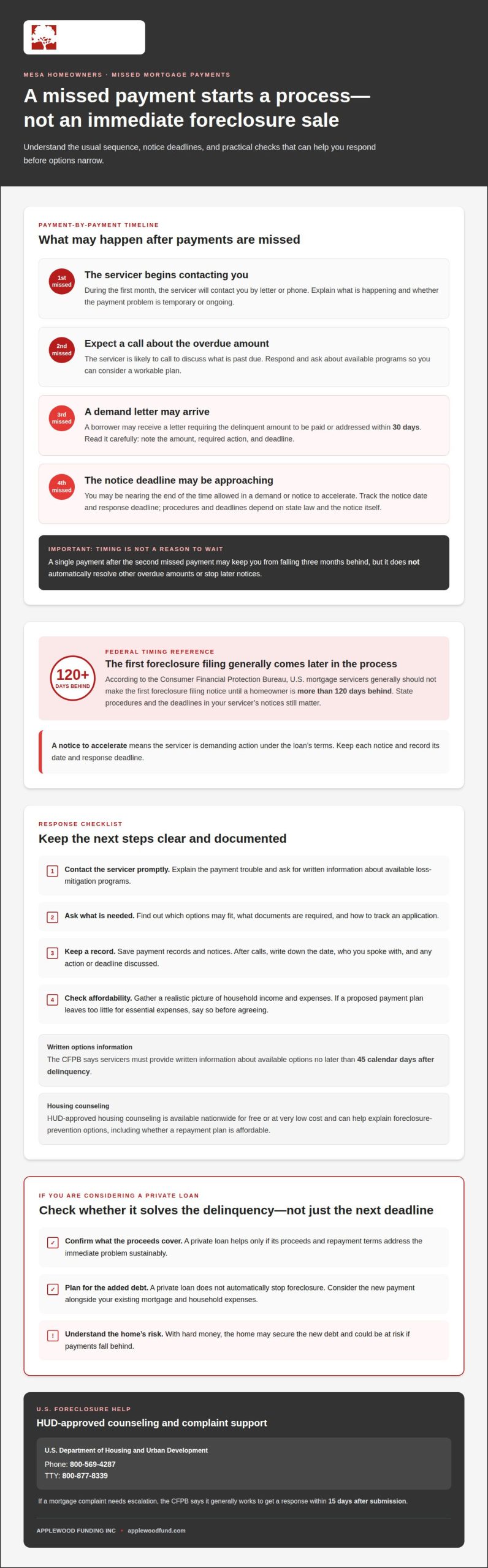
The first missed mortgage payment starts a process, not an immediate foreclosure sale. During the first month, the servicer will contact the homeowner by letter or phone. After the second missed payment, the servicer is likely to call to discuss the overdue amount. Responding and asking about available programs can give you time to consider a workable plan. For example, if you’ve missed one payment, explain whether the problem is temporary or ongoing.
By the third missed payment, a borrower may receive a demand letter requiring the delinquent amount to be paid or addressed within 30 days. Read the letter carefully: it identifies the amount at issue and the deadline. After the fourth missed payment, the borrower may be nearing the end of the time allowed in that demand or notice to accelerate. A single payment after the second missed payment may still keep a borrower from falling three months behind, but it does not automatically resolve other overdue amounts or stop later notices.
Federal timing offers an important reference point, not a reason to wait. According to the Consumer Financial Protection Bureau, U.S. mortgage servicers should not make the first foreclosure filing notice until a homeowner is more than 120 days behind on payments. Foreclosure procedures depend on state law, and the steps and deadlines in a servicer’s notices still matter. A notice to accelerate, for example, signals that the servicer is demanding action under the loan’s terms. Track each notice’s date and response deadline.
A private loan differs from a loan modification, forbearance, refinancing, or selling the home. A modification changes mortgage terms, forbearance temporarily pauses or reduces payments, refinancing replaces the mortgage, and selling uses the proceeds to address the debt. A private loan adds new debt, so it helps only if its proceeds and repayment terms address the immediate problem sustainably.
Hard money carries serious risk if you can’t repay: the home may secure the new debt and could be at risk if payments fall behind. Consider whether the payment plan fits your household income and whether the loan will resolve the existing mortgage delinquency, rather than simply delaying the next deadline.
Act on the next notice, not the last possible date. Contact the servicer, explain the payment trouble, and ask for written information about available loss mitigation programs. The Consumer Financial Protection Bureau says servicers must provide written information about available options no later than 45 calendar days after delinquency. Keep the application instructions and status details together with payment records and notices.
For foreclosure help in the United States, call the U.S. Department of Housing and Urban Development at 800-569-4287, or use its TTY line at 800-877-8339. HUD-approved housing counseling can help homeowners understand foreclosure prevention options, including whether a repayment plan is affordable. If a mortgage complaint needs escalation, the Consumer Financial Protection Bureau says it generally works to get a response within 15 days after submission.
Recognizing foreclosure risk
Foreclosure risk can begin before a formal notice arrives. A change in income, rising household expenses, or a temporary emergency can make a mortgage payment harder to afford. Watch for a growing gap between the money available and the amount due. If you’re having trouble covering the next payment, contact your mortgage servicer promptly. Early communication gives the servicer time to understand the problem and discuss possible assistance before missed payments accumulate.
Pay attention to changes in both your finances and your mortgage account. An overdue payment, a servicer message asking you to discuss the account, or a notice outlining steps to address delinquency deserves prompt attention. Don’t assume the issue is resolved just because you spoke by phone. Record the date, the person you spoke with, and any action or deadline they described. These notes can help you identify unresolved issues and explain your situation consistently.
Use these signs to decide when to seek help:
- Your income has dropped, or essential housing costs now compete with the mortgage payment.
- You’ve missed a payment or expect to miss one, and don’t have a clear plan to catch up.
- You received written communication from the servicer but don’t understand the requested action.
- You’re considering new debt to cover existing mortgage payments without knowing how you’ll repay it.
These signs call for a clear review, not guesswork. Gather your mortgage statement, recent notices, and a realistic picture of household income and expenses. Tell the servicer whether the difficulty is temporary or ongoing. Ask which loss-mitigation options may fit, what documents are needed, and how to track an application. If a proposed payment arrangement leaves too little for essential expenses, say so before agreeing.
Housing assistance can help when mortgage terms or notices are difficult to interpret. HUD-approved housing counseling is available nationwide for free or at very low cost. A counselor can help you understand foreclosure-prevention options and prepare questions for the servicer. Be cautious about relief offers that demand money upfront, as they may be scams. Keep communicating with the lender rather than relying on a promise that someone else will stop the process.
For homeowners considering avoiding foreclosure with a private loan in Mesa, assess the proposed repayment obligation alongside the existing mortgage and household expenses. A decision about avoiding foreclosure with a private loan in Mesa should account for how the new debt will be repaid, not just whether it can address an immediate need. If financing is part of your options, a conversation about home mortgage financing options can help clarify how property-based borrowing relates to your situation. The goal is to identify a path you can sustain, not simply move the payment pressure to another account.
Repayment plans
A mortgage repayment plan spreads overdue payments across future monthly bills. You resume regular mortgage payments and add an agreed amount toward the missed balance. This may suit a temporary income disruption when regular income has returned. The key test is affordability: the added amount must fit alongside housing costs and other essential bills. If you’re considering avoiding foreclosure with a private loan in Mesa, compare the new loan payment with a repayment plan to see which obligation is more sustainable.
Contacting your mortgage servicer promptly gives it time to discuss a financial plan. Explain whether the income problem has ended, continues, or is expected to change. A clear picture of your situation helps the servicer review available options and your ability to pay. Ask how the proposed monthly amount is calculated, when it starts, and how to make payments. Keep the written terms with your mortgage account records.
Repayment plans differ from other loss-mitigation options. A special forbearance plan gives you extra time to repay missed mortgage payments, but doesn’t add them to the end of the loan. Forbearance can pause or reduce payments temporarily, but it doesn’t erase what you owe. A payment deferral moves overdue mortgage debt to the loan’s end and immediately brings the loan current. A modification changes loan terms and can add some or all missed payments to the amount owed.
- Repayment plan: Regular payments resume, with an additional monthly amount toward the delinquency.
- Forbearance: Payments pause or decrease temporarily, while the missed amount remains due.
- Deferral: Overdue debt moves to the end of the mortgage, bringing the loan current.
- Modification: The mortgage terms change, and some or all missed payments can be added to the balance.
Compare the full payment obligation, not just the first month’s amount. For example, if your income has returned, assess whether regular payments plus the catch-up amount leave enough for ongoing expenses. A housing counseling agency can help you review your budget and prepare questions about the proposed terms. Ask the servicer how it will handle payments, deadlines, and application documents. Clear answers help you judge whether the plan fits your situation.
Also ask how the arrangement affects your account status and credit reporting, and request the servicer’s response in writing. Don’t treat an informal conversation as approval of a repayment plan. Confirm the terms, payment dates, and consequences of missing a plan payment before accepting. Government assistance programs and mortgage modification are separate options, not automatic parts of a repayment plan. To assess whether avoiding foreclosure with a private loan in Mesa is practical, weigh the total amount due, the payment schedule, and whether your household can maintain ownership without taking on unmanageable new debt.
How does a private loan stop foreclosure in Arizona, and what must be paid off?
A private loan may address foreclosure risk by providing funds to bring an existing mortgage current or pay it off. The new loan itself doesn’t stop foreclosure. The existing servicer must receive the required funds, and you must address any remaining process or deadlines. In Mesa, first identify whether you want to catch up on overdue payments or replace the current mortgage entirely. Those are different payoff targets.
To catch up, the required amount may include missed installments and other sums the servicer identifies as due. For a full payoff, request a current payoff statement from the mortgage servicer. It should show the amount needed to satisfy the existing debt and the date through which that figure applies. Compare the figure with the proposed loan proceeds. If the funds fall short, the original mortgage may remain delinquent.
Map out the funds before signing. Confirm how the new lender will disburse them, how the existing servicer will receive them, and how the payment will be credited. Then obtain written confirmation from the servicer showing whether the loan is current or paid off. For example, if you borrow enough to cover arrears but overlook another amount listed in the payoff information, a balance may remain unresolved. Keep the payoff statement, payment evidence, and account update together.
A private loan may be an option if you can’t resolve the delinquency through an existing repayment plan or mortgage modification. Compare the new obligation with your household income, the property’s value, and your expected source of repayment. A plan that covers today’s arrears but leaves no workable way to repay the private loan shifts the pressure instead of solving the problem. Consider both the old mortgage and the new debt before deciding.
- Amount to resolve: Establish whether funds will cover overdue payments or the full mortgage payoff.
- Disbursement: Confirm the payment route and how quickly the servicer can apply the funds.
- Written status: Obtain documentation showing the existing account’s updated status.
- Repayment ability: Assess the new loan payment alongside household expenses and any remaining mortgage debt.
Arizona foreclosure procedures are governed by state law, so the notices and deadlines in a Mesa homeowner’s case matter. A loan closing doesn’t prove that a pending foreclosure action has stopped. Have the servicer’s written account status and any relevant notices available before relying on payoff funds. If the funds can’t reach the correct account in time or don’t cover the amount required, you may still face the original foreclosure process.
Private financing adds a new repayment obligation, and the property may secure that debt. If the new loan payments become unaffordable, the home could be at risk under the loan terms. Compare the payoff amount, new payment schedule, and realistic repayment plan before proceeding. Ask yourself: can the funds resolve the existing mortgage problem, and can your household sustain the replacement obligation?
How can Mesa homeowners choose and verify a licensed private mortgage lender?
Start with the lender’s legal business name, not just a website or salesperson’s name. Ask for its license details and the name of the Arizona authority that oversees the proposed mortgage transaction. Use official state records to confirm that the license matches the business and activity being offered. If the records and loan documents show different names, pause until the difference is clearly explained.
Next, assess whether the proposed financing addresses the foreclosure problem. The lender should explain in writing how funds would reach the existing mortgage servicer and whether they’re intended for overdue payments or a full payoff. Compare the expected proceeds with the servicer’s current figures. A loan that can’t cover the required amount may add a new obligation without bringing the existing mortgage current.
Read the complete agreement before signing. Identify the interest rate, payment schedule, maturity date, collateral, default terms, and any charges listed in the documents. Check whether the new payment fits your household budget alongside the existing mortgage and essential housing expenses. For example, if the private loan pays overdue installments but leaves the regular mortgage unaffordable, the underlying risk remains.
Use a focused review:
- Identity: Match the lender’s legal name across its license details, disclosures, and agreement.
- Authority: Confirm the relevant Arizona license or authorization in official public records.
- Purpose: Establish whether proceeds address arrears, a payoff, or another stated use.
- Repayment: Review each payment date and the full obligation through the loan’s end.
- Security: Understand which property secures the debt and what the agreement says about default.
Pressure is a warning sign. You should have time to read the loan documents and understand how the transaction works. Avoid mortgage-relief offers that ask for money upfront, as they may be scams. Don’t rely on a verbal promise that a lender can stop foreclosure. Ask for the funding process and any conditions in writing, then confirm with your mortgage servicer how it will apply payments.
Compare outcomes, not speed alone. A private loan can create a new repayment obligation secured by your home, so assess whether the payment plan will remain sustainable after the original mortgage issue is addressed. If the lender’s identity, authority, or written terms are unclear, don’t sign based on a deadline or verbal assurance. Review the documents alongside the status of your existing mortgage before committing.
For a property-backed financing discussion, talk through your mortgage financing options and how the proposed loan would fit your repayment plan.
Applewood Funding Inc
Applewood Funding Inc is a private hard money lender offering financing options for property owners assessing their next move. If you own and occupy your Mesa home, an Owner Occupied Hard Money Loan may be relevant to a property-backed financing discussion. It isn’t a foreclosure remedy by itself: the key questions are whether the funds can address the existing mortgage issue and whether you can manage the new repayment obligation.
Bring your current mortgage status, payoff information, property details, and a realistic view of your repayment capacity to the conversation. This context helps clarify how financing could fit alongside the options you’ve discussed with your servicer. If the new loan would leave you unable to make future payments, it may not support a sustainable plan.
For a straightforward conversation about your situation, contact Applewood Funding Inc.
Choose a Next Step You Can Sustain
For Mesa homeowners considering avoiding foreclosure with a private loan, the question is whether new financing supports a realistic path forward, not simply whether it can provide funds. Focus on a repayment obligation you can manage and a clear purpose for the financing. If borrowing would add pressure without resolving the mortgage problem, consider other options with your servicer before committing.
Applewood Funding Inc offers Owner Occupied Hard Money Loans, Fix and Flip Loans, and Rental Property Loans for different property needs. The relevant fit depends on whether you occupy the home and what you need the financing to address. A direct conversation can help you explore how property financing relates to your situation without treating a loan as a guaranteed foreclosure solution.
Discuss your financing situation with Applewood Funding Inc and take your next step with a clear plan.
Frequently Asked Questions
What if I need help or more information?
Start with the organization best suited to your question. A housing counselor can help explain mortgage assistance options, while your servicer can clarify account details and application status. If you’re unsure what a notice asks you to do, note its deadline and ask the servicer to explain the required action in writing. Keep the notice, account statements, and submitted forms together so each conversation starts with the same information.
What should I do if I’m having trouble paying my mortgage?
Tell your mortgage servicer as soon as you expect a payment problem, and explain what changed. For example, distinguish a temporary interruption in income from a longer-term reduction. Ask which options fit your account and what information the servicer needs to review them. Keep paying bills as you’re able, and don’t agree to a payment arrangement without understanding how it fits your full household budget.
What options can help a homeowner avoid foreclosure in Mesa, Arizona?
Options may include a repayment plan, forbearance, payment deferral, mortgage modification, refinancing, private financing, or selling the home. The best path depends on whether the hardship is temporary, whether you can afford ongoing payments, and how the property’s value compares with the mortgage debt. For example, a homeowner who can no longer sustain the payment may need to weigh a sale differently from someone facing a short-term income gap.
What credit score, equity, income, and property requirements do private lenders in Mesa have?
There isn’t one universal Mesa credit-score or equity threshold; requirements depend on the lender and loan structure. Applewood Funding states “No Credit Required.” You still need to understand the proposed loan’s repayment terms. Lenders may assess the property, available equity, income, intended use, and ability to repay. Ask how these factors affect the amount, payment schedule, and terms offered before deciding.
What steps can a private lender help a Mesa homeowner take after receiving a foreclosure notice?
Applewood Funding Inc, a private hard money lender, can assess whether property-backed financing could provide funds toward overdue mortgage debt or a payoff. Share the notice and current mortgage information so the financing purpose can be evaluated against the amount due and applicable deadline. A loan review alone doesn’t stop foreclosure. The existing servicer must receive and apply the required payment, so keep its communications and account status central to your plan.