

Tucson Private Money Lenders for Real Estate Investors
November 14, 2026Sedona land loans for construction and homebuilding
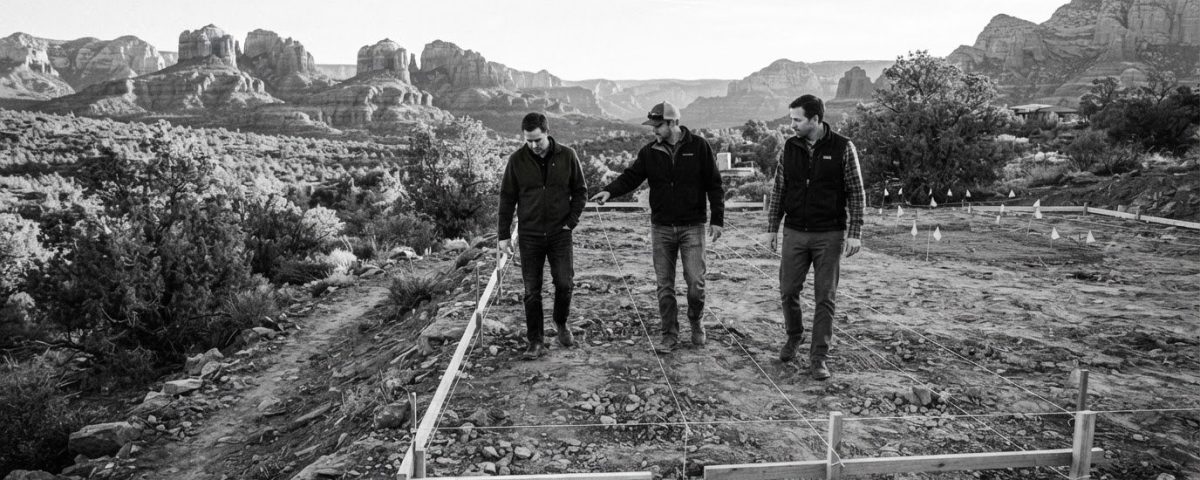
In Sedona, the land itself can shape financing as much as the home you plan to build. Sedona land loans may finance a land purchase or construction, while hard money financing can offer another route when conventional lending doesn’t fit. The right option depends on the parcel, your building plan, and how you’ll repay the loan.
Financing a lot involves more than finding the property and securing funds. Hillside terrain, septic feasibility, zoning, and access can all affect how a lender views the parcel and construction plans. Clarify these issues early to make more informed financing decisions.
This guide explains how construction and hard money loans can work for land and homebuilding, which property details may affect financing, and what to prepare for an application. You’ll also learn how Applewood Funding Inc’s Construction and Land Loans fit into the process and when this financing may suit a Sedona project.
Key Takeaways
- Understand how construction financing can connect a land purchase with a homebuilding plan, and what lenders consider when reviewing the project.
- Factor hillside conditions, septic feasibility, HOA rules, and zoning into your financing plans before moving forward with a parcel.
- Compare land by usable acreage and property characteristics, not just the asking price, to better assess its fit for your build.
- Prepare for a lender’s review of the parcel, construction plan, and repayment approach so the application and funding process can move forward clearly.
- Learn when Applewood Funding’s Construction and Land Loans may fit a Sedona project and how they relate to other property financing options.
Construction loans for land and homebuilding
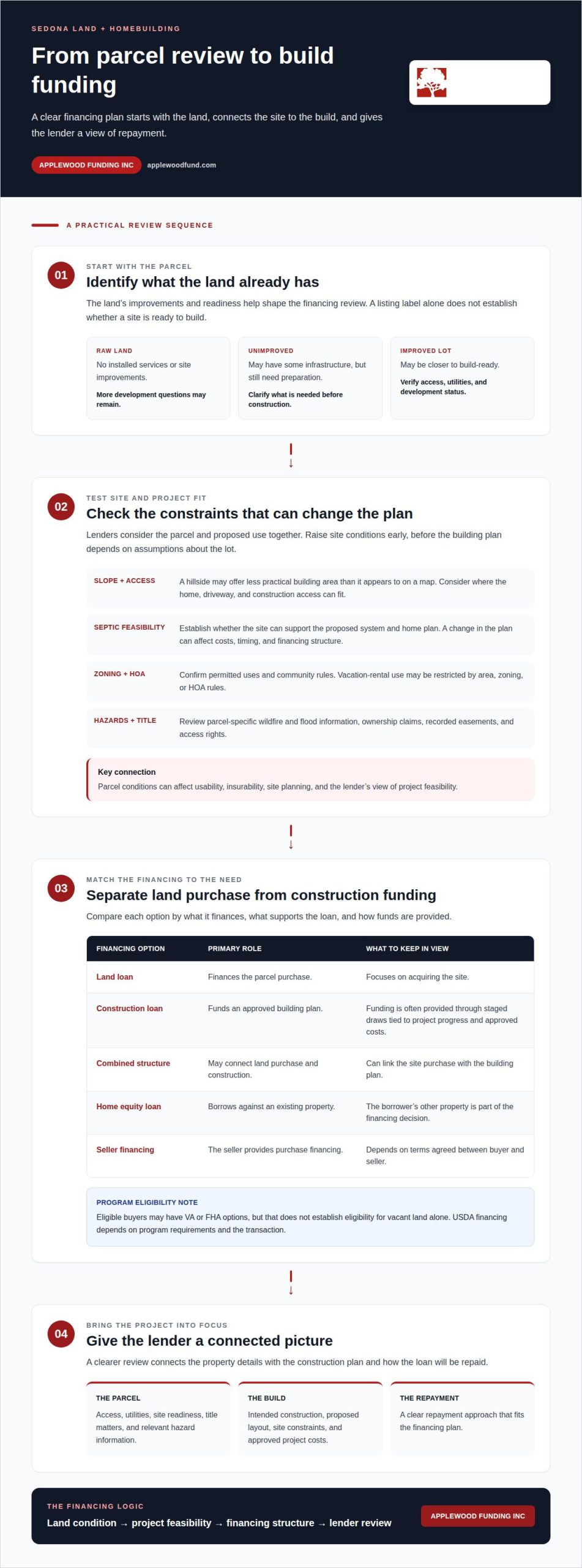
For a Sedona build, financing depends on the parcel’s improvements and your construction plan. Land financing covers the site purchase; construction financing supports the build. Some financing structures may address both.
Raw land has no installed services or site improvements. Unimproved land may have some infrastructure but still need preparation. An improved lot may be more ready for building, though its actual access, utilities, and development status still matter.
Land loans finance a parcel purchase, while construction loans fund an approved building plan, often through staged draws. Home equity loans borrow against an existing property, while seller financing means the seller provides purchase financing.
Eligible Sedona buyers may have VA or FHA financing options, but that doesn’t establish eligibility for vacant land alone. USDA financing depends on its program requirements and the transaction.
Wildfire, flood, and title concerns can affect a parcel’s usability, insurability, or ownership certainty. Review property-specific hazard information and title records during the financing process.
Land Type and Loan Differences
Raw land often raises the most development questions because services, access, and site readiness may require additional work. An unimproved parcel may have some infrastructure, but the lender still needs to understand what remains before construction can start. An improved lot may be closer to build-ready, yet the label alone doesn’t establish feasibility.
For example, a Sedona parcel with road access but no confirmed utility connections differs from a lot with services already at the site. The lender evaluates the property and proposed use, not just the listing description. That distinction can shape the financing structure, documentation, and work needed before building.
Financing Option Comparisons
A land loan focuses on acquiring the site. A construction loan focuses on funding the build, with disbursements tied to project progress and approved costs. Someone buying land to build later may need separate financing stages; a combined structure may instead connect the purchase and construction.
A home equity loan uses equity in another property, making the borrower’s existing home part of the financing decision. Seller financing depends on terms agreed between buyer and seller. Compare options by collateral, repayment structure, project timing, and whether they cover land, construction, or both.
Sedona Land Purchase Risks
Wildfire exposure can affect a parcel’s insurance options and the practical costs of building. Flood exposure can affect site planning and property use. These risks vary by location, so financing review should consider the specific parcel rather than assume all Sedona lots have the same conditions.
Title issues can include ownership claims, recorded easements, or access rights that affect how land can be used. A title review helps identify these matters before closing. On a hillside lot, pay close attention to access and buildable area. On any parcel, unresolved title concerns can complicate financing and future construction.
Hillside properties, septic systems, and zoning
In Sedona, a parcel’s location and development limits can shape its financing. Hillside terrain, septic systems, HOA rules, and zoning can affect whether a planned home or investment use fits the property. Raise these details early, before your project plan relies on assumptions about the lot.
A hillside parcel can look spacious on a map while offering a smaller practical building area. Slope can affect where a home, driveway, and other site features fit. For example, a steep approach may require a different access plan than gentler terrain. These conditions can change the project’s scope and a lender’s view of its feasibility.
Site access matters as much as slope. A planned home needs a workable route for construction and ongoing use. On a hillside lot, the route’s location may affect the building footprint and site preparation. Financing review is clearer when the parcel details and proposed layout align.
Septic systems also deserve early attention in Sedona areas without sewer service. A parcel’s suitability depends on whether the site can support the proposed system and home plan. Assuming a septic solution is feasible without establishing it could mean changing the construction plan, which can affect costs, timing, and financing structure.
Connect the planned home size and use to the septic question. A site that supports one development plan may not support another. Give the lender a clear picture of the intended construction, site constraints, and how they fit together. Treat septic feasibility as a key development condition, not a detail to leave until after planning.
Zoning determines permitted property uses, while HOA rules may add separate limits within a community. In Sedona, vacation-rental use can be restricted by area, HOA rules, or zoning. If you’re counting on rental income, account for those constraints before building a financing plan around short-term stays.
For an investment property, separate intended use from the home’s appearance or location. Being near downtown or resort areas doesn’t establish that vacation rentals are allowed. Review the zoning and HOA limits for the specific parcel, then align your purchase and financing plan with the permitted use.
These details matter because lenders assess the parcel and the project together. A steep lot, unresolved septic feasibility, or restricted rental use can change the plan presented for financing. Share the parcel information, intended construction, and planned occupancy consistently. For a rental-focused project, discuss rental property financing in light of the property’s intended use and local constraints.
How lenders manage the loan application and funding process
A Sedona land loan application involves reviewing the borrower and property before approval, closing, and funding. Credit score, income, and debt-to-income requirements depend on the loan program, borrower profile, collateral, and repayment plan.
Application Steps
Start with the parcel and purchase terms. Provide the property address, purchase contract, intended use, and requested financing structure. For a construction plan, include the proposed scope, budget, and schedule so the lender can assess the land and build together.
Next, the lender reviews your financial information and the property. The review may involve a valuation, title work, access details, and relevant site documents. Missing or inconsistent information can slow the process. For example, if the contract and supporting documents describe different parcels, the lender will need clarification.
After review, the lender presents proposed terms and any remaining conditions. Closing follows when the required approvals and documents are in place; funds are then released according to the transaction. Construction financing may use staged disbursements tied to project progress, unlike land-purchase funds released at closing.
Timing depends on how quickly you assemble borrower and property records, as well as the parcel’s complexity and the proposed project. A straightforward vacant-lot purchase differs from a hillside site with access questions and a detailed build plan. Clear, consistent information helps avoid unnecessary back-and-forth.
Borrower Qualification Criteria
No single credit score, income level, or debt-to-income ratio applies to every Sedona land loan. Lenders weigh these factors alongside the parcel’s value, requested loan amount, down payment, intended use, and repayment strategy.
Credit history shows how a borrower has managed existing obligations. Income documentation helps establish available repayment resources, while debt-to-income analysis compares recurring debts with income. Self-employed borrowers may need records that clearly explain income patterns; borrowers with variable earnings should present a consistent financial picture.
Property and project details matter, too. A lender may assess the land’s marketability, access, development readiness, and your plan for holding or building on it. For example, a future homebuyer’s project differs from an investor’s plan to prepare land for resale.
During review, respond promptly to requests and keep the purchase terms, financial records, and project details consistent. If your intended use changes from personal construction to rental investment, tell the lender. Occupancy and repayment plans affect how the application is evaluated.
Typical price per acre for vacant land in Sedona?
Sedona land listings show why one typical price per acre can be misleading. Asking prices and parcel sizes vary, producing a broad spread. Dividing asking price by acreage gives a rough comparison, not a valuation or a guarantee of a parcel’s worth. It also doesn’t account for buildability, access, utilities, slope, or permitted use.
Several Sedona listings illustrate the range:
These per-acre figures are approximate calculations based on each listing’s asking price and acreage, not a market average. The examples above show substantial differences. A larger lot may have a lower calculated per-acre figure, while a smaller lot may have a higher one.
Use the calculation as a first comparison, then examine the parcel itself. Two lots with similar acreage, for example, can differ in access, utility availability, slope, septic feasibility, and zoning. Those features may affect how much land can support your intended project. Advertised acreage alone doesn’t show how much usable building area you’ll get.
For financing, asking price is only one part of the picture. A lender may consider the property and intended use alongside your plan. A parcel priced below another listing may still require more site work or have development constraints. A higher asking price alone doesn’t establish greater value or easier construction.
Compare parcels using the same steps: note each asking price and acreage, calculate a rough per-acre amount, then compare property characteristics. Keep listing prices and calculations distinct from a lender’s valuation.
No single per-acre figure reliably describes every vacant lot in Sedona. Treat the spread as a reminder to assess location, usable land, access, utilities, and development plans before deciding whether a parcel’s asking price fits your project.
Which lenders and credit unions offer land loans in Sedona or Yavapai County?
No single lender category fits every Sedona land purchase. Banks, credit unions, and private lenders assess vacant land differently, and a lender’s general mortgage services don’t establish that its loan fits a specific parcel. Start by identifying the purpose: buying raw land, purchasing an improved lot, or financing land for construction.
When comparing a bank or credit union, ask whether its land financing covers the parcel type and intended use. A lender evaluating land for a future home may review the purchase differently from one evaluating a development project. In Yavapai County, location alone doesn’t settle suitability. Access, utility status, zoning, and your plan can all shape underwriting.
Private lending is another financing category to consider when a project needs a different structure. Compare the collateral requirements, repayment plan, funding stages, and whether the loan covers land alone or construction too. A stated loan-to-value ratio describes the loan amount against collateral value: a 50% ratio means borrowing half the value of the assets used as collateral. It isn’t a universal Sedona land-loan offer.
Compare options using the same parcel and project details. This makes differences in lender responses easier to understand:
- Property fit: Does the financing cover vacant land, and how does it treat raw, unimproved, or improved parcels?
- Project fit: Can the structure support a land purchase, later construction, or both?
- Collateral: Which property or assets secure the loan, and how does valuation affect the amount?
- Repayment: Does the repayment plan align with the intended use and expected project timeline?
- Funding: Are proceeds released at closing or in stages tied to construction progress?
For example, a buyer purchasing an improved Sedona lot for a future home should distinguish land-acquisition funds from construction funds. A lender’s response should address both the parcel and the planned next step, rather than treating “real estate financing” as one interchangeable product.
Banks and credit unions can be options, but compare the actual land-loan structure, not just the institution’s name. Understand the proposed collateral, repayment terms, valuation approach, and any connection to construction before deciding. For a parcel with a complex development plan, clarity on those details matters as much as the initial financing fit.
Have a Sedona or Yavapai County parcel in mind? Discuss your land financing options in relation to the purchase and build plan.
Compare banks and credit unions with private lenders, and confirm that the financing covers the specific parcel type and intended use.
Have a comparable purchase in mind, but keep market context separate from loan terms: Sedona homes for sale typically received 2 offers. The Clarkdale home listing advertises a 5K seller credit; neither detail establishes land-loan availability.
Applewood Funding: Construction and Land Loans
Applewood Funding offers Construction and Land Loans for buyers planning a Sedona land purchase, homebuilding project, or both. Bring the parcel details and intended project into the financing conversation. This frames your request around the land, construction plan, and intended property use.
For an investment property, Fix and Flip Loans or Rental Property Loans may suit different plans. Owner Occupied Hard Money Loans are for financing an owner-occupied property. The right offering depends on the property and purpose of the loan.
Ready to discuss your project? Contact Applewood Funding about your land or construction financing needs.
Set Your Sedona Project in Motion
Connect your financing plan to a specific property and purpose. For Sedona land loans, clarify whether you’re purchasing land, preparing to build, or funding an investment. Bring together the parcel details, intended use, and project outline to give the financing discussion a practical starting point.
Applewood Funding offers Owner Occupied Hard Money Loans, Fix and Flip Loans, and Rental Property Loans alongside Construction and Land Loans. These options address different property plans, from owner occupancy to renovation or rental investment. Choose the option that matches your intended use and discuss the project details directly.
Contact Applewood Funding to discuss your options. Take the next step with a clear plan and move your Sedona property project forward.
Frequently Asked Questions
What land loan options are available in Sedona, Arizona?
Sedona land loans can involve land-purchase financing, construction financing, private hard money, or seller financing. Conventional financing may also be available to qualified buyers, while eligible buyers may have VA or FHA opportunities. These options don’t all finance vacant land in the same way. Compare whether funds cover the land purchase, building costs, or both, and whether the repayment structure fits your project.
What zoning, access, water, septic, and utility requirements affect land financing in Sedona?
Property details affect whether your intended use and development plan are workable. Zoning and HOA rules can restrict uses such as vacation rentals; access, water, and other utilities affect site readiness. Where sewer service isn’t available, septic feasibility becomes part of planning. For example, financing a parcel for a rental home should align with its permitted use and available services, not assumptions based on nearby properties.
What steps does a lender guide borrowers through, and what documents should they provide, to apply for a land loan in Sedona?
A lender typically reviews the proposed transaction, borrower finances, and parcel before presenting terms and arranging closing. Prepare the purchase agreement, parcel identification or legal description, intended-use summary, and construction outline if you plan to build. The lender may also request financial records and property information for valuation and title review. Keep names, parcel details, and purchase terms consistent across documents to avoid clarification delays.