

Private Lender for Self-Employed Borrowers: Find the Right Arizona Home Loan
October 2, 2026Lot Loan Guide: How to Finance Land in Arizona in 2026
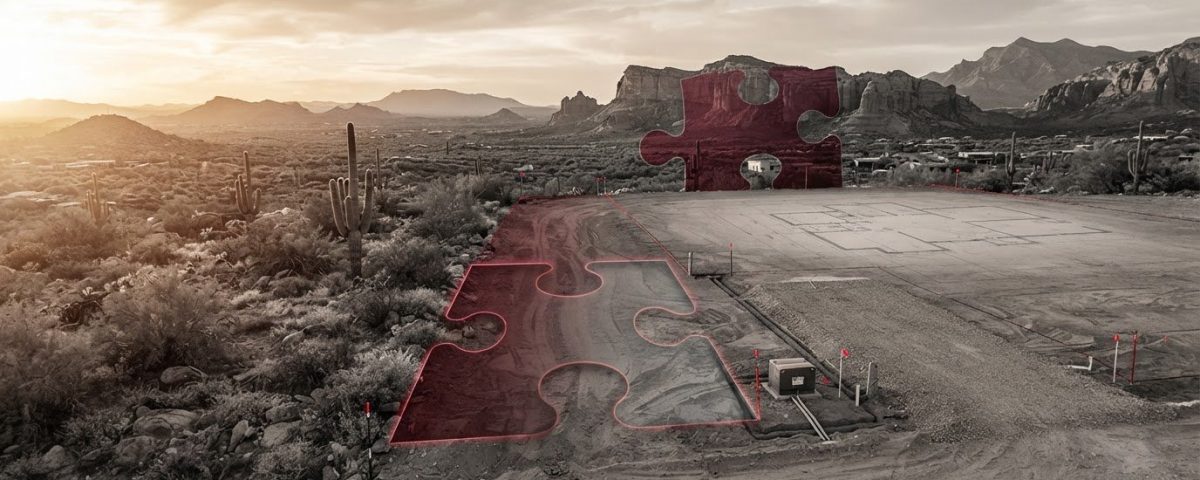
What if the biggest hurdle with a lot loan isn’t your credit file, but whether the parcel fits your plans? In Arizona, raw land with no improvements, unimproved land with partial infrastructure, and improved land ready for construction can present very different financing considerations. Those differences can affect the loan structure to explore, the funds you may need to contribute, and whether to finance the land on its own or alongside a future build.
Start with the parcel and its intended use, not a generic loan checklist. This guide explains how lot loans work, what lenders may evaluate about the land and borrower, and how to prepare for an Arizona purchase. You’ll also find practical due-diligence steps for investigating access, water availability, utilities, and zoning before you commit. Whether you’re considering land near Phoenix, Tucson, or elsewhere in Arizona, a clear picture of the parcel and your plans makes for a more focused financing discussion.
Key Takeaways
- Match a lot loan to the parcel’s readiness and your intended use, rather than assuming every land purchase needs the same financing.
- Prepare to discuss the property, your borrower profile, proposed project, and repayment plan as parts of one application.
- Decide whether you need financing for land acquisition now or construction funding built around a home project.
- Organize due diligence in stages, from defining your plans to reviewing parcel records and assessing available services.
- Research the specific location, including relevant city and county requirements around Phoenix, Tucson, or elsewhere in Arizona.
What Is a Lot Loan, and When Does Arizona Land Need One?
A lot loan is financing used to buy a parcel of land before a home exists on it. It can separate the land purchase from a later building project, giving you time to plan construction, decide how you intend to use the property, and assess what the site needs. Financing the land doesn’t automatically cover construction. The right structure depends on the parcel and your plans.
That distinction matters in Arizona, where access, existing services, and site conditions can vary from one parcel to another. Lenders may consider those features alongside your borrower profile, intended use, and repayment plan. A future primary home, second home, or investment project can each shape the financing discussion, but the planned use alone doesn’t determine whether a parcel or application qualifies.
How raw, unimproved, and improved lots differ
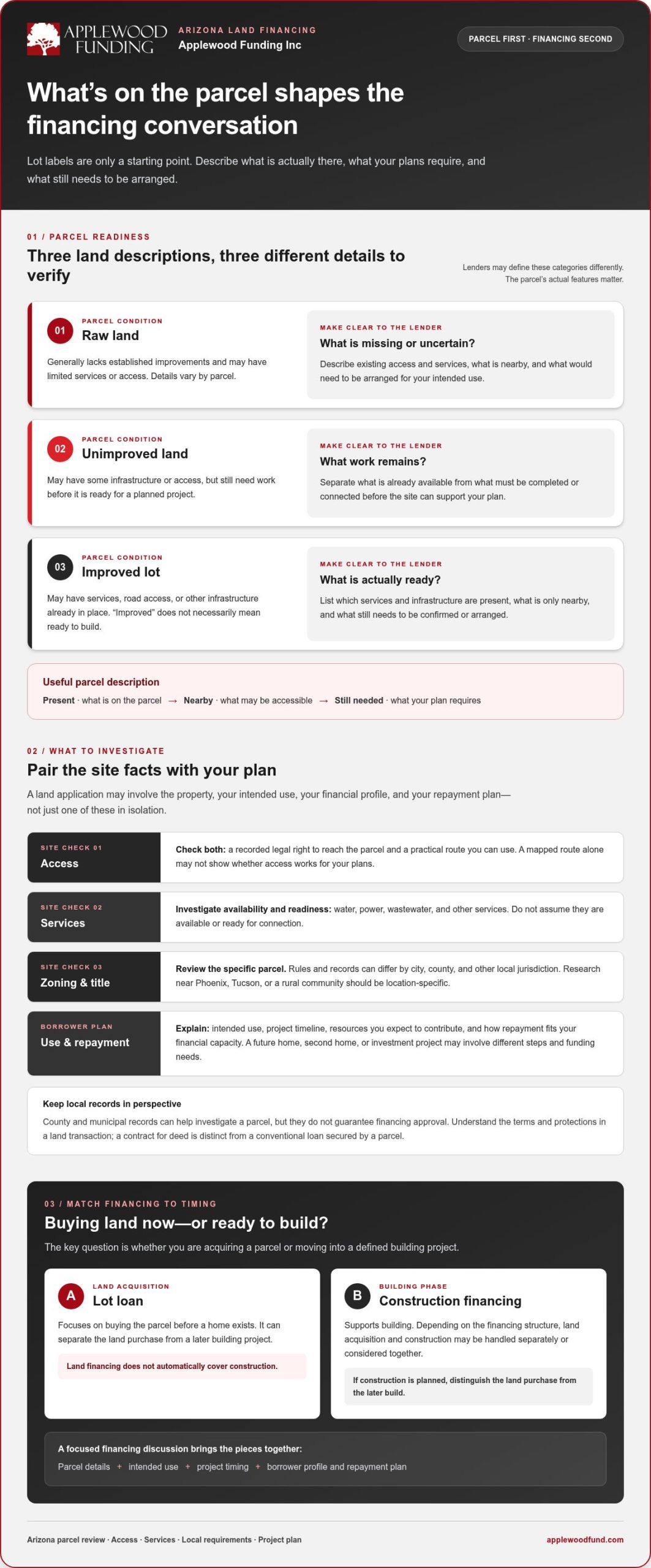
Land labels offer a starting point, not a universal classification. Lenders may define them differently, so describe what is actually on the parcel rather than relying on its label.
- Raw land: Generally lacks established improvements and may have limited services or access. The details vary by parcel.
- Unimproved land: May have some infrastructure or access, but still need work before it’s ready for a planned project.
- Improved lots: May have some services, road access, or other infrastructure already in place. “Improved” doesn’t necessarily mean ready to build.
For example, two parcels described as improved could differ in the services available or the work still needed. For a useful comparison, list what is present, what is nearby, and what remains to be arranged. Verifiable property details give a lender a clearer picture than a broad category alone.
Who may consider financing a lot
Buyers who want to secure land before choosing a builder or beginning construction may consider land financing. So might someone planning a future residence, a second home, or an investment project. Explain the intended use and likely next steps, including whether construction is planned and how soon. A clear plan helps frame the discussion, though it doesn’t guarantee eligibility.
A lot loan focuses on acquiring the land. Construction financing supports building, and the two may be handled separately or, depending on the financing structure, considered together. Don’t assume a land purchase loan includes funds for a future home. Investors exploring alternatives may also encounter a hard money loan, a real estate financing approach with terms that differ from conventional lending. Applewood Funding Inc offers land and construction loans, so you can discuss the parcel and intended project as connected parts of your financing plan.
What Arizona Lot Lenders May Evaluate Before Financing Land
A land application involves more than the borrower or the parcel alone. A lender may consider the property’s characteristics, your intended use, your financial profile, and how you plan to repay the loan. Bring those pieces together early. A clear overview can help surface questions to resolve before you commit to buying.
Parcel access, utilities, zoning, and title
Start with access. A recorded legal right to reach the parcel and a practical route you can use are related, but distinct considerations. Review property records and assess the actual approach to the site. A mapped route alone may not tell you whether access works for your plans.
Investigate water, power, wastewater, and other services instead of assuming they’re available or ready for connection. Then review zoning and title information for the specific parcel. Rules and records can vary by city, county, and other local jurisdiction, so research for land near Phoenix, Tucson, or a rural community should be location-specific. County and municipal records can help you investigate the parcel, but they don’t guarantee financing approval.
Also consider the purchase structure. The CFPB’s discussion of contract-for-deed risks is a reminder to understand the terms and protections involved in a land transaction. That arrangement is distinct from a conventional loan secured by a parcel.
Borrower plan, equity, and repayment strategy
Explain what you plan to do with the land and when. A future home, second-home plan, or investment project may involve different steps, timelines, and funding needs. Lenders may consider how your plan fits the parcel, what resources you expect to contribute, and how repayment fits your broader financial capacity. There’s no single set of assumptions that applies to every property or borrower.
Be ready to discuss the intended use, expected project timeline, and repayment approach. If construction is part of the plan, distinguish the land purchase from the later building phase. That helps frame whether the financing conversation should focus on acquiring the parcel, construction, or how those needs relate.
Land-loan review can depend on the parcel’s access, services, permitted use, title, the borrower’s financial capacity, and the plan for repayment.
Applewood Funding Inc provides land and construction financing in Arizona. If you’re weighing a parcel and a future project together, discuss your Arizona land financing plan as one connected picture.
Lot Loan vs. Construction Loan: Choose Financing Around Your Build Plan
The key question is timing: are you buying land now, or are you ready to move into a defined building project? A lot loan focuses on acquiring the parcel. Construction financing supports the build. Your project’s readiness can help determine which conversation to have first, though financing depends on the specific parcel, plan, and borrower.
| Planning factor | Lot loan | Construction financing |
|---|---|---|
| Purchase purpose | Acquire land before construction is underway. | Fund a planned building project, potentially alongside the land purchase. |
| Construction timing | Often considered when building is a later step or the schedule is still taking shape. | Relevant when the borrower is preparing to build. |
| Project readiness | The focus is on the parcel and the land purchase plan. | The build plan and parcel readiness are part of the financing discussion. |
When a separate lot loan may fit the plan
Buying land ahead of construction can make sense if you need time to refine the design, coordinate plans, or determine the project sequence. In that situation, treat the land acquisition and future build as separate stages. Share your expected timeline and intended use, then account for what still needs to happen before construction can begin. A lot loan doesn’t guarantee that later construction financing will be available.
For more detail on financing a ground-up project, read the construction loan guide.
When construction financing belongs in the conversation
If you have a defined build plan and want to consider land and construction funding together, raise that early. The project’s scope, timeline, and the parcel’s readiness can influence how financing is structured. For example, a site that still needs key services or preparation may call for a different plan than a parcel ready for the next building steps.
Bring the land details and project plan into one discussion. Clarify what you’re buying, what you intend to build, and when you expect each stage to happen. That gives the lender a more complete view than a land purchase request alone. Applewood Funding Inc provides land and construction loans, connecting parcel review with the intended project. For a broader look at financing considerations, see this guide to hard money loan trade-offs.
Arizona Lot-Loan Due Diligence: A Practical Checklist Before You Commit
Before committing to land, follow a clear sequence: define your intended use, investigate the exact parcel, review available records, assess services and site conditions, then discuss the financing plan. Each step answers a different question. Research what the land may support, then consider how the purchase and project fit your financing goals.
Research the parcel and its local jurisdiction
Start by identifying the parcel’s location and which city or county offices maintain relevant information. Phoenix-area properties may involve Maricopa County records, while land in or near Tucson has its own local offices and processes. Don’t assume guidance for one Arizona jurisdiction applies everywhere.
- Define the planned use. Write down whether you’re considering a home, second home, or investment project, and whether construction is part of the plan.
- Research the exact parcel. Use its location and parcel details to focus your investigation. Look into zoning, recorded title information, and legal and practical access.
- Review local records. Check the relevant county and municipal sources for parcel and land-use information. Treat records as research tools, not a promise of financing or permission to build.
- Assess services and site conditions. Investigate water, power, wastewater, and other utility availability. Consider environmental or physical conditions that may affect your intended use, and seek parcel-specific information rather than relying on general assumptions.
- Discuss the financing plan. Bring your intended use, timeline, parcel findings, and financial overview into the lender conversation before making a purchase commitment you can’t easily reverse.
Prepare a clear financing brief
Make the financing discussion focused. Summarize why you’re buying the land, how long you expect to own it, and whether you plan to build. Gather the parcel details you’ve found and a clear picture of your financial capacity and repayment approach. Use an early conversation to surface questions about project fit and financing structure before moving forward.
Parcel due diligence tells you what the land may support; loan review considers how the property and your financing plan fit together.
Applewood Funding Inc offers land and construction financing in Arizona. Discuss your Arizona land financing plan with the parcel details and project purpose in hand.
Explore Arizona Land Financing With Applewood Funding
Land financing works best as a project conversation, not a decision made from the parcel description alone. Applewood Funding offers land and construction loans in Arizona, bringing the purchase and your intended next steps into the same discussion. The aim is to understand the land, what you want to do with it, and how the financing path may fit your plans. Approval and terms depend on review of the specific project.
Bring the lot and project plan into one conversation
Before discussing a lot loan, organize the details that connect the parcel to your plans. A focused overview helps clarify what you’re trying to finance and what questions remain. Include:
- Parcel location: Share the city or county and any identifying property details you have.
- Intended use: Explain whether you’re planning a primary residence, second home, or investment project.
- Access and services: Summarize what you’ve learned about road access, utilities, and the property’s current condition.
- Build timeline: Say whether construction is a future possibility or a defined part of your current plan.
These details help connect land acquisition with possible construction needs without assuming they must use the same financing structure. If you’re buying the parcel now and building later, explain that sequence. If you have a defined project, bring its scope and timing into the conversation too. The parcel and project can be considered together, while the financing path depends on the details of your situation.
Take the next step on your Arizona lot purchase
Start by gathering parcel information, writing down your intended use, summarizing your due diligence, and clarifying your likely build timeline. Bring those points to a financing discussion before making a purchase commitment. You’ll have a more practical basis for exploring land and construction financing, and a clearer view of what needs attention next.
Applewood Funding serves borrowers in Arizona, including Phoenix, Scottsdale, Mesa, Tempe, Glendale, Peoria, Sedona, Flagstaff, and Tucson. Whether you’re considering a parcel in the Phoenix area or elsewhere in Arizona, bring the property details and project plans to a focused financing conversation.
Make Your Arizona Land Purchase Plan Clear
A smart lot loan plan starts with the parcel, not a one-size-fits-all checklist. Investigate the property’s access, services, zoning, title, and site conditions for its specific location. Then connect what you learn to your intended use and timeline. Those details can help shape a focused financing discussion.
Keep land acquisition and construction in view as related but distinct needs. If you’re buying now and building later, explain that sequence. If you have a defined project, bring its scope and timing into the conversation. Applewood Funding offers land and construction loans and serves Phoenix and communities across Arizona.
Ready to discuss your parcel and plans? Discuss your Arizona land financing options with Applewood Funding. Bring the property details and your questions to start a focused conversation about your land purchase and project plans.
Frequently Asked Questions
What is a lot loan, and how does it work?
A lot loan is financing used to purchase land before a home exists on it. It typically focuses on the parcel, borrower, intended use, and repayment plan. Unlike a standard home mortgage, there’s no completed house on the property. In Arizona, details such as access, available services, and development plans can shape the review. Eligibility and terms depend on the specific lender and transaction.
Can I get a lot loan if I do not plan to build right away?
A buyer may seek financing for land now and plan to build later, but the lender’s requirements and the parcel’s characteristics matter. Be ready to explain why you’re buying the land, how long you expect to own it, and whether construction is part of a future plan. Financing the purchase doesn’t guarantee that you’ll qualify for a separate construction loan later.
How much down payment do I need for a lot loan?
There isn’t one down payment amount that applies to every land purchase. The amount may depend on the parcel’s condition, the financing structure, lender requirements, and your financial situation. Land with fewer improvements may be assessed differently from a parcel with infrastructure already in place. Before committing, discuss the purchase price, available funds, planned use, and parcel details with the lender so you can understand the financing structure being considered.
Is it harder to get a loan for land than a home mortgage?
Land financing involves different questions than a mortgage for a completed home, but it isn’t automatically harder for every borrower. Lenders may look closely at the parcel’s access, services, zoning, and potential use, along with your finances and repayment plan. The review can vary by property and financing structure. For land in Phoenix, Tucson, or elsewhere in Arizona, investigate the specific parcel rather than assuming one review fits all.
Can I use a lot loan to buy land and build a home later?
You can use a lot loan to finance land before you’re ready to build, but construction costs aren’t automatically part of that loan. A later build may require separate construction financing, or land and construction needs may be considered together under a financing structure suited to the project. Applewood Funding offers land and construction loans. Discuss your parcel, intended home, and timeline as related parts of the plan, without assuming future financing is guaranteed.
What should I check before buying vacant land in Arizona?
Research the exact parcel’s zoning, title records, legal and practical access, utility availability, and site or environmental conditions. Identify the responsible city and county offices, since local details can differ. For example, Phoenix-area research may involve Maricopa County, while a Tucson-area parcel has its own jurisdictional context. Check water, power, and wastewater access instead of assuming services are available. Use these findings to inform, not replace, a financing review.
Are lot loans and construction loans the same thing?
No. A lot loan focuses on buying land, while construction financing supports building. The right financing conversation depends partly on whether you’re acquiring a parcel for later use or preparing for a defined build. Applewood Funding offers land and construction loans for Arizona borrowers, including those in Phoenix, Scottsdale, Glendale, Peoria, Tempe, Mesa, Sedona, and Flagstaff. Share the parcel, project purpose, and timeline to discuss how the needs may fit together.