

Scottsdale Private Money Loans: A 2026 Borrower’s Guide
September 25, 2026Land Development Financing: A Step-by-Step Guide for 2026
A parcel can look like a promising deal and still be far from ready for development. Land development financing is easier to evaluate when you map funding to each project milestone, from acquisition and due diligence to site work and construction. Start with the plan, not just the purchase price.
If you’re unsure which costs a lender may consider, what site issues could delay a project, or which documents to bring to a financing conversation, you’re not alone. Lenders assess more than the land itself. Zoning, access, utilities, project costs, experience, and supporting paperwork can all affect how they evaluate a proposal.
This guide explains how to prepare a land project, compare financing options, and plan funding around each development stage. You’ll learn how to assess a parcel’s readiness, identify risks to investigate, and organize documents lenders may request. We’ll also cover when it may make sense to explore a lender offering construction and land loans, without assuming every project or borrower is a fit.
Key Takeaways
- Separate land acquisition, site preparation, and vertical construction costs to identify the funding need at each stage.
- Before pursuing land development financing, check the parcel’s zoning, intended use, access, utility availability, and local requirements.
- Compare funding options by project milestone, collateral, documentation, and repayment plan. Lenders may assess projects differently.
- Prepare a clear lender package that explains the project, budget, timeline, and funding request. Complete documents help lenders evaluate a request but don’t guarantee approval.
- Before a financing conversation, list the project’s current stage, unresolved risks, and immediate questions. Verify local details instead of relying on assumptions.
What Land Development Financing Covers Before Construction Begins
Land development financing may fund work that prepares a parcel for a planned use or future construction. It isn’t one universal loan for every expense. Buying land, investigating its condition, installing infrastructure, and building structures are distinct needs, and a lender may treat each differently. The broader real estate development process helps explain why funding needs can change as a project moves from land selection to construction.
Before approaching a lender, define what needs funding, when each cost will arise, and how you expect to repay the debt. A credible development plan, verifiable site information, and a realistic repayment strategy help a lender assess a request. They don’t guarantee approval or mean every cost will be eligible.
Which project stages may need financing?
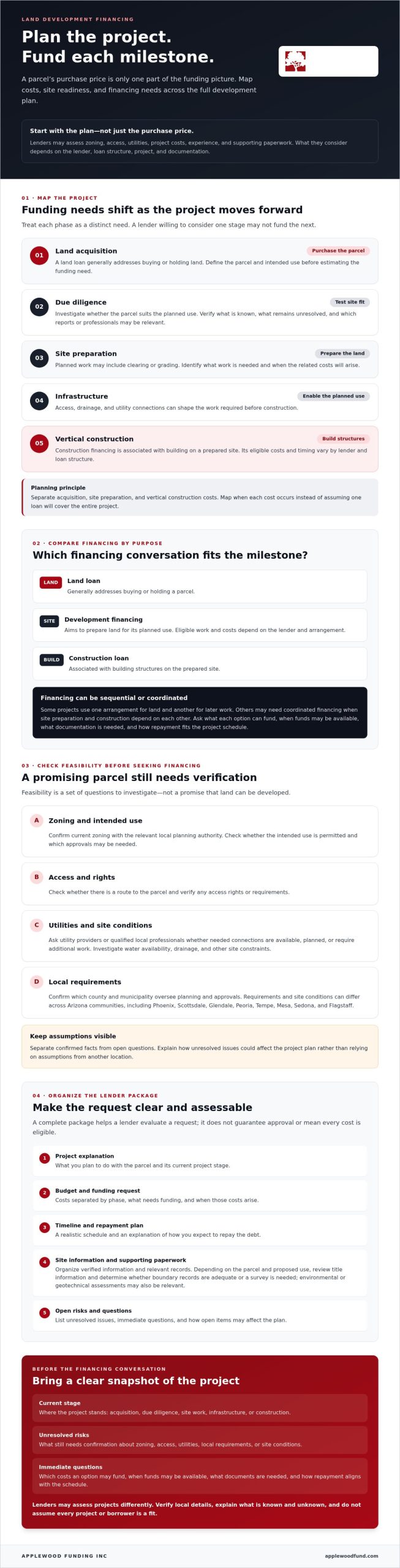
Think in milestones. Acquisition funds the purchase, while due diligence helps determine whether the parcel suits your intended use. Site preparation may involve clearing or grading. Infrastructure work can address access, drainage, and utility connections. Vertical construction comes later, when buildings are built on the prepared site. What a lender will consider depends on the lender, loan structure, project, and documentation.
For example, a developer might evaluate a vacant parcel, confirm access and utility options, plan site work, and eventually build. A lender willing to consider the purchase may not fund the later work. Map costs and funding needs by phase instead of assuming one loan will cover the entire project.
How land loans differ from construction loans
A land loan generally addresses buying or holding a parcel. Development financing is aimed at preparing it for the planned use, while a construction loan is associated with building. Boundaries and eligible costs vary by lender, so ask what each option can fund, when funds may be available, what documentation is needed, and how repayment fits the project schedule.
Some projects use sequential financing, with one arrangement for the land and another for later work. Others may need coordinated financing, especially when site preparation and vertical construction depend on one another. Applewood Funding Inc lists construction and land loans among its offerings, so its contact page is one place to raise questions once you’ve defined the project stage and funding purpose. This doesn’t mean every project or borrower will qualify. For more on the building phase, see a guide to ground-up construction loans.
Check Arizona Land Feasibility Before You Seek Development Financing
A parcel’s appearance doesn’t show whether your project can move forward. Feasibility is a set of questions to investigate, not a promise that land can be developed. Before seeking land development financing, establish what you plan to build and check whether the site, approvals, and infrastructure could support that use.
Start by confirming the parcel’s location and which county and municipality oversee the relevant planning and approval steps. Requirements and site conditions can differ between Phoenix, Scottsdale, Glendale, Peoria, Tempe, and Mesa, as well as in communities such as Sedona and Flagstaff. Don’t assume a process or utility situation in one place applies elsewhere in Arizona.
Verify zoning, access, and utility assumptions
Contact the relevant local planning authority to confirm current zoning, whether your intended use is permitted, and what approvals may be needed. Then check access: is there a route to the parcel, and have any access rights or requirements been verified? Ask utility providers or qualified local professionals whether the connections your plan depends on are available, planned, or would require additional work.
Water availability, drainage, and other site constraints can affect feasibility and the work required before construction. Treat assumptions as open questions until they’re confirmed. A lender evaluating the request may need to understand what is known, what remains unresolved, and how open issues could affect the project plan.
Identify reports and professionals the project may require
Due diligence can turn a general idea into facts a lender can assess. Review title information with an appropriate professional, and determine whether existing boundary records are adequate or a survey is needed. Depending on the parcel and proposed use, environmental or geotechnical assessments may also be relevant. The right scope depends on the site and project, so confirm it with qualified local professionals rather than treating every report as a universal requirement.
Keep a brief record of each finding, who confirmed it, and what still needs investigation. This makes it easier to build a realistic budget and explain the project’s status. Verify Arizona-specific zoning, permitting, utility, and report requirements with the applicable local authorities and professionals before relying on them.
For rural home projects, the U.S. Department of Agriculture describes eligibility and terms for its USDA Rural Development loan program. Review the program directly, and don’t assume it covers land preparation or fits a particular development plan.
Once you’ve checked the parcel and listed outstanding questions, you can discuss the project stage and funding purpose with a lender. If you’re exploring whether a construction and land loan may fit, Applewood Funding Inc’s contact page provides a way to share details about your Arizona project. Eligibility and fit depend on the project and lender review.
Compare Land Development Financing Options Against Project Milestones
The right funding path depends on what the project needs next. Financing to acquire or hold land addresses a different stage from funding site work or building. Compare options based on the parcel’s current condition, the work ahead, the collateral involved, the documents requested, and the repayment plan. A lender determines which structures are available after reviewing the borrower and project.
Banks, private lenders, and other funding sources may weigh different parts of a proposal. Rather than assuming one source is always faster, cheaper, or easier to qualify for, ask how each will evaluate your specific project stage and what evidence it needs.
Comparison criteria
Acquisition or land holding: Clarify whether the proposed financing covers purchasing or holding the parcel. Ask what property information, borrower documents, collateral, and repayment details the lender will review.
Site preparation: Explain what work remains, such as grading or infrastructure, and provide the project scope and supporting site information. Ask whether those costs may be considered and how funds would be made available.
Vertical construction: Present the building plan, budget, and expected repayment strategy. Confirm what construction documents are required, what collateral supports the request, and whether funds are released in stages.
Partially prepared land: Show which improvements are complete and which remain. A parcel with confirmed access or utility work may raise different evaluation questions from raw land, but it doesn’t guarantee a particular financing outcome.
Match the funding approach to the project stage
Imagine a parcel that has been acquired but still needs site work before construction. The next funding need may relate to preparing the land, not simply buying it or building on it. List each milestone, its anticipated costs, and what must happen before the next phase can begin. This helps a lender assess whether the requested structure matches the project sequence.
Understand trade-offs before choosing a lender
Compare the details in writing. Ask how much borrower equity may be needed, what documents are required, what collateral supports the loan, how repayment is expected to work, and what conditions apply before funds are released. Answers depend on the lender and project, so don’t rely on assumptions about flexibility or eligibility.
Before committing, review the loan documents and clarify draw conditions, including what evidence or approvals are needed for each release. If the proposal includes a building phase, use a guide to construction loan options to understand the questions to raise about that stage. Strong land development financing starts with matching the request to the actual milestone, then checking that the funding structure and repayment plan fit together.
Prepare a Lender-Ready Land Development Financing Package
A clear package helps a lender understand what you plan to do, what the parcel needs, and how funding fits the project timeline. Complete information supports evaluation but doesn’t guarantee approval. Requirements vary, so use this checklist as a starting point and confirm the actual document list with each prospective lender.
A strong package connects parcel facts, a defined project plan, a supported budget, and a credible repayment path.
Build a clear project scope and budget
Start with the intended land use, development phases, schedule assumptions, and professionals responsible for key work. Be specific about what must happen before the site is ready for construction and what the next milestone will be.
Organize the budget by phase instead of presenting one blended total. Separate acquisition, due diligence, site work, infrastructure, and vertical construction. Ask qualified professionals to support cost assumptions where appropriate, identify unresolved items, and account for contingencies. If a cost or timing estimate is preliminary, label it that way rather than presenting it as settled.
Organize parcel, borrower, and repayment information
Bring the facts that help a lender follow the project from land to planned use. Depending on your situation and the lender’s requirements, preparation items may include:
- Purchase or ownership details for the parcel.
- Available title, boundary, survey, environmental, or geotechnical information.
- Relevant zoning details, permits, approvals, or records of applications in progress.
- A project description, phase-by-phase budget, schedule assumptions, and details about responsible professionals.
- Borrower financial information requested by the lender.
- A repayment or exit strategy that explains how you expect to repay the debt.
Keep documents organized by topic and note what is confirmed, pending, or unavailable. Before submitting anything, ask the lender which documents it needs, what formats it accepts, and whether it expects updates as the project advances. For land development financing, these details can help you prepare a focused request instead of sending disconnected records.
Then summarize the funding request in plain language: identify the current project stage, the amount and purpose you want the lender to evaluate, and the next milestone that funding would support. A lender will determine available structures after reviewing your circumstances and project. A complete file is useful, but it isn’t a promise of approval.
If you’ve organized the parcel information, project scope, budget, and repayment plan, Applewood Funding Inc’s contact page is available for questions about land and construction financing. Fit and availability depend on lender review.
Move from Arizona Land Plan to a Financing Conversation
Before approaching a lender, get clear on four things: where the project stands, what remains unresolved, what you need funds for, and which decisions you need help evaluating. A focused conversation about land development financing starts with facts, not assumptions. For an Arizona parcel, confirm zoning and intended use with the relevant local authority, and verify access, utility availability, and approval details with the appropriate sources.
Prepare a brief project snapshot. Include the parcel’s location and ownership or purchase status, intended use, completed and upcoming phases, current financing gap, and open due diligence items. Be direct about what is confirmed and what is still pending. This gives a lender a clearer basis for discussing whether a funding structure may fit.
Questions to ask before discussing financing
Bring practical questions. Answers depend on the lender, borrower, and project, so ask for specifics rather than assuming standard terms or processes.
- Which project stages and cost categories may be considered for financing?
- What borrower contribution, collateral, and project or financial documents would you need to review?
- How are funds accessed or drawn, and what conditions must be met before each release?
- What repayment expectations should I plan around, and how does the proposed schedule relate to project milestones?
- If approvals take longer than planned or the project scope changes, how could that affect funding?
Ask for relevant requirements and conditions in writing. Clarify unfamiliar terms before making a commitment, and compare the proposed repayment plan with your project’s expected sequence.
Choose a practical next step for your Arizona project
Organize parcel facts, the project plan, expected funding use, and unresolved due diligence into a concise brief. If local zoning, utilities, access, or approvals aren’t confirmed, list them as next steps instead of treating them as settled. Preparation helps make the financing discussion more focused, but it doesn’t ensure approval.
Applewood Funding Inc lists construction and land loans among its offerings. If you’re exploring whether this type of lender may fit your project, a conversation can help you explain your plans and ask about current program scope. It isn’t a guarantee of availability or approval. Review the contact information if you want to discuss your land financing questions and where your Arizona project stands.
Turn Your Land Plan Into a Clear Next Step
Build your financing plan around the project, not just the parcel. Confirm what the site can support, separate acquisition and development needs from construction costs, and organize a clear budget, project scope, and repayment strategy. These steps give lenders useful context, though they can’t guarantee approval.
Connect each funding request to a specific milestone and be upfront about unresolved site details or approvals. Clear questions help you understand what a lender may consider, which documents it needs, and how a proposed structure could fit your plans.
Applewood Funding Inc lists construction and land loans among its offerings and serves Arizona markets, including Phoenix, Scottsdale, Glendale, Peoria, Tempe, Mesa, Sedona, Flagstaff, and Tucson. To discuss your project, contact Applewood Funding Inc about your land financing questions and share the project stage, funding purpose, and details you’ve confirmed.
Frequently Asked Questions
What is land development financing?
Land development financing is funding a lender may consider for costs involved in preparing land for a planned use or construction. Depending on the parcel and financing structure, needs could include acquisition, due diligence, site work, or infrastructure. It isn’t automatically the same as a loan for building. For a property in Phoenix, Mesa, or elsewhere in Arizona, ask which stages and expenses a lender may consider before building your budget.
How does land development financing work?
Start by defining the project and confirming what you know about the parcel. Investigate zoning, access, utilities, approvals, and likely development costs with relevant local authorities and qualified professionals. Then organize the project plan, budget, borrower information, and repayment strategy. A lender reviews the request and decides whether its available financing may fit. Requirements and funding stages vary, so verify details for your Arizona property rather than relying on assumptions.
Can I finance raw land and its development with one loan?
Possibly, but no single loan structure applies to every parcel or lender. Financing may focus on acquiring or holding land, while other funds may address site preparation or construction. Ask whether one facility could cover the stages your project needs, how funds would be released, and what conditions apply. For land in Scottsdale, Tucson, or another Arizona market, compare the proposed structure with your project schedule and seek qualified advice before committing.
What do lenders look at for land development financing?
Lenders may review the parcel, intended use, project feasibility, borrower finances, collateral, budget, approvals, and repayment plan. The exact assessment depends on the lender and financing structure. A clear package helps explain the request, but doesn’t guarantee approval. Before applying, ask what information is needed and whether unresolved zoning, access, utility, or environmental questions should be addressed for your Arizona project.
How do I know if Arizona land is ready for development?
Don’t rely on a listing description or informal assumption. Confirm which municipality or county governs the parcel, then check permitted uses, access, utility availability, and the applicable approval process with local authorities and qualified professionals. Site conditions may call for a survey or other assessment. Requirements can differ between Phoenix-area communities and places such as Flagstaff or Sedona, so verify facts for the specific parcel before treating it as build-ready.
What documents should I prepare for a land development loan?
Start with parcel and purchase information, available title or survey materials, a project scope, phased budget, schedule assumptions, and relevant approvals or reports. Gather requested borrower financial information and explain your repayment strategy. A lender may ask for more based on the property and project. Whether the parcel is near Peoria, Tempe, or elsewhere in Arizona, request the lender’s current checklist early and have qualified professionals support estimates or technical details.
Is land development financing different from a construction loan?
Yes. The terms can relate to different project needs, though one development plan may involve both. Land financing may address acquiring or holding a parcel, development funding may support site preparation and infrastructure, and construction financing generally concerns building work. Lenders may define coverage differently. Before comparing options for an Arizona property, ask which costs and project stages each proposed loan covers and how funding releases are handled.