

Financing Tempe Properties with Zoning Issues for ASU Rentals
November 18, 2026Hard Money Second Mortgage Pricing in Glendale

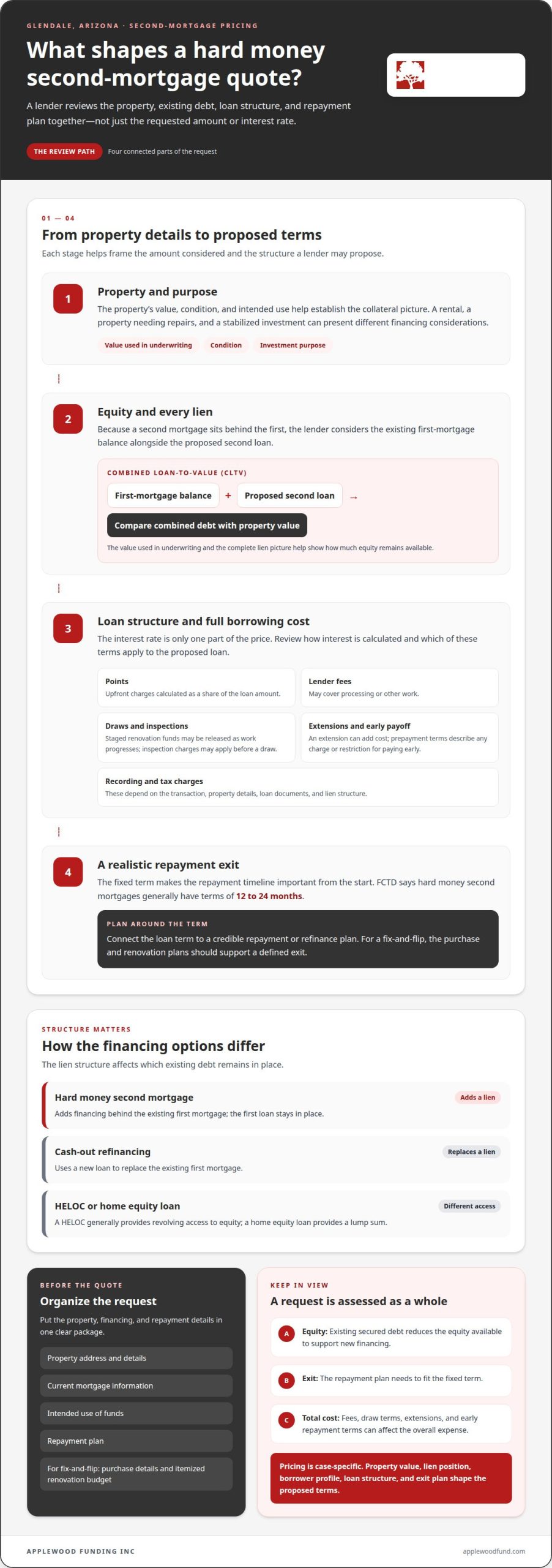
A fixed term can shape a hard money second mortgage just as much as the property does. For borrowers getting a second mortgage with hard money in Glendale, pricing depends on factors such as property value, available equity, the loan structure, and the planned exit. FCTD says hard money second mortgages generally have terms of 12 to 24 months, so the repayment timeline matters from the start.
It’s reasonable to focus on the rate, but the full cost also depends on how the loan is structured and what fees apply. The property secures the second mortgage behind an existing first mortgage, and lenders weigh its value alongside the borrower’s financing plan, equity, and exit strategy.
This article explains what drives pricing, how property value and existing debt affect potential financing, and how credit may factor into eligibility. You’ll also see why a fixed term matters and what information helps a lender assess the request. The price depends on the individual case and is provided after a quote request, with the property, loan structure, and borrower’s circumstances shaping the terms.
Key Takeaways
- Look beyond the interest rate: points, lender fees, draw and inspection charges, extension costs, and prepayment terms can all affect the total expense.
- For a second mortgage, existing debt reduces the equity available to support new financing. The combined loan-to-value picture matters.
- Hard money can involve a larger down payment and higher interest than a traditional mortgage, so weigh the cost against the purpose and repayment plan.
- A weaker credit profile may not automatically rule out an investment loan; property value, equity, and a credible exit strategy can carry significant weight.
- Match the loan’s fixed term to a realistic repayment or refinance plan, and organize property and project details to support underwriting.
What can hard money loans in Glendale finance?
A hard money second mortgage is financing secured by real estate that already has a first mortgage. In Glendale, Arizona, borrowers may consider this structure for an investment purchase, a fix-and-flip project, or another property-backed funding need. A lender evaluates the property, available equity, existing debt, and repayment plan. These details shape the amount considered and the proposed loan structure.
Pricing involves more than the interest rate. Points are upfront charges calculated as a share of the loan amount, while lender fees may cover processing or other work. A project with staged renovation spending may use draws, which release funds as work progresses. Inspection charges may apply before a draw. An extension can add cost if repayment takes longer than planned, while prepayment terms describe any charge or restriction for paying early.
Review each proposed term: how interest is calculated, which points and lender fees apply, how draw requests work, whether inspections incur charges, and what extensions or early repayment involve. These details affect total borrowing costs and access to funds. The price depends on the case and is provided after a quote request; property, lien position, borrower profile, loan structure, and exit plan shape the terms.
Do not treat a statewide or national market average as a Glendale quote. A reported average may reflect different property types, loan purposes, lien positions, and borrower profiles. For a specific Glendale property, the value used in underwriting, existing mortgage balance, available equity, financing purpose, and planned repayment shape the lender’s assessment. The requested loan amount alone cannot establish the rate or total cost.
A hard money second mortgage differs from a HELOC, home equity loan, and cash-out refinancing. A HELOC generally provides revolving access to equity, while a home equity loan provides a lump sum. Cash-out refinancing replaces the existing first mortgage; a second mortgage adds financing behind it, leaving the first loan in place.
Recording and tax treatment depend on the transaction and property details. The loan documents, lien structure, and applicable requirements determine which recording or tax charges apply. Include these transaction-specific items in your overall funding plan instead of assuming one charge applies to every Glendale second mortgage.
For a Glendale request, organize the property address, current mortgage information, intended use of funds, and repayment plan. For a fix-and-flip project, include purchase details and an itemized renovation budget. A clear package helps the lender evaluate the collateral, equity, costs, and exit strategy together.
Loan-to-value limits, including second loans
A hard money lender weighs the requested funding against the real estate securing it. With a second mortgage, the existing first lien also affects how much equity remains available. Evaluate the property value and all secured debt together.
Loan Amount and LTV Limits
Loan-to-value, or LTV, compares a loan balance with the property value used in underwriting. The lender considers the property’s condition, intended use, equity, and repayment plan when assessing the requested amount. A rental acquisition and a renovation project may present different risks, even when the properties have similar values. Focus on how the requested funding relates to the specific property and its financing purpose.
Second-Mortgage LTV Limits
A second mortgage is secured behind an existing first mortgage. The lender therefore considers the first mortgage balance alongside the proposed second loan. Combined loan-to-value, or CLTV, compares both balances with the property value used for underwriting. For a Glendale property, available equity and the complete lien picture help frame the request; do not assume one LTV figure applies to every property.
Cash-Out and Combined LTV
Cash-out financing uses property equity to provide funds, but its calculation depends on the lien structure. With a second mortgage, the first loan remains in place, so add its balance to the proposed second lien when considering CLTV. With cash-out refinancing, the new loan replaces the existing first mortgage. The difference matters because each structure leaves a different set of secured debts after closing.
Build a clear estimate by identifying the property value used in underwriting and the current first-mortgage payoff. Then add the proposed second loan to determine the combined debt against that value. This gives the lender a consistent basis for reviewing the requested amount and remaining equity.
Property condition and use also shape the review. A rental property, a home needing repairs, and a stabilized investment each have distinct financing considerations. A fix-and-flip request should connect its purchase and renovation plans to a defined repayment exit. The lender assesses the whole project, not just the requested amount or a value estimate in isolation.
Keep cash-out LTV and second-mortgage CLTV separate in your planning. Refinancing replaces a lien; a second mortgage adds another one. For a Glendale request, organize the property details, current mortgage balance, intended use of funds, and repayment plan so the proposed structure is clear.
Review your property-backed financing options with the lien balances and intended use of funds in view.
Hard money loan disadvantages and down payments
Hard money can help fund a time-sensitive property investment, but the borrower should weigh its costs against the project’s exit. These loans often carry higher interest rates than traditional mortgages because lenders take on more risk. A second mortgage can also cost more than a first mortgage, so the payment plan should account for both liens.
A substantial down payment may be needed. Hard money borrowers may need around 25-30% down, depending on the transaction and property. For a purchase, that cash contributes toward the acquisition. For a bridge loan, existing property equity may support the financing instead. Either way, the borrower needs a defined repayment path, not just funds to close.
Terms are short compared with long-term mortgages. Hard money loans commonly run from 6 months to 3 years. A delayed renovation, sale, or refinance can create pressure near maturity. Glendale borrowers should align the proposed term with the property timeline, including expected repairs, marketing, and the planned payoff source.
Minimum loan amounts can affect whether a request fits a lender’s program. The lender evaluates the requested funding against the property, lien structure, project purpose, and expected repayment. Organize the current mortgage balance, project costs, available funds, and exit plan before determining the amount to request. A licensed AZ mortgage broker can help present those transaction details clearly.
Approval and funding involve distinct stages. The lender reviews borrower and property information, underwrites the request, and prepares approved terms for closing. In Glendale, timing depends on the completeness of the file and the steps needed to evaluate the specific property and transaction. Prompt, consistent records can keep the review moving without guaranteeing a particular funding date.
Keep the loan purpose clear. An owner-occupied home, rental property, and fix-and-flip project each have a different use and repayment story. Describe the actual purpose accurately and connect it to the proposed payment plan. That distinction helps the lender assess whether the financing fits the property and your intended use.
Before accepting a bridge loan, consider the down payment, interest expense, maturity date, and repayment source together. A sale or refinance plan should have a realistic timeline and a clear connection to the property. If project completion or sale timing slips, the borrower may need to address the remaining balance as the term ends.
Bad-credit eligibility and underwriting considerations
A low credit score doesn’t automatically settle an investment-loan decision. Hard money underwriting weighs the property, equity, financing purpose, and exit plan.
Credit and Income Requirements
Credit and income help describe your financial position, but they aren’t the only underwriting factors. For an investment loan, a lender may focus on property value, available equity, your plan, and the exit strategy. Present income and repayment details alongside the property information to show how payments fit the financing plan.
Credit Score Requirements
There is no credit score minimum specified here, so avoid treating a particular score as a universal cutoff. Applewood Funding Inc. states “No Credit Required.” A weaker credit profile can still be part of the overall review, but the property, equity, and credible repayment or exit strategy remain central.
Prepare a clear file before underwriting begins. Include the property address, current mortgage information, intended use of funds, and a repayment plan. For a fix-and-flip investment, provide purchase details, an itemized renovation budget, and a realistic sale or refinance exit. These items connect the requested financing to the property’s value and your plan.
Income evidence adds useful context, especially when you expect rental income or have self-employed earnings. Lenders can assess expected cash flow against payment obligations and the proposed exit. Keep projected rents separate from current income, and explain how each supports repayment. A bridge loan with a defined property sale differs from long-term rental financing.
California requires geographic care in this comparison. Second mortgages are common in California hard money lending, while they are mostly absent from hard money lending in most other states. That market pattern does not set Glendale, Arizona underwriting criteria or establish a credit score threshold there.
A California revolving line of credit differs from a one-time loan because funds can be drawn as needed under its terms. For a real estate-backed request, distinguish the credit limit from the amount already drawn, and explain how the funds support the project. The lender still evaluates collateral and the repayment plan; a revolving structure doesn’t replace those considerations.
Strengthen the request by addressing credit issues directly and pairing them with a practical repayment path. Explain the circumstances behind a credit setback, then show the property’s value, available equity, and exit strategy. Applewood Funding Inc. states “No Credit Required,” and approval depends on the complete financing picture, not one score in isolation. Clear records make that picture easier to assess.
Fixed-term hard money second mortgages
A fixed term sets the period for using borrowed capital and reaching repayment. Hard money loans are short-term loans secured by real estate, and lenders assess the property alongside the financing plan. For a second mortgage, the first loan stays in place, so the repayment plan must account for both obligations.
Available term descriptions vary by loan type. FCTD says hard money second mortgages generally have terms of 12 to 24 months, with some business-purpose loans extending to 36 months. A broader market description gives hard money loan durations of 6 months to 3 years. These ranges are context, not a promised term for every Glendale property.
The key question is whether the planned exit fits the maturity date. A fix-and-flip borrower might plan to complete renovations, sell the property, and repay the second lien from sale proceeds. A rental-property borrower may instead plan to refinance after improving the property. Each route depends on project progress, property value, equity, and the financing available at exit.
Map the term against the project’s actual stages before accepting an offer. Identify when funds are needed, when the property work should finish, and when sale proceeds or replacement financing can repay the loan. A delay in construction, leasing, or sale can leave less time for payoff. Build the timeline around the exit, not simply the date capital is expected.
Read the maturity and payment provisions together. The term says when the loan comes due, while payment terms explain what is owed during the term and at payoff. Interest calculations, extension provisions, and prepayment terms can affect the repayment plan. Confirm how each provision works in the written loan terms, especially if the projected exit could shift.
A private money loan may suit a defined real estate opportunity with a clear repayment event. It can be a poor match when the project depends on an uncertain sale date or a refinance without a workable path. Residential borrowers should also distinguish personal-use financing from business-purpose investment financing, because the purpose affects how the request is evaluated.
For a Glendale second mortgage, prepare a concise timeline showing the property’s current status, planned work, expected sale or refinance, and payoff source. Pair that timeline with the property details and existing mortgage information. A lender can then evaluate whether the requested fixed term matches the collateral and exit strategy.
Discuss your fixed-term financing plan and align the proposed maturity with the property’s repayment path.
Applewood Funding
Applewood Funding is a private hard money lender for borrowers seeking property-backed financing. If you’re weighing a second mortgage for an owner-occupied home, rental investment, or real estate project, align the existing debt, available equity, intended use of funds, and repayment plan.
Applewood Funding offers Owner Occupied Hard Money Loans, Fix and Flip Loans, Rental Property Loans, and Construction and Land Loans. These options address different property needs, so bring the property details, current mortgage information, and a clear funding purpose to start a focused conversation.
Contact Applewood Funding to discuss your property financing needs.
Turn your property plan into a clear next step
If you’re considering getting a second mortgage with hard money in Glendale, define the decision around the property’s role and your intended outcome. A focused financing conversation starts with the address, existing mortgage details, how you plan to use the funds, and what will repay the loan. This gives the lending review a practical foundation instead of relying on a rate alone.
Applewood Funding offers Owner Occupied Hard Money Loans, Fix and Flip Loans, and Rental Property Loans. The right fit depends on whether the property is your home, an active renovation, or a rental investment. Bring the details that distinguish your situation, then discuss how the financing structure aligns with your plans.
Take the next step when you’re ready to explore the request with a professional. Start a conversation with Applewood Funding about your property and financing goals. A clear plan puts you in a stronger position to move forward thoughtfully.
Frequently Asked Questions
What is the pricing for a hard money second mortgage?
Pricing is set for the individual request and provided after a quote request. To make the quote useful, explain how long you expect to hold the property and whether repayment will come from a sale, refinance, or operating cash flow. Ask for a written breakdown of interest, points, lender charges, draw-related charges, extension provisions, and early-payoff terms. Compare the expected total cost with your planned exit.
Can I borrow money with bad credit?
Yes, a poor credit profile does not automatically rule out an investment loan. Applewood Funding states “No Credit Required” and serves borrowers with poor credit or bankruptcy. Explain past credit events clearly, then show how the property supports repayment and what exit will repay the lien. Keep the explanation factual and consistent with the property and transaction documents.
How can I evaluate private money lenders in Glendale for a second mortgage?
Evaluate how the proposed terms fit the property and repayment plan. Applewood Funding is a private hard money lender. Review the proposed term, payment structure, lien position, and payoff provisions together. For a second mortgage, make sure the written proposal identifies the existing first lien and the new loan’s place behind it. The schedule should align with the project’s actual sale, rental, or other repayment strategy.
How does a lender start the hard money second-mortgage process, and what information should I provide?
The review can start with the property address, intended use, current first mortgage balance, requested funds, and repayment plan. Include a purchase contract for an acquisition or an itemized renovation budget for a fix-and-flip project. Proof of funds and an experience summary can also help explain the transaction. Keep figures consistent across documents, especially the mortgage payoff and project budget.
Can I get a hard money second mortgage in Glendale, Arizona?
This question concerns Glendale, Arizona. Applewood Funding’s local scope includes Glendale and markets such as Phoenix, Scottsdale, Peoria, Tempe, Mesa, Sedona, Flagstaff, and Tucson. Identify the property’s location accurately in the request, alongside its intended use and existing lien details. The financing review needs to match the actual property and transaction, not another place with a similar city name.
What are current hard money second-mortgage rates and fees in Glendale?
Current pricing is set through a quote request and depends on the property, existing lien, borrower, loan structure, and planned term. Ask the quote to distinguish interest, points, lender fees, draw or inspection charges, extensions, and prepayment terms. Then assess the expected cost over your intended holding period. The payoff timeline matters because it affects how long interest accrues.
What loan-to-value limits do Glendale hard money lenders allow for a second mortgage?
The loan amount is assessed against the property value and existing debt. For a second mortgage, add the first mortgage balance to the proposed second lien, then compare that total with the property value used in underwriting. Available equity, property condition, financing purpose, and the exit plan all inform the review. Consider combined loan-to-value, rather than assessing the second loan by itself.
What credit, income, equity, and property requirements apply to a hard money second mortgage?
Underwriting considers the property, existing mortgage, available equity, financing purpose, and repayment plan. Credit history and income provide additional context, while an investment request can place substantial emphasis on collateral and a clear exit strategy. Property details should support the requested financing, and income information should explain how scheduled payments fit the borrower’s plan. A coherent file connects these factors.