

Rental Property Investment Loans in 2026: Compare Options and Choose
October 16, 2026
Private Lender vs. Big Bank: Which Home Financing Path Fits in Arizona?
October 18, 2026How to Get Preapproved for a Hard Money Loan in Scottsdale
What if the most important part of seeking a hard money loan isn’t your credit score, but having a clear picture of the property and how you’ll repay the loan? If you’re researching how to get preapproved for a hard money loan in scottsdale, start with the details that help a lender understand your situation: why you’ll occupy the property, what you plan to finance, and how the loan fits your next steps.
It’s reasonable to want a clear answer before making a move, especially when owner-occupied financing and lender reviews feel unfamiliar. An initial conversation or preapproval can help you understand whether a loan may fit, but neither is final approval or guaranteed funding. The property, borrower, transaction, and applicable requirements may all shape the outcome.
This guide explains what information to assemble, how a lender may review a Scottsdale property and your repayment plan, and what separates an early review from final approval. You’ll also learn how to compare a private loan with other financing by looking beyond the initial decision to the full repayment picture.
Key Takeaways
- Learn how to get preapproved for a hard money loan in scottsdale by organizing your occupancy purpose, property details, financing goal, and repayment plan.
- See how property value and available equity may factor into a lender’s review, while recognizing that assessment methods and limits vary.
- Compare hard money financing with conventional mortgages and other options by qualification path, timing, repayment plan, and total borrowing cost.
- Use a practical five-step checklist to prepare for a financing conversation about a Scottsdale or Maricopa County property.
- Understand why accurate occupancy details and a clear repayment plan matter, and why preapproval isn’t a promise of final funding.
What Scottsdale borrowers should know before seeking hard money preapproval
Hard money financing is generally associated with loans secured by real estate, but the label alone doesn’t tell you whether a particular loan fits your plans. What is a hard money loan? This overview explains the broad concept; the lender’s review determines how a specific request is assessed.
Hard money preapproval is an initial, conditional review of a borrower, property, and proposed financing, not a final commitment to lend. It can help clarify whether a request may fit a lender’s approach and what questions remain. It isn’t a promise that the loan will close or confirmation of final terms.
For Scottsdale borrowers, one of the first details to explain is occupancy. Will you use the property as your primary residence, or is it part of a business-purpose investment plan? Those are different situations, and the distinction may affect how a lender evaluates the request and which rules apply. Be direct about your actual plans. Don’t describe an intended home as an investment property, or the reverse, to make the request seem more suitable.
Owner-occupied hard money financing is available through Applewood Funding, but eligibility depends on the transaction and review. A borrower buying a home to live in is not presenting the same purpose as an investor financing property for business use. The property, borrower, proposed loan, and repayment plan all matter. Criteria vary, so another borrower’s experience or a general online claim can’t establish what will happen in your case.
Keep the stages clear. A positive early response can be useful, but don’t rely on it as permission to commit to a purchase or other expense. More review may be needed, and applicable consumer-protection and mortgage requirements may depend on the facts. Questions about Arizona or federal rules are best addressed through qualified legal guidance, rather than assumptions based on the phrase “hard money.”
Can a hard money loan be used for a primary residence?
Potentially. Owner-occupied financing is available, but whether a specific primary-residence transaction fits depends on lender review and applicable requirements. Describe who will live in the home and how you plan to use it. That’s different from an investor-purpose scenario, such as seeking financing for property held for business purposes. Don’t assume investment-loan terms or processes automatically apply to a home you’ll occupy.
Preapproval, prequalification, and final approval are different
Prequalification may be an early estimate based on limited information. Preapproval generally reflects a more informed but still conditional assessment. Neither equals final approval. Property valuation, title review, supporting documentation, and underwriting may remain before a lender makes a final decision. Treat every early indication as a step in the review, not guaranteed funding.
How a lender may assess a Scottsdale hard money loan request
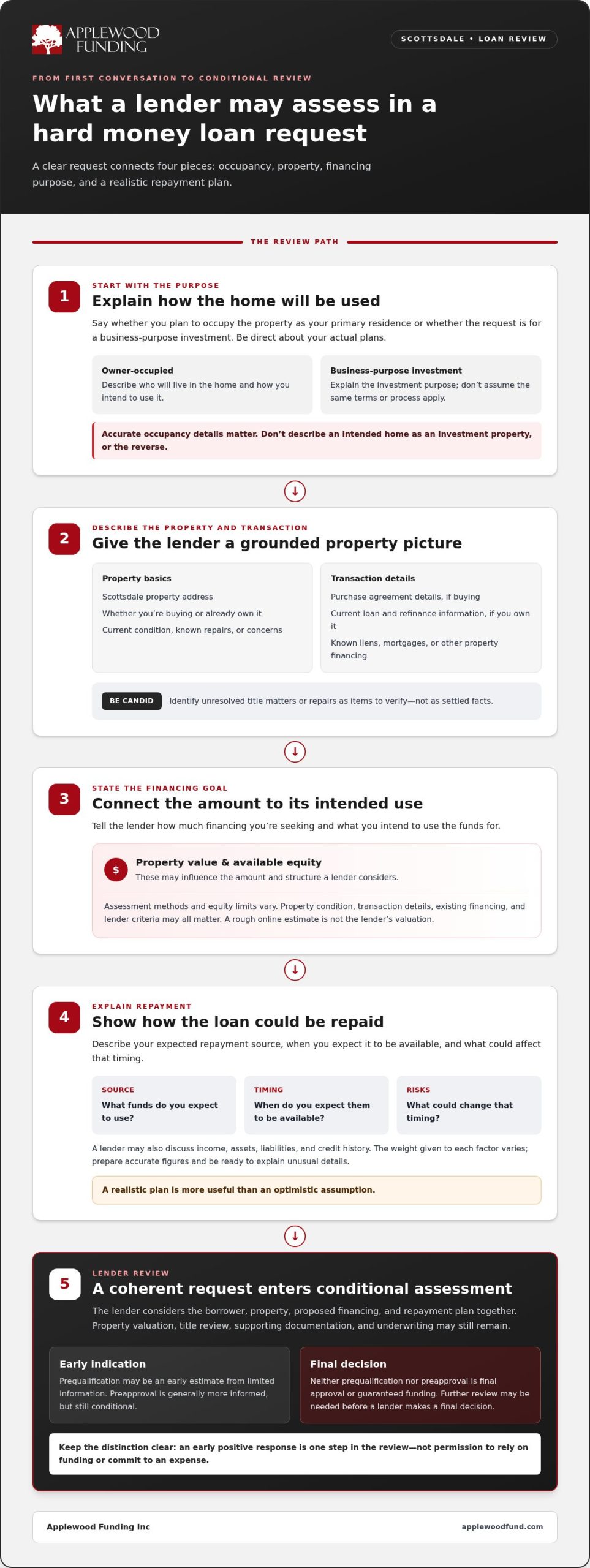
A lender’s review isn’t only about the property or the borrower. Expect the conversation to connect four pieces: how you’ll occupy the home, what the property is like, how much financing you’re seeking and why, and how you expect to repay it. A clear, consistent account helps the lender understand the whole request and makes gaps or unanswered questions easier to identify early.
Property value and available equity may influence the amount and structure a lender considers. But there’s no single valuation method or equity limit that applies to every request. A lender may evaluate the property in light of its condition, transaction details, existing financing, and its own criteria. Don’t assume a rough online estimate equals a lender’s valuation.
Property, purchase, and equity information to assemble
Start with the basics. Gather what you know about the property and transaction, even if some details are still developing. These are useful starting points for a conversation, not a universal list of required documents:
- The Scottsdale property address, intended occupancy, and whether you’re buying or already own it.
- A plain-language description of the property’s current condition and any known repairs or concerns.
- Purchase agreement details, if you’re buying, or current loan and refinance information, if you already own the home.
- Known liens, mortgages, or other financing connected to the property.
Be candid about what you know and what still needs to be verified. For example, if a title matter or repair is unresolved, identify it rather than presenting an assumption as fact. The lender may need to review valuation, title, and transaction records independently. Clear information helps frame that review, but it doesn’t replace it.
Borrower and repayment details a lender may discuss
Next, explain the financing goal. State the amount you’re seeking and how you intend to use the funds. Then describe the repayment plan in plain language: what source you expect to use, when you expect it to be available, and what could affect that timing. A plan should be realistic, not just optimistic.
A lender may also discuss your income, assets, liabilities, and credit history. The weight given to each factor and any supporting information requested can vary by file, so don’t rely on a supposed universal credit threshold. Prepare accurate figures and be ready to explain unusual details, such as variable income or a major existing obligation. Accuracy matters more than trying to make the numbers look perfect.
If you’re considering how to get preapproved for a hard money loan in scottsdale, organize these details into a concise overview: occupancy, property, requested financing, and repayment source. That gives the conversation a practical starting point without treating early feedback as a final lending decision.
Applewood Funding provides owner-occupied hard money financing in Scottsdale. To discuss your occupancy purpose, property details, and financing goal, use the hard money loan contact page.
How to compare owner-occupied hard money preapproval with other options
Compare financing by more than how quickly you might get an initial answer. A conventional mortgage, an owner-occupied hard money loan, or another suitable option can follow different qualification paths, involve different documentation, and create different repayment obligations. A flexible review may suit a complex situation, but flexibility can come with different costs or a shorter repayment horizon. The right fit depends on your occupancy, finances, property, and timeline.
Use this framework to compare the full picture. Specific requirements and terms vary by lender and transaction, so treat the table as a set of questions to investigate, not a promise about any loan.
| Comparison point | Owner-occupied hard money | Conventional mortgage | Other suitable option |
|---|---|---|---|
| Collateral basis | Property value and available equity may factor into review. | The property secures the mortgage; borrower and property qualifications are assessed. | Depends on the product and transaction structure. |
| Documentation | Requirements vary; expect review of the property, borrower, and financing request. | Often involves detailed borrower and property documentation. | Varies by option and lender. |
| Repayment plan | Understand the payment structure, term, and credible repayment or exit plan. | Review the scheduled payments and length of the loan. | Check how and when repayment is due. |
| Total borrowing cost | Compare all disclosed fees, interest, and payment obligations. | Compare the full costs over the period you expect to keep the loan. | Request a complete written cost picture. |
| Key uncertainties | Valuation, title, lender review, and repayment timing may affect the outcome. | Qualification, property review, and processing conditions may affect timing. | Eligibility and terms depend on the specific option. |
For broader context on the trade-offs, read this hard money loan pros and cons guide. Then compare written terms side by side. Look beyond the initial payment: account for fees, payment structure, the loan’s full term, and the cost or consequences if your repayment plan takes longer than expected. Don’t assume a preliminary estimate reflects the final terms.
Questions to answer before choosing a financing route
Will you genuinely occupy the property, and does the proposed loan purpose match that plan? How long do you expect to hold the home, and does that timeline work with the loan’s repayment schedule and your exit plan? Review the complete written terms, including fees, payment structure, and what happens if repayment is delayed. Clear answers make comparisons more useful.
When a preliminary approval is not enough
An early indication may leave valuation, title, documentation, or underwriting conditions unresolved. Until those reviews are complete and the lender provides its final decision, the amount or terms may change, or funding may not proceed. Avoid making commitments based only on a verbal estimate. Ask for the outstanding conditions and rely on written terms when weighing your next step.
A practical Scottsdale hard money preapproval checklist
Make your first lender conversation count. A focused summary connects your occupancy plans, the Scottsdale or Maricopa County property, the financing request, and how you expect to repay. Keep verified facts separate from estimates. If you’re figuring out how to get preapproved for a hard money loan in scottsdale, use this five-step sequence to prepare without treating an early discussion as a final decision. Applewood Funding works with borrowers seeking owner-occupied hard money financing in Scottsdale and across Arizona communities including Phoenix, Glendale, Peoria, Tempe, Mesa, Sedona, Flagstaff, and Tucson.
- Define the use. State plainly that you plan to occupy the home, if that’s your intention. Explain the financing goal and how you expect to use the funds.
- Gather property facts. Note the address, purchase or ownership status, known condition, and any current liens or financing. Include available transaction details.
- Outline repayment. Identify the expected repayment source and target timing. Consider what could change that plan.
- Prepare records. Organize available purchase, ownership, income, asset, and liability information. Label estimates and items still being updated.
- Discuss terms. Review proposed payments, fees, timing, remaining conditions, and what happens if repayment is delayed.
Prepare a clear borrower and property summary
Keep the summary concise enough to use in a conversation. Include who will occupy the property, where you are in the transaction, what you know about its condition, and why you’re seeking financing. Gather records that support the details you share, but don’t present an estimate as a confirmed figure. A clear label such as “title information being updated” helps distinguish open items from verified facts.
Build a realistic repayment and risk plan
Write down your expected repayment source, target timing, and a practical alternative if the original plan changes. Test the plan against possible repair needs, income changes, or delays in a sale or refinance. Then review payment obligations and the stated consequences of missed payments before proceeding. A plan with no room for setbacks may need more thought before you rely on it.
Save this conversation checklist:
- Occupancy purpose and financing goal
- Property address, condition, and transaction stage
- Known liens and existing financing
- Income, assets, and liabilities, with estimates clearly marked
- Repayment source, target timing, and backup plan
- Questions about payments, fees, conditions, and delays
Ready to put your details in order? Discuss your Scottsdale financing situation with Applewood Funding as a next step in exploring owner-occupied hard money financing. A conversation can help frame your request, but it isn’t a guarantee of approval or funding.
Take the next step toward owner-occupied hard money preapproval
A productive financing conversation starts with three clear facts: you intend to occupy the property, you can describe its condition and transaction status, and you have a repayment plan you can explain. Bring those pieces together before discussing possible next steps. They give a lender useful context without turning an early review into a promise of approval or funding.
Applewood Funding provides owner-occupied hard money financing in Scottsdale. A focused first discussion can help frame your situation, identify information that may still be needed, and clarify what the review process may involve. The outcome depends on the particular borrower, property, transaction, and lender review. Keep that distinction in view as you consider your options.
What to include in your first financing conversation
Be direct about your plans and the property. State that it’s intended as your primary residence, explain whether you’re buying or already own it, and describe the stage of the transaction. Share the Scottsdale property location, your financing goal, any available equity information, and how you expect to repay the loan. If figures are estimates or still being updated, label them clearly.
Timing matters too, but describe it as context rather than an assumed funding date. For example, explain when you hope to make a decision and what deadlines are connected to the transaction. That gives the lender a clearer picture without suggesting that a particular schedule or approval is guaranteed. Bring relevant questions about the property review and remaining conditions, and note any known issues that could affect your plans.
Move forward with a clear view of conditions and obligations
Before relying on a proposed loan, ask for a clear written explanation of the terms and borrower responsibilities. Understand the payment structure, costs, conditions that remain open, and what may happen if your repayment plan is delayed. Make sure you know which details are preliminary and which have been reviewed. If anything is unclear, get the explanation before making a decision.
Valuation, title, documentation, and underwriting may still affect the final decision. Don’t treat a verbal estimate or preliminary indication as guaranteed funds, and don’t make commitments that depend on financing being final until you understand what conditions remain. A careful review can help you compare the proposal with your needs and repayment capacity.
If you’re ready to take the next step, share your occupancy plans, property details, financing goal, and any timing constraints with Applewood Funding. Contact Applewood Funding about your Scottsdale loan to begin a conversation about owner-occupied hard money financing. Clear information is the best starting point; approval and funding are never assured by an initial discussion.
Turn your financing questions into a clear next move
Use the next conversation to test whether the proposed path fits your real priorities, not just your immediate deadline. Ask what information would sharpen the review, which conditions could still change the outcome, and how the repayment plan holds up if circumstances shift. Those answers can help you decide what to do next, even if you’re still comparing options.
Knowing how to get preapproved for a hard money loan in scottsdale is about more than getting an early response. It’s about building a clear basis for a decision you can stand behind. Applewood Funding provides owner-occupied hard money loans in Scottsdale and other Arizona communities. A conversation can help you explore whether this financing approach may fit your situation, without assuming approval is guaranteed.
Take the next step with your questions and property details ready. Contact Applewood Funding about your Scottsdale financing options to start moving toward a more informed decision.
Frequently Asked Questions
Can I get preapproved for a hard money loan on a primary residence in Scottsdale?
It may be possible through an owner-occupied hard money program, but the outcome depends on your transaction, property, borrower information, lender review, and applicable requirements. State clearly that you plan to live in the home. A purchase intended as your primary residence is different from an investor-purpose transaction, so don’t assume financing structured for an investment property can be used for your home. Treat an early indication as conditional until final terms are issued.
What documents do I need to seek hard money preapproval?
Start by organizing identification, borrower financial information, and what you have about the property and transaction. For example, gather the address, purchase agreement or current loan details, known liens, property condition notes, and relevant income, asset, and liability information. If you’re researching how to get preapproved for a hard money loan in scottsdale, organize these details for your first discussion. Mark estimates clearly so they aren’t mistaken for verified figures.
Does a hard money lender check credit for preapproval?
A lender may review your credit, but it can be only one part of the assessment. The property, available equity, stated occupancy, borrower details, and repayment plan may also be relevant. Criteria differ, so a particular score shouldn’t be treated as an automatic approval or denial. If your credit history includes an issue that could prompt questions, be prepared to explain it accurately and provide context or supporting information if requested.
How long does hard money preapproval take in Scottsdale?
There isn’t one timeline that applies to every Scottsdale request. The lender, transaction complexity, completeness of your information, property review, title work, and applicable underwriting requirements can all affect the process. An initial conversation may take place before the full file is reviewed, but it doesn’t establish final approval or a funding date. Ask which review steps remain and avoid making commitments that depend on an estimated timeline.
Is preapproval a guarantee that my hard money loan will close?
No. A preliminary indication is generally conditional, and the lender may still need to verify information about you, the property, occupancy, value, title, and transaction. Read written conditions closely and identify what is outstanding, who must provide it, and whether anything could change the proposed terms. Before relying on financing for a purchase or another commitment, wait until the lender has completed its review and provided final terms.
Can I get a Scottsdale hard money loan if a bank denied me?
A bank denial doesn’t automatically decide the result of a private-lending request. A lender may assess your request using its own criteria, including the property and repayment plan, while still reviewing your borrower information and intended occupancy. Explain the reason for the denial honestly, especially if circumstances have changed or you can clarify an issue. Then compare the proposed payments, costs, and obligations with other financing options before moving forward.
What should I compare before accepting an owner-occupied hard money loan?
Compare the written terms, including the payment structure, fees, repayment timeline, remaining conditions, and borrower responsibilities. Consider whether the payments fit your budget and what you would do if your expected repayment source is delayed or unavailable. Make sure the stated loan purpose matches how you’ll actually use the property. In Arizona, compare the complete financial obligation with other available options, not just an advertised rate or expected speed.