

Mesa Fix and Flip Financing 2026: August Loan Rates and Terms
October 24, 2026Flagstaff land acquisition loans: costs, equity and closing time
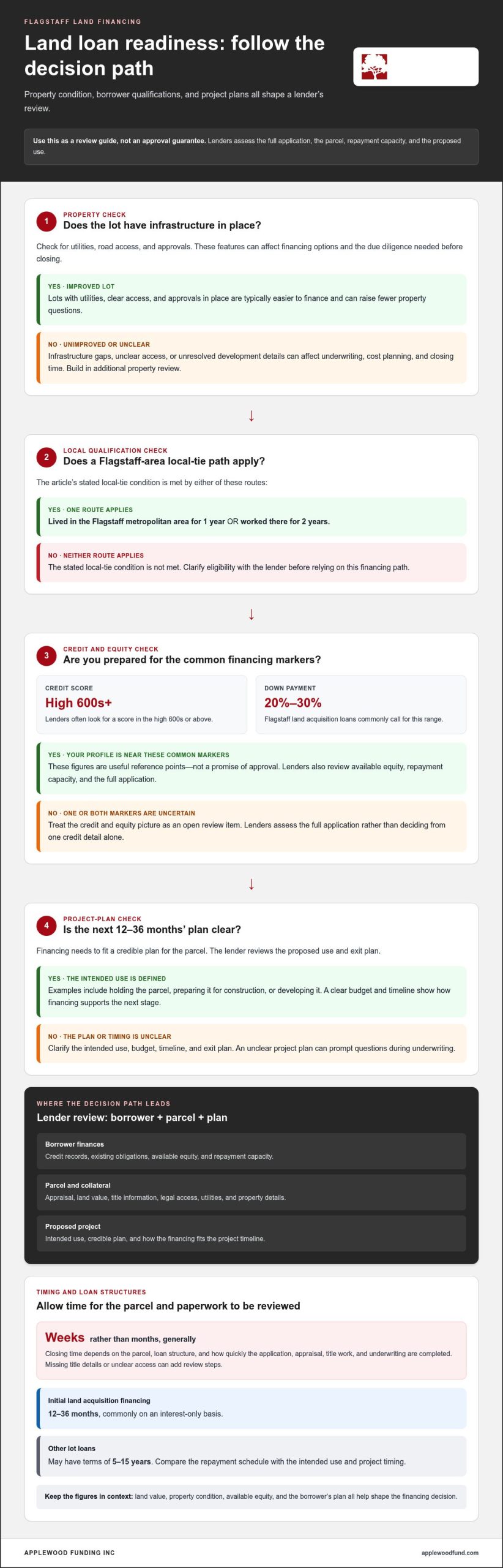
Land loans aren’t impossible to secure, but they usually require more cash upfront than a typical home purchase. Flagstaff land acquisition loans commonly call for a 20%-30% down payment, and lenders often look for a credit score in the high 600s or above. Financing is generally measured in weeks rather than months, with the property and your plans affecting the timeline.
That higher bar can make buying land feel uncertain. Infrastructure matters, too: improved lots with utilities, road access, and approvals in place are typically easier to finance than unimproved land.
Understand the key factors before making an offer. This article explains what lenders review, how credit and equity can affect qualification, and what may shape closing time for improved and unimproved lots in Flagstaff. You’ll also learn how a credible property plan fits into financing, so you can assess the deal and prepare for your next decision.
Key Takeaways
- Estimate the amount you may need by looking at the land’s value, its condition, and your plan for the property over the next 12 to 36 months.
- Expect credit review and an appraisal to help lenders assess repayment capacity, collateral value, and the risks tied to the specific parcel.
- Prepare to show how much equity you can contribute and how your experience supports the project’s plan and execution.
- Compare the lot’s utilities, road access, approvals, and infrastructure. These features can affect financing options and the due diligence needed before closing.
- Build time for property review and loan documentation into your purchase plan, especially when the land is unimproved or the project details need clarification.
How quickly can a land loan close in Flagstaff, AZ?
Land financing in Flagstaff generally takes weeks rather than months, though the timeline depends on the parcel, loan structure, and how quickly the application, appraisal, title work, and underwriting are completed. Improved lots with clear access and utilities can raise fewer property questions than undeveloped parcels.
Loan size follows the property and plan. Lenders commonly use lower loan-to-value ratios for land because they view it as higher risk than a home. That means the land’s supported value and the borrower’s available equity help shape the amount of capital. Financing also needs to fit a credible plan for the next 12 to 36 months, such as holding the parcel, preparing it for construction, or developing it.
Initial land acquisition financing commonly runs 12 to 36 months on an interest-only basis. Other lot loans may have terms of 5-15 years. Those structures serve different plans, so compare the repayment schedule with the intended use and timing of the project. A lender reviews the parcel and proposed use before deciding which structure fits.
Application and underwriting involve defined reviews. The lender evaluates borrower finances, land value, title information, access, and the proposed project. An appraisal supports the collateral assessment, while underwriting weighs that evidence alongside repayment capacity and the exit plan. Submit a complete application with property records to reduce avoidable follow-up. Missing title details or unclear access can add review steps.
Qualification may also involve local ties: applicants must have lived in the Flagstaff metropolitan area for one year or worked there for two years. Lenders assess credit, available equity, repayment ability, and whether the plan fits the parcel. A clear budget and timeline show how financing supports the next stage.
What lenders offer land acquisition loans in Flagstaff? Banks, credit unions, and private lenders are financing channels to consider. Flagstaff credit unions frequently lend on commercial real estate deals below $3 million, while core commercial real estate bank loans range from $1 million to $10 million. Those figures describe commercial real estate lending, not a guaranteed land-loan amount.
What zoning and minimum-lot rules apply? Flagstaff and Coconino County requirements depend on the parcel’s jurisdiction, zoning district, and intended use. Confirm the applicable zoning and minimum-lot standards with the relevant local planning authority before treating a parcel as buildable.
Site-loan programs have specific purposes. USDA Rural Housing Site Loans relate to rural housing sites, and USDA’s RD Instructions 1924-A and 1924-C cover site-development standards and policies. Before relying on this type of program, match the proposed site work to its rules and the parcel’s eligibility.
What risks should buyers check? Before financing land near Flagstaff, review zoning, legal access, utilities, title, and site conditions. Unclear development rights, infrastructure gaps, or a mismatch between the parcel and intended project can affect underwriting, cost planning, and closing time.
Credit checks and appraisals
A land-loan review considers two distinct questions: can the borrower repay, and does the parcel support the requested financing? For Flagstaff land acquisition loans, credit records help lenders assess repayment patterns, existing obligations, and available capacity. An appraisal focuses on the land as collateral. Strong credit cannot resolve a property valuation gap, and a well-supported appraisal does not erase repayment concerns.
Credit review typically considers payment history, outstanding balances, credit accounts, and current debt obligations. These details help show whether the proposed mortgage fits alongside other commitments. For example, a borrower with steady repayment records and manageable monthly obligations presents a different profile from someone with overdue accounts. Lenders consider the full application rather than making a decision based on one credit detail.
Prepare a clear picture of your credit and finances before applying. Gather records that explain current debts, income sources, and unusual changes in account activity. If a report contains an error, document the specific item and supporting records. Clear explanations help underwriting distinguish a reporting issue from a pattern that may affect repayment capacity.
The appraisal provides a property-focused view of value and marketability. For a vacant parcel, the review may consider location, comparable land sales, access, permitted use, utilities, and physical characteristics. Comparable properties near Phoenix may differ from those in Flagstaff, so local context matters. The appraised value helps establish the collateral basis for a loan, not the borrower’s personal estimate or intended resale price.
Property records and the appraisal should tell a consistent story. Compare the legal description, parcel boundaries, access information, and intended use across the purchase documents and application. If a listing describes road access but property records show an access easement, that distinction may need review. Differences in acreage or parcel identification can also prompt questions and delay underwriting.
- Credit: Review payment history, balances, and outstanding obligations.
- Property: Organize the parcel identification, legal description, and available access details.
- Value: Compare the appraisal’s supporting sales with the parcel’s location and features.
- Application: Explain material differences between submitted records and appraisal or title information.
Credit and appraisal findings work together. A strong application connects repayment capacity to a defensible property value and a practical use plan. In Flagstaff land acquisition loans, both the borrower’s financial profile and the parcel’s specific characteristics shape the lender’s assessment. Organize the financial records and property documents before purchase so the lender can review both sides of the request without avoidable gaps. For questions about mortgage financing in Arizona, explore land financing information.
Borrower equity and sponsor experience
Equity is the portion of the land purchase the borrower can fund without loan proceeds. For a Flagstaff parcel, lenders weigh that contribution alongside the project scope, collateral, and repayment plan. More borrower capital can reduce the amount financed, but enough funds should remain for the work needed to make the property usable.
Plan for more than the purchase contribution. Development may involve surveys, access improvements, utility extensions, or other site preparation. If all available cash goes toward buying the parcel, you may lack capital for the next phase. In your application, separate purchase funds from planned project reserves and explain which expenses you will pay directly.
For example, an applicant buying unimproved land could show how equity covers the acquisition, then identify the funding source for road access or utility work. The lender can compare this plan with the parcel’s condition and intended use. If the project depends on infrastructure, explain how that work will be funded before the land is expected to support construction or another use.
Sponsor experience helps demonstrate whether the plan is practical. Relevant experience may include managing land purchases, coordinating contractors, completing site work, or overseeing a real estate project. Be specific: a completed comparable project provides more context than a general claim of development experience. A first-time sponsor can explain which qualified professionals or partners will handle unfamiliar tasks.
Income and housing obligations also affect the equity picture. A lender considers whether existing debt and household expenses leave room for the proposed loan payments. For an investment parcel, explain how you will carry the project during the land-holding period. For land intended for a future home, distinguish personal housing costs from project expenses. A direct, organized explanation makes the application easier to assess.
Useful application materials include:
- Equity records: Show the funds available for the purchase and planned site costs.
- Project budget: Separate acquisition, preparation, and later construction expenses.
- Experience summary: Describe completed real estate or land projects and the sponsor’s role.
- Execution plan: Identify who will manage surveys, contractors, approvals, and site work.
- Repayment outline: Explain the intended exit, such as a sale, refinance, or transition to another financing structure.
Keep the budget, experience summary, and proposed schedule consistent across applications. If a Flagstaff project targets work over the next 12 to 36 months, show how available equity supports each stage rather than only the initial purchase. This connection helps a lender understand the sponsor’s capacity, the project’s sequence, and where additional capital may be needed.
Credit score and down payment requirements
Land lenders weigh credit and cash contribution together when sizing a loan. For Flagstaff buyers, both can affect how much financing the property can support.
Credit Score Standards
A credit score summarizes borrowing and repayment history, helping lenders assess the risk of extending credit. Most lenders look for a score in the high-600s or above for a lot loan. That benchmark gives borrowers a practical starting point, but the full review also considers payment history, current balances, and existing obligations.
A score below that range does not tell the whole story by itself. A lender may also consider whether missed payments were isolated or part of a pattern, and how current debt affects repayment capacity. Before applying, review your credit records and prepare clear explanations for unusual entries. Accurate, consistent application details help underwriting assess your full financial picture.
Down Payment Expectations
A down payment is the buyer’s share of the purchase price paid from personal funds or other accepted sources. Lenders commonly require 20%-30% or higher for a lot or land loan. Land is considered higher risk, so the borrower’s contribution can reduce the amount financed and provide more equity in the collateral.
Work backward from the purchase price and the lender’s required contribution. Keep the down payment separate from funds needed for closing expenses and planned site work. For example, when considering unimproved land, account for both the purchase contribution and the resources needed to address access or utilities.
Credit and down payment can affect each other during underwriting. A strong cash contribution may reduce the requested loan relative to the property value, while credit history helps show how you have managed past obligations. Neither replaces a complete review of income, debts, collateral, and the land’s intended use.
Organize your application around clear, consistent records. Document the source of the down payment, list outstanding debts, and make sure the requested amount matches the purchase agreement. If funds come from multiple sources, explain each contribution plainly. This gives the lender a clear view of your available equity and reduces questions about the transaction.
- Credit: Review your payment history, balances, and obligations before applying.
- Cash: Plan for a 20%-30% or higher contribution, plus separate project funds.
- Consistency: Align the application, purchase agreement, and down-payment records.
Use these figures to assess readiness, not as an automatic approval formula. A lender weighs credit profile, available equity, parcel value, and repayment plan together. For a Flagstaff lot, preparing these elements before underwriting can clarify how much financing to pursue and how much money to preserve for the project.
Improved and unimproved lots
For a Flagstaff land purchase, the distinction between improved and unimproved property can affect financing eligibility. Improved lots with utilities, road access, and approvals in place are typically easier to finance than unimproved lots.
An unimproved lot is undeveloped land with limited or no infrastructure. That can mean more questions about how the site can be reached, served, and prepared for its intended use. The parcel’s label alone does not tell the full story. Lenders consider its actual features and records.
How do water access, septic, utilities, and road access affect land loan approval in Flagstaff? Lenders assess whether the parcel’s water access, septic arrangements, utilities, and road access support its intended use. Documented services and access can make an improved lot easier to evaluate, while missing infrastructure can raise property questions and affect financing eligibility.
Start with the parcel records and purchase documents. Compare the legal description with the property being offered, then identify recorded access rights and available utility information. For example, if a listing describes road access but the parcel relies on an easement, that detail matters to the lender’s review. Clear records connect the site’s condition with its proposed use.
Water and wastewater arrangements deserve the same attention. Identify whether the site has a service connection, relies on another arrangement, or needs additional work. For septic, review the parcel’s available documentation and how it relates to the planned use. Do not assume a nearby utility line means the lot already has service. This distinction can affect project planning and the lender’s assessment of readiness.
Approvals matter, too. A lot with approvals in place is typically easier to finance than land still requiring key approvals. Review the documents for the intended project and make sure they refer to the same parcel and proposed use as the purchase agreement. Changes in the site plan can affect what information underwriting needs.
Unimproved land may require more planning because infrastructure could need attention after acquisition. Map the work between purchase and intended use, then separate existing site features from future improvements. This gives the lender a clearer view of the project sequence and helps you avoid treating undeveloped acreage as ready to use.
Land ownership also brings ongoing responsibilities. Vacant land remains subject to property taxes, and financing may require insurance. Include these obligations in your holding plan alongside planned site work. Even unused land carries costs and responsibilities for its owner.
Before moving ahead, organize records for access, utilities, water, septic, approvals, and property taxes. For a Flagstaff parcel, this information helps distinguish an improved lot from land needing further work. Discuss land financing for your property as you assess the parcel and its intended use.
Applewood Funding: Owner Occupied Hard Money Loans
Applewood Funding Inc offers Owner Occupied Hard Money Loans and Construction and Land Loans for different property needs. If you’re financing land for a project, Construction and Land Loans may fit; for an owner-occupied property, consider the owner-occupied option.
Bring the parcel details, intended use, available equity, and project plan into the financing conversation. These details help clarify your needs and identify a path that matches your goal. Fix and Flip Loans and Rental Property Loans serve different real estate plans, so choose a loan type that fits the property’s purpose.
Ready to discuss your plans? Contact Applewood Funding Inc to talk through the next step.
Turn Your Land Plan Into a Clear Next Step
Your next step is to connect the parcel with a practical financing plan. If you’re comparing Flagstaff land acquisition loans, prepare a brief covering the property, intended use, project stage, available funds, and expected path after purchase. This gives the financing conversation a clear starting point and separates the land purchase from later construction or investment decisions.
Applewood Funding offers Owner Occupied Hard Money Loans, Fix and Flip Loans, Rental Property Loans, and Construction and Land Loans. The right direction depends on what you’re financing: an owner-occupied property, a renovation, a rental investment, or land and construction. Gather your project details before deciding which financing path fits your immediate goal.
Ready to discuss your plans? Contact Applewood Funding about land financing and take the next step with a clearer picture of your project. A well-defined plan puts you in a stronger position to move forward.
Frequently Asked Questions
Are lot loans hard to get?
Yes, lot loans can be harder to qualify for than loans secured by a completed home. Land can be less marketable collateral, so lenders often limit borrowing relative to its value. Compare the lender’s equity expectations with your available funds and planned use. Clear parcel documentation and a realistic purpose can make an application easier to assess, though approval still depends on the complete loan request.
What Is a Lot Loan?
A lot loan finances the purchase of a parcel of land, often for a future home or another real estate project. Unlike a standard home mortgage, it is secured by land without a completed residence. The parcel’s development status and intended use help shape the loan structure. For example, a buyer purchasing a serviced residential lot has a different project profile from someone acquiring raw acreage for later development.
Can I finance raw or undeveloped land?
Yes, raw or undeveloped land can be financed, though limited infrastructure can make a parcel harder to assess. Identify the intended use and explain what must happen before the land can serve that purpose. A buyer planning to hold a parcel has a different financing plan from one preparing for construction. Clear parcel records and a credible project plan help lenders understand the request and the collateral.
Can land development costs be included in the loan?
Land loans may cover acquisition and planned site work when the financing structure includes both, but do not assume every loan covers those costs. Separate the purchase amount from development expenses in your budget. For example, list proposed access or utility work as distinct project costs, then explain the sequence and funding plan. The loan agreement determines which expenses proceeds may cover and how funds are released.
How may funds be used?
Use loan proceeds for the purpose described in the loan agreement, such as the land purchase or eligible project expenses included in the financing. Keep acquisition costs separate from future construction or personal expenses in your records. If your plan includes preparing a parcel before building, show each stage clearly. A written budget connects each use of funds to the property and project timeline.
How much down payment is required?
Lenders commonly require a 20%-30% or higher down payment for a lot or land loan. The required contribution depends on the parcel, its value, and the financing request. Plan for the down payment separately from funds needed for closing expenses or future site work. This distinction matters: using every available dollar toward the purchase can leave too little capital for the project’s next phase.
How much equity is typically required for a land loan?
Borrower equity commonly appears as the down payment, with lenders often expecting 20%-30% or higher for land. Equity and loan-to-value describe related but different sides of the financing. For example, a 50% loan-to-value ratio means the loan equals half the value of the assets used as collateral. Your contribution, the appraised value, and the requested loan amount together show how much equity supports the deal.
What are the terms of the loans?
Land-loan terms vary by financing structure and project purpose. Lot loans often have terms of 5-15 years, while initial land acquisition loans commonly run 12 to 36 months on an interest-only basis. Compare the payment schedule with your plan for the property. A shorter structure may require a clear next step, such as selling, refinancing, or moving into another financing phase when the term ends.